How to Clean Filters on an Air Conditioner: A Practical Guide
Learn how to safely clean filters on your air conditioner to boost airflow, improve indoor air quality, and lower energy use. Follow this step-by-step guide with tools, tips, and safety warnings from Cleaning Tips.


This guide explains how to clean filters air conditioner safely and effectively, boosting efficiency and indoor air quality. You'll learn which tools you need, the step by step sequence, and how to tell when a filter needs replacement rather than cleaning. Follow these steps to reduce energy use and maintain a healthier, more comfortable home environment.
Why Cleaning AC Filters Matters
According to Cleaning Tips, keeping the filters clean is a simple habit that pays off across comfort, health, and efficiency. A clogged or dirty filter restricts airflow, forcing the compressor to work harder and consume more energy. When filters are clean, air moves more freely, reducing temperature swings and improving indoor air quality. The Cleaning Tips team found that regular attention to filters can help lower strain on the system and keep dust from circulating through living spaces. This is especially important for households with allergy or asthma sufferers, pets, or high dust levels. By investing a few minutes on routine cleaning, homeowners and renters can extend equipment life and enjoy steadier cooling performance.
Filters, Types, and When to Clean vs Replace
Most residential AC units use pleated or mesh filters that trap dust and pollen. Some are designed to be washable, while others are disposable. If your filter is visibly dirty, clogged, or discolored, it is a sign to either clean or replace it. Washable filters can often be cleaned and reused several times, but disposable filters should be replaced according to the manufacturer’s recommendations. Understanding your filter type helps you decide whether washing is sufficient or if you should order a replacement. Regular inspection each month during peak cooling season ensures you catch buildup before it becomes restrictive.
Tools and Safety Before You Begin
Before you touch the unit, gather your tools and wear protective gear. Always unplug the unit if accessible, and never operate a powered appliance with an open panel. Use gloves to protect your hands from sharp edges, and a soft brush to avoid tearing delicate filter fibers. A small vacuum with a brush attachment helps remove loose dust without saturating the filter. When in doubt, consult the user manual for filter type and cleaning instructions. Safety first prevents accidental damage and keeps indoor air safer for occupants.
Maintenance Schedule and Seasonal Tips
Create a simple maintenance calendar that fits your schedule. Check the filter every month during heavy use and clean or replace it as needed. In dusty environments, you may need to clean filters every 2-4 weeks. After cleaning, ensure the filter is completely dry before reinstalling to prevent mold growth. Set reminders on your phone or calendar to reinforce the habit, and combine filter checks with other seasonal maintenance tasks such as cleaning coils or clearing debris around outdoor units.
Common Pitfalls and How to Avoid Them
Avoid rigidly scrubbing hard or using hot water on nonwashable filters, which can damage the fibers and reduce filtration efficiency. Do not rinse a filter with strong chemical cleaners that may leave residue. Never operate the AC with a missing or damaged filter. When in doubt, replace the filter rather than attempting to clean it, especially if the filter is torn or has become deformed. Finally, avoid letting water sit on metal frames, which can promote rust and mold growth.
Troubleshooting and Quick Fixes
If airflow remains weak after cleaning, check for obstructions in supply vents, ducts, or around the outdoor unit. A dirty evaporator coil can also block airflow; if accessible, lightly clean the coil with a soft brush. If you are unsure about filter condition or if symptoms persist (unusual noises, frost buildup, or persistent odors), consult a professional HVAC technician. Regular cleaning is a proactive step, but not a substitute for professional service when systems show signs of malfunction.
Tools & Materials
- Soft-bristle brush(For gentle scrubbing of the filter mesh)
- Vacuum cleaner with brush attachment(To remove loose dust without damaging fibers)
- Mild dish soap(Used if the filter is washable and visibly dirty)
- Bucket with warm water(For soaking and rinsing washable filters)
- Towels or microfiber cloth(To dry and blot excess moisture)
- Replacement air conditioner filter(Keep on hand in case the filter is damaged or non-washable)
- Step ladder(Use if the unit is mounted high and out of reach)
- Gloves(Protect hands from sharp edges and debris)
Steps
Estimated time: 20-30 minutes
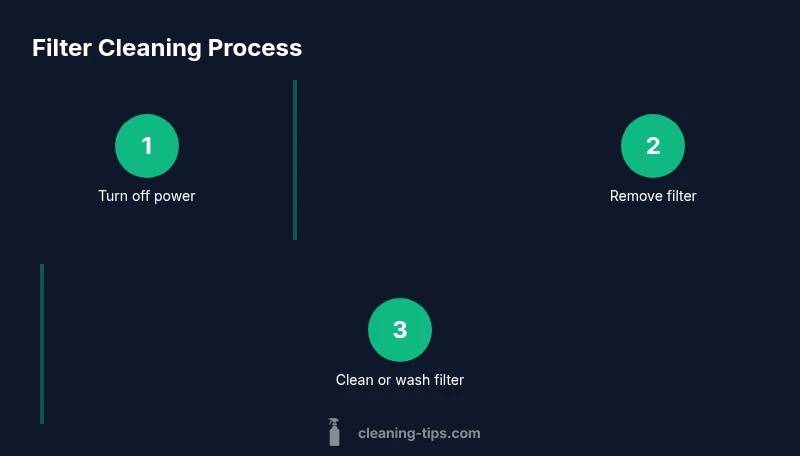
- 1
Power off and prep your space
Turn off the unit and unplug if possible. Clear the area around the indoor unit and lay down towels to catch dust. This preparation reduces risk and keeps surfaces clean.
Tip: Never work on a live electrical unit; safety first. - 2
Locate and remove the filter
Open the front panel or access door and slide out the filter frame. Take a quick photo to remember orientation for reinstallation.
Tip: Note orientation arrows on the frame. - 3
Shake out loose dust or vacuum
Take the filter outside if possible and gently tap to remove dust. Use a soft brush or vacuum with brush attachment to remove embedded particles.
Tip: Avoid aggressive brushing that could tear the filter. - 4
Wash or wipe the filter
If washable, rinse with lukewarm water and a small amount of mild soap. Do not use hot water or strong cleaners.
Tip: Rinse thoroughly until no soap residue remains. - 5
Dry completely before reinstall
Allow the filter to air dry fully in a clean, ventilated area. Do not reinstall while damp to prevent mold growth.
Tip: Patience pays off; damp filters harbor mold. - 6
Reinstall and test the unit
Place the filter back with arrows aligned correctly. Close the panel and power on to confirm airflow.
Tip: If airflow is weak, recheck seal and filter seating. - 7
Set a regular cleaning schedule
Mark a recurring reminder for filter checks during peak season. Consistency keeps the system running efficiently.
Tip: Pair with other routine maintenance tasks.
Questions & Answers
Can I clean disposable filters?
Disposable filters are usually replacement-only. Cleaning them can damage the filter media and reduce filtration effectiveness. If in doubt, replace with a new filter.
Disposable filters are usually replacement-only; cleaning is not recommended.
How often should I clean air conditioner filters?
Check filters monthly during heavy use and clean or replace as needed. In lighter use or dusty environments, every 1-3 months may be sufficient.
Check monthly and adjust based on usage and dust.
What if cleaning doesn’t improve airflow?
If airflow remains weak after cleaning, inspect for obstructions in vents or ducts or a dirty evaporator coil. Consider professional service if symptoms persist.
If it’s still weak, check vents and coils or call a pro.
Is it safe to wash vinyl or mesh filters?
Many washable filters can be cleaned with mild soap and water. Always follow the manufacturer’s directions and avoid harsh chemicals.
Most washable filters can be cleaned with mild soap and water.
Should I replace filters every season?
Replacement frequency depends on filter type and environment. Replace per manufacturer guidance in dusty or high-use settings; otherwise cleaning can extend life.
Replace as recommended; environment matters.
Do washable filters need to be completely dry before reinstall?
Yes, completely dry before reinserting; moisture can promote mold and odors.
Yes, make sure they’re dry.
Watch Video
The Essentials
- Regularly inspect and clean filters to maintain airflow.
- Use the correct cleaning method for your filter type.
- Dry filters fully before reinsertion to prevent mold.
- Replace disposable filters as recommended by the manufacturer.
- Create a simple, seasonal maintenance routine.