Can You Clean and Reuse an Air Filter? A Practical Guide
Discover when you can safely clean and reuse an air filter, how to clean by filter type, and when replacement is wiser. Step-by-step guidance, safety tips, and maintenance practices for healthier indoor air.


You can reuse some washable air filters if the manufacturer labels them as washable or reusable. Disposable filters should not be washed. This guide explains how to identify washable options, how to clean them safely, and when to replace. Follow the label, avoid harsh chemicals, and ensure the filter is completely dry before reinstalling.
Understanding washable vs disposable air filters
If you’re wondering can you clean and reuse an air filter, the answer depends on the label and the filter type. According to Cleaning Tips, some pleated and mesh filters are designed to be washed and reused, while most fiberglass or non-reusable filters are not. The key is to read the manufacturer’s instructions and inspect the filter for any sign of wear or damage. Filters come in a variety of constructions—fiberglass, pleated paper, and metal mesh—and each type has distinct care requirements. Knowing which category your filter falls into helps prevent air quality problems and protects your heating or cooling equipment.
In general, washable filters are typically marked as reusable and are common in mid-range HVAC systems and some air purifiers. If a filter is not clearly labeled as washable, assume it is disposable and replace it when dirty. This distinction is crucial for maintaining efficiency and ensuring that indoor air remains clean. As you proceed, remember that even washable filters require proper drying to avoid mold growth and odors that can negate the benefit of cleaning.
From a practical standpoint, can you clean and reuse an air filter? The short answer is: only if the manufacturer approves it. Cleaning Tips emphasizes always starting with the label and performing a quick integrity check before attempting any wash. If you do proceed, use gentle cleaning methods and avoid soaking the filter, which can damage its structure and reduce filtration efficiency.
-note
Tools & Materials
- Filter label or manual(Check for washability and replacement intervals.)
- Mild dish soap(For washable pleated or metal filters.)
- Lukewarm water(Avoid hot water that can warp materials.)
- Soft-bristle brush(Gently loosen dust from pleats.)
- Vacuum cleaner with brush attachment(Pre-clean to remove loose dust.)
- Clean towel or drying rack(Air-dry completely before reinstalling.)
- Gloves(Protect hands during handling and cleaning.)
- Replacement filter (as backup)(Keep on hand in case the filter cannot be reused.)
Steps
Estimated time: 1-2 hours
- 1
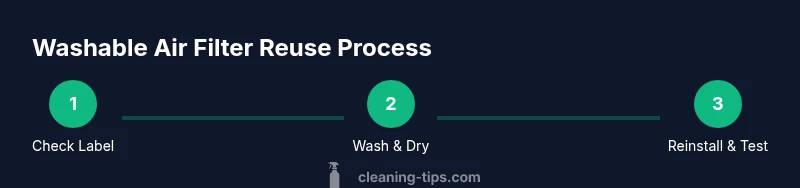
Identify filter washability
Remove the filter and inspect the label or manual to determine if it is washable or reusable. If the documentation says washable, proceed with cleaning; if not, plan for replacement. This step prevents wasted effort and protects your system from improper cleaning.
Tip: If you’re unsure, assume it’s disposable and order a replacement rather than risking reduced filtration. - 2
Prepare your workspace and tools
Lay out all tools on a clean surface. Wear gloves to protect your hands from dust and use a towel to catch any water. Ensure the space is well-ventilated to minimize respiratory exposure to dust.
Tip: Having everything ready prevents mid-cleaning trips to grab supplies. - 3
Remove and pre-clean the filter
Carefully remove the filter from its slot. Use a vacuum with a brush attachment to remove loose dust from the surface and between pleats if accessible. This minimizes the amount of moisture needed during washing.
Tip: Vacuuming first reduces the chance of clogging your sink or bathtub drain with debris. - 4
Wash the filter (if labeled washable)
Rinse the filter under lukewarm running water. For pleated filters, use gentle soap if advised by the manufacturer; avoid harsh chemicals. Do not scrub too aggressively to protect pleats and maintaining the integrity of the filter media.
Tip: Never use high-pressure water that can deform the filter. - 5
Rinse and remove soap
Rinse until all soap is gone and the water runs clear. Soap residue can irritate nasal passages and reduce filtration efficiency, so thorough rinsing is essential.
Tip: Double-check for any remaining suds before proceeding. - 6
Dry the filter completely
Shake out excess water, then place the filter on a drying rack or clean towel in a well-ventilated area. Avoid direct sunlight that can warp materials. Ensure no moisture remains, especially in folds or pleats.
Tip: Under-dried filters can encourage mold growth and odors. - 7
Reinstall and test
Once fully dry, reinstall the filter in its slot. Run your HVAC or purifier briefly to verify airflow and listen for unusual sounds or reduced airflow, which may indicate improper seating or damage.
Tip: If the filter noticeably restricts airflow after cleaning, consider replacement. - 8
Maintain a clean rotation
Create a simple schedule to check filters monthly and rewash only when guidelines permit. Keep a backup filter for quick swaps in busy seasons.
Tip: Regular checks extend filter life and protect indoor air quality.
Questions & Answers
Can all air filters be washed and reused?
No. Most disposable filters should not be washed. Only washable or reusable models, as specified by the manufacturer, are safe to clean and reuse.
Most filters aren’t washable; only reusable models should be cleaned per the label.
How do I know if my filter is washable?
Look for explicit labeling such as 'washable' or 'reusable' on the filter or in the manual. If unsure, contact the manufacturer.
Check the label or manual to confirm washability.
Is washing a HEPA filter safe?
Most HEPA filters are not designed to be washed. If the manufacturer says it’s washable, follow their instructions exactly.
HEPA filters are usually not washable unless specified by the maker.
What cleaning supplies are safe to use?
Use only mild soap and water if the manufacturer approves. Avoid solvents, bleach, or high-pressure cleaning that can damage the media.
Stick to mild soap and water if allowed by the label.
How long does drying take after cleaning?
Drying times vary by filter type and environment. Ensure complete dryness before reinstalling to prevent mold.
Give it ample time to dry fully before putting it back.
When should I replace rather than clean?
Replace if the filter is damaged, warped, has persistent odor, mold, or if airflow remains restricted after cleaning.
If you see damage or odor, replace rather than clean.
Watch Video
The Essentials
- Check the label before cleaning to confirm washability
- Use mild soap and lukewarm water only if approved by manufacturer
- Dry thoroughly before reinstalling to prevent mold
- Replace disposable or damaged filters promptly
- Follow manufacturer guidance for best results