Clean Machine Car Washes: A Practical Guide for Homeowners
Learn how to clean machine car washes safely and effectively with a practical, step-by-step approach. This guide covers safety, tools, cleaners, routine maintenance, and troubleshooting to keep your equipment reliable and efficient in 2026.


Learn how to clean machine car washes safely and effectively, from pre-clean checks to routine maintenance. This guide covers identifying components, selecting appropriate cleaners, and a practical cleaning routine you can perform with common tools. You’ll protect equipment, extend its life, and keep your car wash operation running smoothly. A quick setup and safety checklist get you started.
Why Proper Cleaning of Machine Car Washes Matters
Keeping clean machine car washes isn't just about appearance; it directly affects performance, longevity, safety, and the user experience. According to Cleaning Tips, residue from soaps, waxes, and rust can clog nozzles, harbor bacteria, and reduce drying efficiency. Over time, buildup can cause pumps to work harder, increasing energy use and the risk of breakdowns. The Cleaning Tips team emphasizes that a regular cleaning routine helps prevent costly repairs and keeps car wash bays safe for operators and customers. When you clean the system consistently, you also protect sensitive rubber seals and soft plastics from harsh cleaners that can cause cracking or clouding. In short: a clean machine car wash runs more smoothly, uses fewer resources, and delivers a better wash for vehicles. This section explores why cleanliness matters and sets the foundation for a practical maintenance plan.
Safety First: Power, Chemicals, and PPE
Before you touch any component, shut down and unplug the machine if possible and disconnect the power source to prevent accidental starts. Wear PPE: chemical-resistant gloves, eye protection, and a breathable apron. Work in a well-ventilated area to minimize fumes from cleaners. Never mix cleaners, particularly acids with ammonia-based products, as dangerous gases can form. Read the manufacturer's safety data sheet (SDS) for each chemical you plan to use and choose products labeled compatible with stainless steel, rubber seals, and plastics common to car wash equipment. Keep a spill kit and a waste container nearby, and never pour leftovers down the drain unless the product is explicitly approved for your plumbing system.
Assess Your System: Identify Components to Clean
Most automatic and self-serve car wash systems have a few recurring components that collect grime: soap and wax reservoirs, spray nozzles, pumps and hoses, intake screens, and exterior panels. Start with a visual scan to spot oily films, dried soap, mineral deposits, and mold in corners. Remove loose debris by hand or with a soft brush, taking care not to dislodge fittings. Check hoses for cracks or bulges and inspect nozzles for clogs. If your model has brushes or cloth pads, note any wear patterns. Documenting the current condition helps you target cleaning where it will be most effective and plan your maintenance calendar.
Cleaning Agents: What to Use and What to Avoid
Choose cleaners that are specifically formulated for car wash equipment or automotive-grade plastics and rubber. A mild degreasing solution works well on metal housings and aluminum parts, while a non-abrasive cleaner protects seals. Avoid harsh solvents that can degrade gaskets or remove protective coatings. Vinegar and citric acid can help with mineral deposits on glass, metal, and plastic surfaces, but test first on a small area to ensure no adverse effect. Rinse thoroughly after applying cleaners to prevent residue that could contaminate future washes. If you must use sanitizers, select ones that are safe for food-contact surfaces if the machine handles vehicle interiors.
Routine Cleaning Checklist for Domestic Car Wash Machines
Create a simple, repeatable routine you can perform monthly or after intensive use. Start by emptying reservoirs, rinsing containers, and wiping the interior with a soft cloth. Clean the exterior panels with a non-abrasive cleaner and dry with a lint-free towel. For nozzles, soak or spray with a cleaner, then flush with clean water to remove any clogs. Inspect seals and gaskets for signs of wear, and lubricate moving parts only with products recommended by the manufacturer. Finish with a stress-free test run to verify water flow and soap dispensing.
Maintenance Tips to Extend Lifespan
Preventative maintenance beats reactive repairs. Schedule regular inspections of pumps, motors, and belts, and replace worn parts before failure. Keep a log of all maintenance activities, including cleaner types, dates, and observed issues. Use filtered water if possible to reduce mineral buildup. Store cleaners in a cool, dry place and label containers clearly. Periodically recalibrate flow rates and nozzle alignments to maintain consistent wash quality. A little proactive care now reduces downtime later and preserves resale value if applicable.
Troubleshooting and Common Issues
If you notice reduced soap dispensing, weak water spray, or unusual noises, start with a quick rinse to remove built-up deposits. Leaks around seals may indicate a worn gasket or loose fittings; tighten fittings per the manual, then replace if necessary. Visible corrosion on metal parts usually signals exposure to harsh cleaners or moisture; switch to corrosion-resistant cleaners and inspect for deeper damage. When in doubt, consult the manufacturer’s service guide or contact a licensed technician for more complex issues. Keeping a maintenance log helps you recognize recurring problems and plan preventive actions. The Cleaning Tips team also recommends documenting recurring issues and scheduling professional service when needed.
Tools & Materials
- All-purpose cleaner (non-acidic)(Choose a product safe for plastics and rubber)
- Soft-bristled brush(Use gentle strokes to avoid dislodging parts)
- Microfiber cloths(Lint-free and highly absorbent)
- Sponge(Non-abrasive surface for panels)
- Bucket(For rinsing solutions and water)
- Safety gloves(Chemical resistant)
- Safety goggles(Protect eyes from splashes)
- Old towels(Drying and final wipe-down)
- White vinegar (optional)(For mineral deposits on glass or metal)
- Aluminum-safe degreaser (optional)(If your unit has aluminum components)
- Plastic scraper(Gently lift dried residue)
Steps
Estimated time: 60-120 minutes
- 1
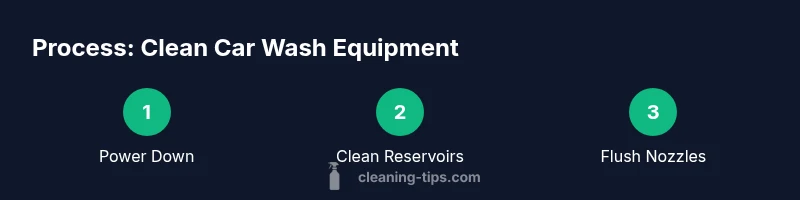
Power Down and Secure
Shut off power and unplug the machine when safe. If you can, lock out the equipment and keep bystanders away during cleaning to prevent accidents. This step reduces the risk of unexpected starts or electrical shocks.
Tip: Always verify power is off with a tester before touching any internal components. - 2
Empty and Rinse Reservoirs
Remove containers holding soap, wax, and cleaners. Rinse each reservoir with clean water to remove old residues, then wipe the interior surfaces dry.
Tip: Label containers and note refill dates to avoid cross-contamination. - 3
Clean Nozzles and Jets
Apply a mild cleaner to spray nozzles and flush with water. Use a soft brush to loosen clogs without bending small passages.
Tip: Never use metal tools on nozzles; plastic scrapers are safer. - 4
Wipe Exterior Surfaces
Wipe the outer cabinet, panels, and touchpoints with a microfiber cloth dampened with cleaner. Dry the surfaces to prevent streaks and moisture buildup.
Tip: Clean in the direction of surface grain or airflow for best results. - 5
Sanitize Hoses and Pumps
Dust or wipe down hoses; apply sanitizer if approved by the manufacturer and allowed for rubber components. Rinse thoroughly to prevent chemical residue.
Tip: Avoid bleach on rubber seals unless explicitly approved. - 6
Dry, Inspect, and Test
Air-dry all parts or use a clean towel. Inspect seals, gaskets, and fittings for wear or leaks. Reconnect power and run a short test cycle with water only before any actual use.
Tip: Listen for unusual noises during the test; stop and inspect if detected. - 7
Document Maintenance
Record what was cleaned, which cleaners were used, and any parts inspected. Schedule the next cleaning date and review the manual for any model-specific steps.
Tip: Set a recurring reminder to ensure regular upkeep.
Questions & Answers
How often should I clean a machine car wash?
Clean after heavy use and perform a deeper refresh monthly or per manufacturer guidance. Regular quick cleans help prevent residue buildup that can clog nozzles or reduce soap dispensing.
Clean after heavy use and schedule a deeper refresh monthly, or per the manufacturer’s guidance.
Can I use household cleaners on car wash equipment?
Use cleaners recommended by the equipment manufacturer or automotive-grade products. Avoid mixing cleaners and test a small area before full application.
Use manufacturer-approved cleaners and test on a small area first.
Is it safe to use vinegar or acidic cleaners on metal parts?
Vinegar can help with mineral deposits on some surfaces, but it may affect certain metals or finishes. Check compatibility with the manual before use.
Vinegar can be helpful but check compatibility first.
What are signs that maintenance is due?
Leaks, unusual noises, reduced soap dispensing, and inconsistent water flow indicate a maintenance check is needed. Schedule service if the problem persists after cleaning.
Leaks or unusual noises usually mean it’s time for a check.
Should I power off equipment before cleaning?
Yes. Always disconnect power before servicing or cleaning any electrical components to prevent shocks or starts.
Always power off before cleaning.
How can I prevent damage to seals and gaskets?
Use gentle cleaners, avoid harsh solvents, and lubricate per the manufacturer’s instructions. Replace worn seals promptly to prevent leaks.
Be gentle with seals and follow the manual for lubrication.
Watch Video
The Essentials
- Power down first and secure the area
- Use compatible cleaners and avoid harsh solvents
- Inspect seals and hoses during every cleaning
- Document maintenance to guide future care