Do You Need to Clean Your Humidifier? A Practical Guide
Learn why humidifier cleaning matters, how often to clean, and step-by-step methods to maintain healthy humidity in your home. Practical tips, safety reminders, and trusted sources for homeowners and renters.


Yes—humidifiers require regular cleaning to prevent mold, bacteria, and mineral buildup that can affect air quality and your health. This guide explains when and how to clean, what tools to use, and simple maintenance routines you can perform monthly. By following these steps, you reduce risks and keep humidity levels comfortable and safe.
Do You Need to Clean Humidifier: Why It Matters
If you rely on a humidifier to ease dry air, you might wonder: do you need to clean humidifier? The answer is yes. Cleaning prevents mold, bacteria growth, and mineral buildup that can spread into the air you breathe. According to Cleaning Tips, routine cleaning is part of responsible home maintenance and helps protect indoor air quality. Without regular cleaning, mineral dust from hard water can accumulate on surfaces, and stagnant water can breed microorganisms. A simple monthly clean plus a quick weekly rinse keeps your device operating efficiently and reduces the odds of odors, clogging, or white dust on furniture. In this guide, you’ll learn when to clean, which cleaners are safe, and how to create a simple maintenance routine that fits busy households. Clean humidifier components after each season for best long-term results.
Cleaning Frequency: How Often Should You Clean?
Frequency matters as much as technique. If you use the humidifier daily, plan for a quick rinse between uses and a full clean on a weekly or biweekly cycle, depending on water quality and odor indicators. If you only use the unit intermittently, a thorough monthly cleaning is typically sufficient. Always check the manufacturer’s instructions, because some models have unique parts that require special care. Keeping a regular schedule reduces mineral buildup, stops musty smells, and minimizes the spread of any bacteria. The Cleaning Tips team emphasizes that consistency beats intense, one-off cleanups. Use a reminder system if your calendar fills up—consistency is the core habit here.
Types and Cleaning Nuances: Cool-Mist vs Warm-Mist
Tools & Materials
- Distilled water(Use distilled water to minimize mineral residue and avoid white dust.)
- White vinegar(A 1:1 vinegar-to-water solution helps descale mineral buildup.)
- Mild dish soap(Dissolves grime without leaving harsh residues.)
- Soft-bristle brush(Gently scrubs tough residues without scratching surfaces.)
- Microfiber cloth(Drying and wiping surfaces to prevent moisture pockets.)
- Isopropyl alcohol (optional)(For quick disinfection of small parts.)
- Bleach (optional, only if recommended)(Disinfection option only when specified by manufacturer; never mix with vinegar.)
Steps
Estimated time: 40-60 minutes
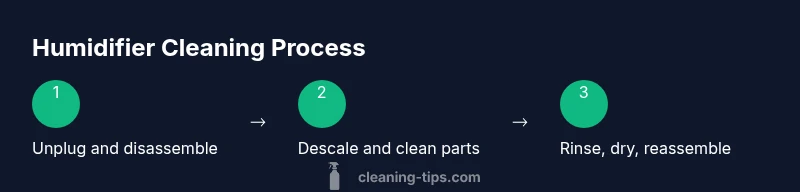
- 1
Power down and disassemble
Unplug the humidifier and remove the water tank. Detach any removable filters, lids, and base components you can safely separate. This reduces splash risk and allows thorough cleaning of every part.
Tip: Always unplug before handling; never submerge the main base. - 2
Drain and rinse
Pour out remaining water from the tank and drain channel. Rinse with clean distilled water to remove loose debris. A quick rinse prevents mineral residue from sticking during the cleaning cycle.
Tip: Avoid using tap water for the rinse if you can; it can introduce minerals that cling to surfaces. - 3
Prepare cleaning solution
Mix distilled water with white vinegar at a 1:1 ratio for descaling. If you prefer soap, add a drop of mild dish soap to a separate rinse bowl for grime.
Tip: Never mix vinegar with bleach in the same container. - 4
Scrub all accessible surfaces
Use the soft-bristle brush to scrub the tank interior, base, and any removable components. Focus on mineral scum, mold spots, and hard-to-reach corners.
Tip: Pay attention to the water intake and nozzle areas where buildup tends to accumulate. - 5
Rinse thoroughly
Rinse each part with distilled water until any vinegar scent is gone and there’s no soap residue. Dry each piece with a microfiber cloth as you reassemble.
Tip: Ensure all parts are completely dry before reassembly to prevent mold growth. - 6
Disinfection (optional, if allowed)
If the manufacturer permits, wipe with a diluted bleach solution or use a 70% isopropyl alcohol wipe on hard surfaces. Rinse thoroughly after disinfection.
Tip: Do not mix cleaners; follow guidelines on the product label. - 7
Dry, reassemble, and test
Reassemble the unit, run a short cycle with just clean water, and observe for unusual smells or leaks before regular use.
Tip: Keep the unit in a well-ventilated area during the first run.
Questions & Answers
Do I need to clean my humidifier regularly?
Yes. Regular cleaning—at least weekly for frequent use and monthly for lighter use—helps prevent mold, bacteria, and mineral buildup that can affect air quality.
Yes. Clean it regularly, especially if you use it often or notice odors or mineral residue.
What cleaning solution should I use?
A mixture of distilled water and white vinegar works well for descaling. Mild dish soap is good for grime. Disinfect only if your humidifier’s instructions permit.
Use vinegar with water for descales and a mild soap for grime; disinfect only if allowed by the manufacturer.
Can I use bleach in a humidifier?
Only if the manufacturer explicitly allows it. Never mix bleach with vinegar and rinse thoroughly to remove any residue before use.
Bleach is only okay if the manufacturer says so, and never mixed with vinegar.
How can I prevent mold in my humidifier?
Clean and rinse regularly, dry parts completely between uses, and use clean water. Store the unit dry when not in use.
Keep it clean, dry, and store it dry when not in use.
How often should I replace filters or wicks?
Follow the manufacturer’s guidelines for replacement intervals, which vary by model and usage. Don’t ignore sign of wear.
Check your model’s spec for replacement intervals and signs of wear.
Is it safe to run a humidifier in a dusty room?
Dust can clog parts and affect performance. Clean more often and consider using a closed environment when dust is heavy.
Dust means you should clean more often and maintain reasonable humidity levels.
Watch Video
The Essentials
- Always unplug before cleaning
- Use distilled water to minimize mineral buildup
- Disinfect only when manufacturer approves
- Dry parts completely before reassembly
- Establish a regular cleaning schedule