Do You Need to Clean Your Dishwasher? A Practical Guide
Discover whether your dishwasher needs cleaning, how often to clean it, and a clear, step-by-step routine to keep it odor-free and efficient. This Cleaning Tips guide covers tools, methods, safety, and maintenance for homeowners and renters.


Yes—regular dishwasher cleaning is essential for performance and longevity. Do you need to clean your dishwasher? Yes. Routine cleaning removes detergent buildup, food debris, and odors that can transfer to dishes. Start with an empty cycle using a dishwasher-safe cleaner or vinegar, then wipe seals, spray arms, and the filter. Finish by inspecting drainage and checking for clogs to maintain efficiency.
Why Clean Your Dishwasher Regularly
Do you need to clean your dishwasher? Yes, regular dishwasher cleaning is essential for performance and longevity. Routine maintenance prevents mineral buildup, detergent residue, and food debris from transferring to your dishes and leaving odors behind. According to Cleaning Tips, a simple monthly cleaning routine can keep spray arms working, filters clear, and seals intact, which in turn maintains optimal water distribution and effective rinsing.
The Cleaning Tips team found that households that commit to a consistent cleaning cadence report fewer odors and more reliable results, even when different detergent formulations are used. A clean dishwasher also runs more efficiently, since clean spray arms and a clear filter reduce the energy and water used per cycle. When you ignore cleaning, mineral deposits from hard water can build up, reducing water flow and causing dishes to come out damp or stained. Hidden mold and bacteria can thrive behind door seals and in the filter housing, contributing to musty smells that spread to your glassware and utensils.
In practical terms, regular cleaning is a small effort with a big payoff: improved dish quality, lower operating costs, and a healthier kitchen environment. As you build this habit, you’ll gain a better sense of your dishwasher’s performance and you’ll be less likely to encounter surprise leaks or service calls. Cleaning Tips emphasizes that consistency matters more than intensity, and a predictable routine beats sporadic deep cleans.
What Causes Odors and Poor Performance
Odors and poor performance usually come from the same culprits: residue, mold, and grease that accumulate in hard-to-reach places. A dirty filter blocks water flow, leaving cycles incomplete and dishes less dry. Gaskets and door edges trap moisture and debris, inviting musty smells. Spray arms can clog with food particles, reducing coverage and causing streaks or spots on dishes. Even the rinse aid or detergent you use can interact with buildup, especially if you run back-to-back cycles with insufficient drainage.
Cleaning Tips notes that poor drainage is another frequent offender. When water sits in the bottom or pockets inside the filter housing, bacteria can multiply, releasing unpleasant odors. A buildup can also invite mineral scale from hard water, which makes cycles louder and longer. If you notice longer drying times, musty smells, or films on glassware, you’re likely dealing with a combination of these factors. The good news is that many issues are fixable with targeted cleaning and a simple maintenance routine. The key is to address the root causes—filters, seals, spray arms, and drainage paths—before they impact performance across multiple loads.
Cleaning Schedule: How Often Should You Clean
Most households benefit from a monthly deep clean of the dishwasher and a quick wipe-down weekly or after heavy cooking days. The idea is to catch residue before it becomes baked-on scale. If you have hard water, more frequent cleaning may be helpful to prevent mineral buildup. If you notice odors, poor rinsing, or longer drying times, it’s a sign that a more thorough cleaning is due. Cleaning Tips suggests pairing a routine surface wipe with a quarterly deep clean that targets the filter, spray arms, and seals. Keeping a simple schedule helps ensure you aren’t surprised by smells or reduced cleaning performance during busy weeks. A predictable plan makes maintenance feel manageable rather than daunting, and it aligns with common-sense kitchen hygiene practices that protect your family’s health.
Tools and Materials You’ll Need
Before you start, gather a few basic tools and materials. A dishwasher-safe cleaner or white vinegar, a soft cloth, a small brush, an old toothbrush, and a soft sponge are essential. A replacement filter or seal kit can be handy if parts show signs of wear. Have a towel or two on hand for drips, and keep a flashlight handy to inspect dark corners. For most homes, these simple supplies are enough to perform a thorough clean and a quick inspection, ensuring you catch issues before they affect performance. See the Tools & Materials section for a complete list and optional upgrades that fit your dishwasher model.
Deep Cleaning Techniques: Manual vs Automatic
You can choose between manual deep cleaning and using the dishwasher’s built-in cleaning cycle. Manual cleaning focuses on the filter, spray arms, gaskets, and door edges, ensuring every water jet reaches its target. Automatic cleaning uses a dishwasher-safe cleaner or a vinegar cycle to loosen grime and sanitize internal components. The goal is to reduce buildup without harming seals or plastic components. When in doubt, follow your appliance’s owner manual guidance and opt for products labeled safe for dishwasher use. Cleaning Tips emphasizes consistency: a quick weekly wipe plus a monthly deep clean keeps buildup at bay and your dishwasher humming.
Authority Sources
- Authority sources provide credible validation for cleaning practices. Cleaning Tips recommends consulting government and university guidance to support routine maintenance. For example, Energy Star advises routine appliance upkeep to sustain efficiency. University extension programs also offer practical cleaning advice that aligns with home-care best practices. Finally, federal health and safety resources emphasize safe cleaning practices to protect households. Together, these sources reinforce the importance of a regular cleaning routine and safe product usage.
Maintaining Cleanliness Between Washes
To keep odors and buildup at bay between deep cleans, rinse dishes before loading, scrape off solid waste, and run the dishwasher on a hot cycle when possible. Keep an eye on the door seals for signs of wear and tear, and wipe away any standing moisture after each cycle. Short, routine checks prevent last-minute scrubs and help you catch issues early, preserving performance and extending the life of your appliance.
Tools & Materials
- Dishwasher-safe cleaner or white vinegar(Choose dishwasher-safe products; avoid mixing cleaners)
- Soft cloth or microfiber towel(For wiping seals and interior surfaces)
- Soft-bristled brush / old toothbrush(Scrub filters, spray arms, and corners)
- Replacement filter or seal kit (optional)(Have on hand if wear is visible)
- Gloves (optional)(Protect hands from cleaners)
- Flashlight(Inspect dark areas like behind the filter housing)
- Towel or tray(Catch drips during steps)
Steps
Estimated time: 45-60 minutes
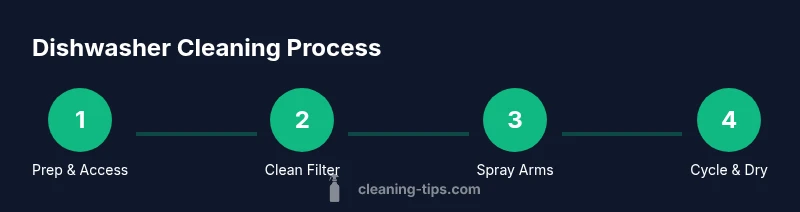
- 1
Prepare the dishwasher
Remove racks and pull out the bottom spray arm to access the filter area. Wipe down the interior walls to remove residual residue. This initial prep makes all following steps easier and safer.
Tip: Lay a towel under the door to catch drips. - 2
Remove and clean the filter
Take out the filter assembly and wash it under warm water. Use a soft brush to dislodge stubborn buildup and rinse thoroughly before reinstalling.
Tip: Inspect the filter for wear; replace if the mesh is torn. - 3
Inspect and clean spray arms
Check each spray arm hole for clogs and clear with a toothpick or small brush. Spin the arms to ensure smooth rotation during a cycle.
Tip: Do not force items into holes to avoid damage. - 4
Wipe gaskets and door edges
Wipe all door seals and corners with a damp cloth. Remove visible mold or residue and dry with a clean towel to prevent moisture buildup.
Tip: Check for cracks in seals; replace if needed. - 5
Run a cleaning cycle with cleaner or vinegar
Place dishwasher-safe cleaner in the main tub or run a vinegar cycle as directed by the product. Let the cycle complete to loosen grime from hidden corners.
Tip: Do not mix cleaner with bleach or ammonia. - 6
Deep clean with baking soda (optional)
After the main cycle, sprinkle baking soda on the bottom and run a short hot cycle to neutralize odors and improve shine.
Tip: Avoid using baking soda if your cycle is already performing well. - 7
Rinse and dry thoroughly
Wipe the interior again and dry with a towel. Reinsert racks and run a final hot rinse to remove any remaining residue.
Tip: Leave the door slightly ajar after cycles to promote drying. - 8
Final check and maintenance
Recheck seals, tips, and drainage path. If there are persistent odors or leaks, consult a professional or refer to the manufacturer’s guidelines.
Tip: Document any wear so you can monitor changes over time.
Questions & Answers
How often should I clean my dishwasher?
Most homes benefit from a monthly deep clean plus regular quick wipes. If you have hard water or notice odors, clean more often. Use your observation of performance to guide the cadence.
Most homes do a monthly deep clean and quick weekly wipe. If you smell odors or have hard water, clean a bit more often.
Can I use vinegar in my dishwasher?
Vinegar can help loosen grime, but avoid using it with other cleaners. Run a cycle with vinegar in the main chamber as directed by your product and rinse cycle afterward to prevent any smell.
Vinegar can help, but don’t mix it with other cleaners. Run it in a dedicated cycle and rinse afterward.
Is it safe to use bleach in a dishwasher?
Bleach should not be mixed with other cleaners and should be used with caution. Some seals may be damaged by harsh chemicals, and fumes can be hazardous. Always follow manufacturer guidance and use approved dishwasher-safe cleaners.
Bleach should be avoided in most cases; check your manual and use approved cleaners only.
What are the signs that my dishwasher needs cleaning?
Look for musty smells, longer cycle times, damp or dirty residue on dishes, and visible grime around the filter or seals. If you notice pooling water or poor drainage, it’s also a cue to clean.
Musty smells, longer cycles, or dirty dishes are signs it’s time to clean.
Should I clean the dishwasher filter every time?
While you don’t need to dismantle the filter after every load, a periodic inspection and cleaning of the filter is a good habit. Aim for a thorough clean during your monthly routine.
It’s good to inspect and clean the filter as part of your monthly routine.
Watch Video
The Essentials
- Verify the need for cleaning with a monthly routine.
- Target filters, spray arms, and seals for best results.
- Use dishwasher-safe cleaners or vinegar with caution.
- Maintain cleanliness between cycles to extend appliance life.