How to Clean Grill: A Practical Step-by-Step Guide
Learn how clean grill safely and effectively with Cleaning Tips. A practical, step-by-step guide to remove grease, sanitize surfaces, and extend grill life with easy-to-follow methods.


Learn how clean grill to remove built-up grease and burnt-on debris, restoring flavor and grill safety. This guide covers prep, basic and deep-clean methods, and maintenance tips you can perform in under an hour. You’ll need basic tools and a few common cleaners, plus follow safety steps to protect yourself and your grill.
Why Clean a Grill Matters
A clean grill performs better, tastes better, and lasts longer. If you’re wondering how clean grill, the answer starts with heat control and safe operation. Built-up grease creates flare-ups, uneven cooking, and smoky flavors you didn’t intend. Regular cleaning reduces the risk of dangerous buildup, helps avoid flare-ups, and extends the life of burners and grates. According to Cleaning Tips, a scheduled cleaning routine after every few uses prevents stubborn char and makes future maintenance faster. When you approach grill cleaning as a simple, repeatable ritual, you’ll spend less time scrubbing and more time enjoying meals. A clean grill also minimizes the transfer of old flavors to new food, preserving the intended seasoning and grill marks that make barbecue satisfying. For homeowners and renters, this is a practical habit that pays off in safety and flavor. Whether you have a gas, charcoal, or electric grill, the core principles remain the same: remove debris, protect heat distribution surfaces, and re-season as needed.
Safety and Prep Essentials
Before you touch any hot metal, prioritize safety. Ensure the grill is off and cooled to a safe temperature before starting any cleaning. For gas grills, disconnect the propane tank or shut off the gas valve; for charcoal grills, let the coals cool completely and remove ashes. Put on heat-resistant gloves, and keep a spray bottle of water nearby for flare-up control. Gather your tools and cleaning agents, and lay down a large towel or drop cloth to catch drips. Remove grates and any trays; place them in a basin with warm, soapy water to loosen grease. This prep stage sets the stage for a thorough cleaning without risking burns or damage. The Cleaning Tips team emphasizes sticking to non-abrasive cleaners on coated surfaces to preserve protective finishes. If you’re cleaning a stainless-steel exterior, use a microfiber cloth to avoid micro-scratches, and never spray cleaners directly onto electrical components.
Deep-Clean Techniques for Grates and Interior
Now you’ll tackle the heavy-duty grime. Start by scrubbing grates with a stiff grill brush or scraper to remove char; for stubborn spots, apply a paste of baking soda and water, let it sit for a few minutes, then scrub again. For removable parts, soak in warm, soapy water for 15–30 minutes to loosen fat and grease. Rinse thoroughly with clean water and air-dry before reinstalling. Wipe interior surfaces with a damp cloth, avoiding burner vents and orifices; never use high-pressure water on gas valves. If your grill has a porcelain-coated grate, avoid metal brushes that can scratch the surface. For charcoal grills, clean the ash catcher and remove ash buildup. When using cleaners, choose eco-friendly options: a drop of dish soap and warm water often suffices. Cleaning Tips suggests finishing with a light coating of oil on grates to prevent rust and give seasoning a head start for your next cook.
Exterior Cleaning, Burners, and Maintenance
Don’t neglect the exterior, including control knobs and the hood. Wipe surfaces with a damp cloth and mild soap, then dry to prevent streaks. For gas grills, inspect burner ports for clogs after cleaning; use a small brush or pin to clear obstructions, but never poke holes in the burners. Clean the lid and hood to improve heat reflection and prevent rust. Periodically check hoses, valves, and connections for signs of wear or leaks. If you notice gas odor or hissing, stop using the grill and call a professional. Reassemble all parts once everything is dry. Finally, reseason the grates with a light coat of oil before your next cook. This routine reduces flare-ups, improves heat distribution, and makes future cleanups faster.
Quick Maintenance Habits to Save Time
Adopt a minimal routine that fits into your cooking cycle. Brush grates while warm after use to remove loose residue; wipe the hood and interior weekly, especially during heavy grilling seasons. Keep a spray bottle of water and a small amount of oil on hand for quick touch-ups. After each cook, unplug or turn off gas, close the lid, and wait for the grill to cool before cleaning. By addressing buildup promptly, you’ll reduce deep-clean time and extend the life of gaskets and seals. Cleaning Tips highlights that small, consistent actions beat marathon scrubs, saving you effort and preserving the grill’s performance across seasons.
Tools & Materials
- grill brush with stiff steel bristles(for removing burnt-on residue from grates)
- bucket of warm, soapy water(soak removable parts)
- non-abrasive scrub sponge(gentle yet effective on coated surfaces)
- stainless steel scraper(alternative to brush for stuck bits)
- rag towels or old cloths(dry and wipe surfaces)
- degreaer or mild dish soap(for cleaning grease and grime)
- heat-resistant gloves(protect hands during cleaning)
- optional: small screwdriver or pin(unclog burner ports on some models)
Steps
Estimated time: 40-60 minutes
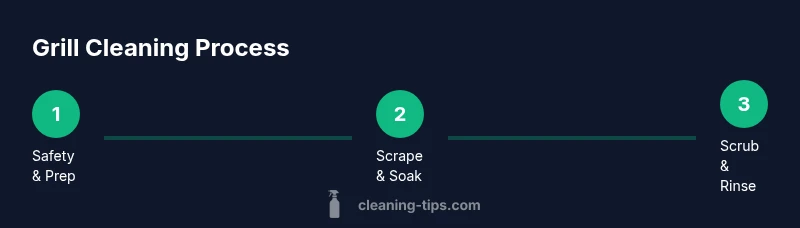
- 1
Safety prep and disassembly
Power down and disconnect gas or ensure charcoal is fully cooled. Remove grates, flame tamers, and drip pans. Set parts on a labeled tray and let everything cool before cleaning.
Tip: Keep track of screws and small parts to avoid misplacing them. - 2
Scrape loose debris
Use a stiff grill brush or scraper to dislodge burnt-on residue from grates. Work in firm, overlapping motions to reveal clean metal beneath.
Tip: Do this while grates are still warm for easier removal of grime. - 3
Soak removable parts
Submerge grates and other removable parts in warm, soapy water for 15–30 minutes to loosen grease. Add baking soda for extra grease-cutting power if needed.
Tip: Avoid soaking porcelain-coated parts too long to prevent micro-cracking. - 4
Scrub and rinse grates
Scrub each grate with a non-abrasive pad, rinse thoroughly, and let dry completely before reinstalling. For stubborn spots, reapply paste of baking soda and water.
Tip: Rinse with hot water to help dissolve grease. - 5
Clean interior and burners
Wipe the interior walls with a damp cloth, avoiding burner ports or valves. Do not spray water directly onto electrical components or gas controls.
Tip: Use a dry brush to prevent pushing debris into vents. - 6
Exterior care and reassembly
Wipe the exterior with mild soap and water, then dry. Reassemble grates and trays once all parts are dry, then wipe a thin coat of oil onto grates.
Tip: Polish stainless surfaces with a microfiber cloth for shine. - 7
Test and maintenance check
Light the grill briefly to ensure proper ignition after cleaning. Check hoses and connections for leaks and test heat distribution before cooking.
Tip: If you detect a gas odor, shut off immediately and seek professional help.
Questions & Answers
What grill parts should you clean first?
Begin with the grates and drip tray to establish a clear workspace. This prevents debris from falling into fresh cleaning areas and makes it easier to reach interior surfaces.
Start with the grates and drip tray for a quick, clean workspace.
Can I use bleach or harsh chemicals on a grill?
Avoid bleach and harsh cleaners on coated or stainless surfaces. Use mild dish soap, vinegar, or baking soda instead to protect finishes and safety.
Avoid harsh cleaners; use milder options like dish soap or vinegar.
Is it safe to soak grill grates?
Soaking is generally safe for most grates, but avoid prolonged immersion for porcelain-coated parts to prevent damage. Rinse well after soaking.
Soak grates briefly, avoid long soaks for porcelain-coated parts.
How often should you clean a grill?
Clean after cooking sessions or after every few uses to maintain performance. Regular quick cleanups save deeper scrubbing later.
Clean after cooking or a few uses to stay on top of buildup.
What should I do to prevent rust after cleaning?
Dry all parts completely and apply a light coat of oil to grates before storing. Store in a dry area to minimize moisture exposure.
Dry thoroughly and oil grates to prevent rust.
Are gas grills easier to clean than charcoal grills?
Gas grills are generally easier to clean due to less ash, but both require routine scrubbing of grates and removal of grease buildup. Charcoal requires ash disposal as well.
Gas grills usually clean up faster, but both need regular scrubbing.
Watch Video
The Essentials
- Turn off and cool before cleaning
- Scrape, soak, and scrub removable parts
- Re-season grates after cleaning