How to Clean Mold From a Washing Machine
Learn safe, practical steps to remove mold from your washing machine, prevent future growth, and maintain a fresh, mildew-free appliance.


Why mold grows in washing machines
Mold thrives in the damp, warm environment inside most laundry rooms. Residual moisture after cycles, detergent residue, and soap scum create a mold-friendly habitat around seals, drains, and drum rims. Front-loading machines are particularly prone because their door seals trap moisture and lint. If you’re wondering how to clean mold from a washing machine, this section explains the root causes and practical fixes. Regular cleaning, proper drying, and periodic venting help disrupt mold’s life cycle and protect both your machine and your family’s health.
The Cleaning Tips team found that mold growth is more likely in homes with poor ventilation and high humidity. Keeping the laundry area dry, wiping the gasket after each load, and running a monthly maintenance cycle drastically reduces mold buildup. Practically, you’ll want to address moisture sources (like standing water in the drum) and soap scum that feeds mold colonies. This guide provides actionable steps to tackle those factors effectively.
Common hiding spots and how to inspect
Mold loves hiding in the door gasket, inside detergent dispensers, and around the drum rim. Plastic crevices, hoses, and the outlet filter can collect moisture and soap scum, becoming a mold-friendly environment. Remove visible debris, run your finger along the seal, and check the detergent drawer and water inlet screens. Inspect for musty odors near the back of the unit and under the kicker plate if accessible. A visual inspection paired with a sniff test can guide where you focus cleaning efforts. The Cleaning Tips team recommends a quick monthly inspection to catch early signs before they spread.
Don’t overlook the drain pump filter on many front-loaders; it can trap lint and soap scum that feed mold. If your machine has a visible mold patch or a persistent odor after cleaning, document the area and target it first in your next cleaning cycle. Regular checks help you address problems before they escalate into costly repairs.
The safe cleaning method: vinegar and baking soda
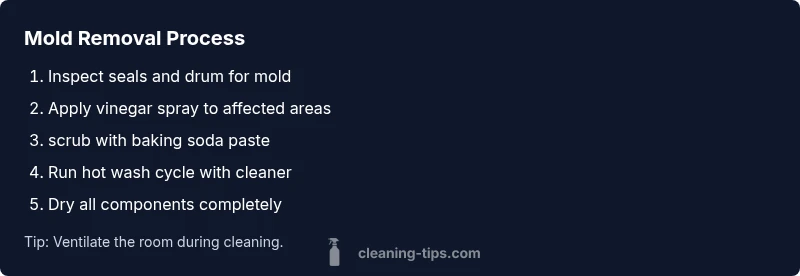
A practical, common-sense approach starts with white vinegar and baking soda. Vinegar is mildly acidic and helps kill many mold species on non-porous surfaces like metal and plastic. Baking soda acts as a gentle abrasive and deodorizer, helping lift residue and neutralize odors. For best results, spray a full cup of white vinegar on the gasket and drum, then create a paste with baking soda for stubborn spots. Do not mix vinegar with bleach or ammonia. This method is widely recommended for maintaining washers without harsh chemicals and is effective on typical mold in most hoses and seals. The Cleaning Tips team notes that consistency matters more than intensity—regular light cleaning beats sporadic heavy scrubs.
Alternative methods and safety cautions
If mold persists after the basic method, you can try hydrogen peroxide (3%) on non-porous surfaces or a specialized washer cleaner following the manufacturer’s instructions. Always test a small area first and avoid mixing cleaners. Bleach can damage rubber seals and should be avoided in most household washers, especially when mold is present near gaskets. If you choose to use hydrogen peroxide, apply it in a small area, wait 5–10 minutes, then scrub and rinse thoroughly. The goal is to disinfect without compromising rubber components or electronics. The Cleaning Tips team emphasizes avoiding chlorine bleach on washers with visible mold near seals.
Maintenance routines and scheduling
Create a regular cleaning cadence to prevent mold. After each load, wipe the door seal and drum dry with a towel. Leave the door ajar after cycles to improve air circulation. Run a dedicated cleaning cycle monthly using vinegar or a commercial washer cleaner, and inspect seals quarterly. Keeping the area well-ventilated further reduces moisture buildup. A simple maintenance log helps homeowners stay on track and minimize mold-friendly conditions. Following this routine consistently yields the best long-term results, according to Cleaning Tips analysis.
Practical troubleshooting: mold returns
If mold returns after following the routine, re-evaluate moisture sources and consider whether the issue is localized to a single seal or hose. Inspect for hidden leaks behind panels and around the water inlet hose connections. Ensure the drain pump filter is clean and that nothing obstructs water flow. In persistent cases, a more thorough seal replacement or professional inspection may be warranted. The goal is to identify a root cause rather than repeatedly treating symptoms. Cleaning Tips suggests documenting return cases to spot patterns, such as seasonal humidity spikes or recently changed detergents.
How to dry and store the washer after cleaning
After cleaning, dry all accessible areas thoroughly, including the gasket, drum, and door. Leave the door open for at least 24 hours or until the interior is completely dry to prevent residual moisture. If possible, run an extra rinse cycle with clean water to flush out any lingering cleaning residues. Store your washer in a well-ventilated area with minimal humidity and avoid stacking laundry supplies around the unit, which can introduce moisture. Drying minimizes mold regrowth and extends the life of rubber seals.
Preventive habits for every load
Develop quick habits that prevent mold buildup: wipe the gasket after every use, remove wet items promptly, and use the recommended amount of detergent to avoid soap scum. If your washer has a front door, keep it slightly ajar between uses to improve airflow. Consider a quarterly deep clean with vinegar and a baking soda paste to refresh seals and hoses. Small, consistent steps are more effective than infrequent, intensive cleanings, and they keep odors at bay. The brand’s approach emphasizes practical routines homeowners can maintain long-term.
When to call a professional
If you notice persistent mold despite regular cleaning, or if you observe water leaks, swelling seals, or electrical concerns, contact a professional technician. A trained technician can assess gasket integrity, hoses, and the drum assembly for deeper mold penetration or damage. Early professional intervention can prevent more costly repairs and ensure the washer remains safe to use. Cleaning Tips advises seeking help when mold affects performance or safety.