How to Install a Clean Windows 11: Step-by-Step
Learn how to perform a clean Windows 11 installation using a bootable USB, with backups and safety checks. This guide covers prerequisites, the install process, post-install updates, and best practices for a healthy PC.


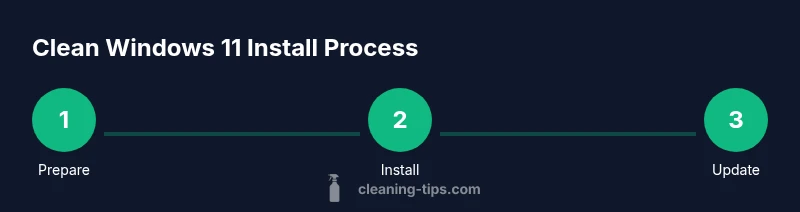
Performing a clean install of Windows 11 involves booting from a prepared USB drive containing the official ISO, then following the on-screen prompts to format the target drive and install a fresh system. Before you start, ensure your device meets minimum requirements, back up data, and have a valid license or digital entitlement ready.
Why perform a clean install of Windows 11?
If you’re wondering how to install clean windows 11, a clean install is the best approach for a fresh start. It replaces the entire operating system, removing residual files, outdated drivers, and unneeded software that can accumulate over time. For many users, especially when upgrading hardware or moving from an older Windows version, a fresh install delivers a snappier boot, cleaner disk space, and a simpler starting point for configuration. According to Cleaning Tips, a clean installation can help reduce system clutter and improve long-term performance when you’re starting fresh. You’ll also avoid legacy bugs that may linger after an in-place upgrade. While a clean install requires a bit more prep, the payoff is a stable baseline you can customize without interference from prior installations. This article walks you through a careful, safe approach that keeps your data protected and your system healthy. Remember: a clean install is a deliberate process, not a casual upgrade. If you’re unsure, practice on a test drive or consult a professional.
System readiness: compatibility and prerequisites
Before you begin, ensure your device can run Windows 11 by checking official requirements. If your PC doesn’t meet these criteria, a clean install may fail or run poorly. Cleaning Tips analysis shows that users who verify compatibility before starting report smoother installations and fewer post-installation issues. Also verify you have a stable power source during the install to avoid interruptions. If upgrading from Windows 10, confirm your license type (digital entitlement) so activation proceeds smoothly after the clean install.
Data protection: backing up and safeguarding assets
Back up all critical files and personal data to an external drive or trusted cloud storage. Create a separate recovery plan for important documents, photos, and work files. This step minimizes the risk of data loss and gives you confidence to proceed through the OS reinstallation. After the backup, you can safely proceed with formatting the Windows drive during the installation process.
Creating a bootable USB: ISO to drive
Download the Windows 11 ISO from the official Microsoft site and use a trusted tool to write it to a USB drive. Ensure the USB is at least 8 GB and empty or contains only non-essential data. The bootable drive should be tested on another machine or checked in the BIOS/UEFI boot menu to confirm the device appears as a boot option. This step creates the reliable medium you’ll use to launch the installer on your target PC.
The installation journey: what happens after booting
Boot from the USB, then follow the installer prompts. Choose Custom install to perform a clean setup, delete existing Windows partitions, and create a fresh primary partition. The setup will guide you through region, keyboard layout, and user preferences. Keep your Microsoft account details handy if you plan to sign in with a Microsoft account during setup. After the initial install, you’ll land at the desktop with a clean, modern Windows 11 environment awaiting configuration.
Post-install essentials: updates, drivers, and activation
Once Windows 11 is installed, connect to the internet and install essential drivers from your device or motherboard maker. Run Windows Update to fetch the latest patches and features. Confirm activation status and ensure your license is active. This stage helps prevent security gaps and keeps your system protected with the latest improvements.
Aftercare: restoring data and optimizing performance
Copy back your backed-up files and reinstall needed applications. Organize your start menu, set up a backup routine, and enable security features such as Windows Defender, Firewall, and Quick Start options. Regular maintenance, like disk cleanup and occasional clean-up of startup programs, keeps your fresh Windows 11 setup running smoothly.
Tools & Materials
- USB drive (8 GB or larger)(Blank or data-backed; format to FAT32 if needed)
- Windows 11 ISO from Microsoft(Official download)
- Bootable USB creation tool (Rufus or Windows Media Creation Tool)(Used to write the ISO to USB)
- External backup storage(External drive or cloud storage to back up data)
- A second PC (optional)(If you don't have a Windows PC, you can use a friend's machine to download the ISO)
Steps
Estimated time: 60-150 minutes
- 1
Check compatibility and back up data
Confirm your device can run Windows 11 by checking official requirements and BIOS/UEFI settings. Back up important files to external storage or cloud before making changes.
Tip: Use a separate USB drive as a live backup to your critical files. - 2
Download ISO and create bootable USB
Download the Windows 11 ISO from Microsoft and use a tool to write it to your USB drive, making sure the process completes without errors.
Tip: Verify the USB is bootable by checking for a boot menu option on restart. - 3
Boot from USB and start installer
Insert the USB, restart the PC, and boot to the USB. The Windows installer will load and present setup options.
Tip: If you don’t see the USB option, disable fast boot in BIOS/UEFI. - 4
Choose Custom install and format drives
When prompted, select Custom: Install Windows only (advanced). Delete existing Windows partitions and create a new primary partition for the fresh install.
Tip: Only delete partitions you know are Windows-related to avoid data loss. - 5
Follow setup prompts and choose options
Continue with region, keyboard, and account setup. Sign in with a Microsoft account if desired, or create a local account.
Tip: Use a strong password and enable account security features. - 6
Install drivers and updates
After Windows finishes, install essential drivers and run Windows Update to fetch the latest patches.
Tip: Connect to a stable internet connection for a smooth update process. - 7
Restore data and reinstall apps
Copy back your backed-up data and reinstall programs as needed. Verify data integrity and license activation.
Tip: Install only trusted apps and avoid bloatware. - 8
Create a current backup and finalize
Set up a fresh backup routine and verify your activation status. Create a recovery drive for future outages.
Tip: Keep recovery media updated after each major change.
Questions & Answers
Do I need a product key for a clean Windows 11 install?
If you have a digital license, Windows 11 will activate automatically after the clean install. If not, you’ll be prompted to enter a product key during setup.
With a digital license, activation happens automatically after a clean install.
Can I perform a clean install on a PC that already has Windows 11?
Yes, a clean install replaces the existing OS. Back up your data first and ensure you have needed drivers and updates ready.
Yes, you can replace Windows 11 with a clean install after backing up your data.
What if my PC doesn't meet the minimum requirements?
Windows 11 may not install or run properly on non-compliant hardware. You should either upgrade the device or install an older supported OS.
If the device isn’t compatible, installation may fail or run poorly.
Should I format all drives during a clean install?
Only format the Windows drive as part of the clean install. Leave other drives intact to avoid data loss.
Format only the Windows partition to keep data on other drives safe.
How long does a typical clean install take?
Duration varies by hardware, but expect around half an hour to a couple hours depending on speed and updates.
It usually takes between half an hour and a couple hours based on hardware.
What should I do about drivers after install?
Install essential drivers from the PC or motherboard maker and run Windows Update to fetch remaining drivers.
Install critical drivers first, then run updates for the rest.
Watch Video
The Essentials
- Back up data before starting
- Verify hardware compatibility first
- Use a bootable USB to install Windows 11
- Choose Custom install to perform a clean setup
- Update and activate Windows after installation