Kettlebell Clean and Press: A Complete How-To
Master the kettlebell clean and press with safe form, progressive steps, and programming tips. Learn setup, technique, common faults, and how to build a reliable routine for total-body strength.


According to Cleaning Tips, this guide shows how to master the kettlebell clean and press with safe, solid form, practical progressions, and a clear training plan. You’ll learn the two-handed clean, the strict press, common faults, and how to program sets and reps. Before you start, ensure a suitable kettlebell weight, a stable surface, and a thorough warm-up.
Understanding the kettlebell clean and press
The kettlebell clean and press is a two-part lift that combines a powerful hip hinge and a controlled upper-body press in a single drill. The sequence typically begins with a hinge to swing the kettlebell into the rack position, followed by a press to full extension. This movement recruits the hips, glutes, hamstrings, core, scapular stabilizers, and the shoulder girdle. Mastery relies on clean mechanics, bracing, and controlled breathing. Start with a weight you can move with precision, and progress gradually as technique becomes more reliable. This exercise is efficient for building full-body strength, developing grip, and improving work capacity for daily tasks and sport.
Notes for this section should emphasize the connection between hip drive and shoulder stability, and how a clean rack position protects the spine during the press.
Proper setup and grip
A solid setup starts with a stable stance, feet roughly hip-width apart, with a slight toe flare to align your knees with your toes. The grip should be relaxed yet firm on the handle at the base of the horn, and the wrist should stay neutral to avoid unnecessary strain. Brace the core, pull the shoulder blades down and together, and maintain a tall spine position throughout the lift. Your breathing should be controlled: inhale as you prepare, exhale briefly during the clean, and exhale fully on the press. This section covers cue-rich steps to ensure balance, grip, and spine safety throughout the movement.
Pro tip: keep your chest proud and lats engaged to protect the low back as you swing into the rack.
Step 1: the clean (Power clean) explained
The clean begins with a hinge and an explosive hip drive to propel the kettlebell upward. The goal is to land the kettlebell softly in the rack position with the elbow close to the body and the kettlebell resting against the forearm. Keep the wrist neutral and avoid pulling with the arm alone; the power should come from the hips and legs, not the shoulder. Slow down the descent after each rep to maintain control and build precision.
Tip: visualize the floor-to-bar path and use your hip hinge to generate momentum rather than pulling with the arms.
Step 2: the press (Strict press) explained
From the rack, press the kettlebell overhead in a controlled line, maintaining a tall torso and a stable ribcage. The elbow should lock out under the kettlebell while the opposite hand can lightly assist by guiding the weight into position if needed. Avoid leaning backward or flaring the ribs; brace the core and exhale on the press to stabilize the midsection. Finish with the kettlebell stacked over the center of the foot and the wrist in a neutral position.
Pro tip: keep the non-working hand close to your body for balance and practice a strict, vertical press before adding any push press variations.
Step 3: breathing and rhythm & step 4: combining clean and press into a smooth cycle
Coordinate breath with each phase: inhale at setup, exhale through the transition and press. A smooth cycle minimizes jerk and reduces the risk of shoulder strain. Practice separate components (clean, rack, press) before combining them into a fluid sequence. Use a metronome or tempo cues to establish consistent rhythm and ensure each rep maintains proper alignment and control.
Tip: start with slower tempo to lock in form, then gradually increase speed while preserving technique.
Step 4: programming and progression for steady gains
Begin with a conservative frequency and volume, increasing sets or reps as technique remains clean and comfortable. Track reps per side, rest between sets, and perceived exertion rather than chasing numbers alone. A typical progression involves short blocks of practice, followed by gradual increases in volume, then a move to heavier kettlebells when form remains solid. This approach reduces risky overload and supports long-term consistency.
Pro tip: incorporate regular form checks with a mirror or video to ensure your technique stays on track as you progress.
Safety, warm-up, and cooldown
Always warm up joints and mobility before lifting: ankle, knee, hip, thoracic spine, and shoulder ranges should be prepared for dynamic movement. After training, cool down with light mobility work for the hips, spine, and shoulders, plus a brief breathing exercise to calm the system. Use a comfortable surface and clean, dry hands to prevent slipping. If you experience pain beyond normal fatigue, pause and reassess technique or seek professional coaching.
Maintenance and safety notes for longevity
Keep your training surface clean and stable; inspect the kettlebell handle for stability and grip texture. Regularly assess your form through video feedback and schedule deload weeks to prevent overtraining. The kettlebell clean and press is a high-skill lift that rewards patience and consistency; prioritize technique over lifting heavier weights to protect joints and reduce injury risk.
Tools & Materials
- kettlebell(Choose a weight you can control for multiple reps with good form; start lighter if unsure.)
- exercise mat or padded floor(Provides grip and knee/forearm comfort on hard floors.)
- water bottle(Stay hydrated during the workout.)
- towel(Optional for sweat and grip maintenance.)
- mirror or camera for form feedback(Helpful for self-coaching and technique refinement.)
Steps
Estimated time: 20-40 minutes
- 1
Set up and warm up
Position your stance, grip, and spine. Begin with 5-10 minutes of dynamic warm-up (hip h swings, thoracic rotations, shoulder mobility) to prepare the hips, lats, and shoulders for the lift. Establish a light tempo to practice the hinge and basic rack position.
Tip: Prioritize posture and brace the core before any movement. - 2
Hinge, grip, and pull into rack
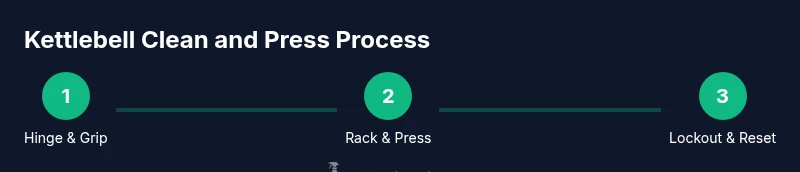
Hinge at the hips with a slight knee bend, drive through the heels, and guide the kettlebell with a strong hip thrust into the rack position. The elbow should stay close to the body with the kettlebell resting against the forearm. Maintain a neutral wrist and tall spine.
Tip: Lead with the hips, not the arms. - 3
Clean to rack position
Allow the kettlebell to sweep from the swing into the rack, landing softly with the elbow tucked in. The weight should sit on the back of the wrist, not the hand, with the forearm vertical. Keep the shoulder blades set and the ribs braced.
Tip: Aim for a quiet, controlled catch rather than a forceful pull. - 4
Press from the rack
From the rack, push the kettlebell overhead in a straight line, locking the elbow at full extension. Maintain torso bracing and avoid leaning or twisting. Lower with control back to the rack when finished.
Tip: Exhale as you press to support airway stability. - 5
Breath, reset, and repeat
Pause briefly between reps to reset the stance and grip. Keep a steady tempo and avoid rushing the cycle. Reassess technique after several reps if fatigue begins to compromise form.
Tip: Use a metronome or tempo cue to maintain rhythm. - 6
Cool down and recover
Finish with light mobility work for the hips, shoulders, and thoracic spine. Hydrate and perform gentle breathing exercises to promote recovery. Note how technique felt and plan the next session with progressive overload in mind.
Tip: Consistency beats intensity for long-term gains.
Questions & Answers
What muscles does the kettlebell clean and press work?
The movement targets the hips, glutes, hamstrings, core, and shoulder girdle. The clean develops hip drive and grip strength, while the press emphasizes shoulder stability and upper-body strength. Core bracing helps transfer power between the lower and upper body.
It strengthens the hips, core, and shoulders, with a strong emphasis on hip drive for the clean and shoulder stability for the press.
What size kettlebell should I start with?
Start with a weight you can clean and press with good form for multiple reps. Prioritize technique over loading, and gradually increase weight as form remains solid without discomfort.
Choose a weight you can control with good form; increase once technique is solid.
How many sets and reps should I perform?
A common starting approach is 3-4 sets of 4-6 reps per side, 2-3 sessions per week. Adjust based on your recovery, experience, and available equipment.
Try a few sets of reps per side and increase gradually as you gain strength.
Can I do this exercise every workout?
Not every workout. Pair the kettlebell clean and press with a varied routine that includes mobility and lighter conditioning days to allow recovery between sessions.
Give your muscles time to recover between heavy lifting days.
What are common faults and fixes?
Common faults include using the arms to lift instead of driving with the hips and losing torso bracing. Fixes include emphasis on hip extension, maintaining a tall spine, and keeping the elbow close to the body during the clean.
Watch for arm pulling and arching the back; use hip drive and braced core instead.
Is it safe for beginners to learn the clean and press?
Yes, with proper coaching, lighter loads, and a focus on form. Start with slow tempo, single reps, and ensure a solid warm-up and mobility routine.
Yes, but start with basics and build up gradually under proper guidance.
Watch Video
The Essentials
- Learn the two-phase kettlebell clean and press with hip-driven clean and controlled press.
- Prioritize technique and bracing; progress gradually to prevent injury.
- Use a stable surface and appropriate weight to maintain form.
- Incorporate warm-up and cooldown to support long-term consistency.