What kind of cleaning solution for Roomba: safe practices
Discover safe cleaning solutions for Roomba robots, what to avoid, and practical steps for exterior cleaning and mop accessories, with model considerations.


Roomba vacuums are designed for dry cleaning and should not have liquids added to their intake or dustbin. Use a mild, pH-neutral soap only on the exterior when needed, and dampen cloths for surface cleaning. If your model includes a mop function, follow the manufacturer’s guidance and use water or a manufacturer-approved solution on the mop pads. The Roomba remains a dry-cleaning device at its core.
Why this matters for Roomba users
If you're trying to improve cleaning results, you might wonder whether you can use cleaning solutions with a Roomba. The short answer is: these robots are designed primarily for dry cleaning, and most models do not require, or even allow, cleaning solutions in their operation. According to Cleaning Tips, using liquids in a Roomba’s path can lead to residue buildup, sensor interference, and potential damage to seals and electronics. This is especially true for newer models that rely on sealed chassis. Before pouring anything on the floor or into the vacuum, check your model’s manual and stick to manufacturer-approved practices. In practice, the safest approach is to keep the Roomba dry and clean the surrounding floor with a suitable floor cleaner instead of adding liquids directly to the robot.
How Roomba cleans: dry-by-design
Roomba robots rely on suction, brushes, and smart sensors to map rooms and pick up debris. The dustbin, filters, and roller brushes are designed to operate with dry debris. Liquids can seep into the bearings and electrical components if spilled, and moisture can affect sensors that rely on infrared or visual cues. The practical takeaway is simple: treat Roomba as a dry-cleaning device and use appropriate cleaners for the floor itself, not the robot. When you need to tackle sticky spills on hard floors, use a floor cleaner separately and maintain a dry environment for the Roomba’s walking surfaces.
Liquids and Roomba models: what is allowed
Not all Roomba models include a mop feature. If your model lacks a mopping module, liquids should not be used in any part of the cleaning cycle. For models with mop adapters, the official guidance is to use only water or a manufacturer-approved cleaning solution on the mop pad. Avoid pouring cleaners directly onto floors in the Roomba’s vicinity, and never spray liquids into the dustbin intake or around sensor ports. When in doubt, stick to water and mild, floor-safe cleaners on the floor itself, not on or inside the robot.
Floor cleaning with a mopping feature: what you can use
If you own a Roomba with a mopping accessory (or a separate mop-robot combo), follow the exact instructions from iRobot or the device’s manufacturer. In most cases, use plain water or a very mild, floor-safe solution that is explicitly approved for mop pads. Harsh chemical cleaners, ammonia-based products, vinegar, or solvents can leave residues, degrade mop materials, or cause corrosion. Always pre-wet mop pads with a small amount of solution and test on a hidden floor area first. Remember: the goal is to use a product that won’t leave sticky residues that could interfere with the Roomba’s sensors or the pads’ ability to pick up grime.
Cleaning the Roomba’s exterior, sensors and brushes
Keep the robot itself dry during routine cleaning. Remove the dustbin, filters, and brushes and brush away hair with a dedicated cleaning tool. Wipe the exterior with a damp microfiber cloth using a mild soap solution if needed, avoiding any direct spray on sensors, charging contacts, or openings. For stubborn grime, a cotton swab dampened with isopropyl alcohol (70%) can be used sparingly around hard-to-reach areas, but never soak components. Dry thoroughly before reassembling. Regular maintenance helps avoid buildup that could necessitate a liquid-based cleaning later on.
Practical guidelines for safe use and best practices
- Never spray liquids directly into the Roomba’s openings.
- Use floor cleaners on the floor only, not inside the robot.
- For mop-equipped models, only use liquids approved by the manufacturer and apply to the mop pad, not the robot.
- Test any cleaner on a inconspicuous area of your floor before broad use.
- Schedule routine cleaning of brushes and sensors to prevent hair and grime buildup.
Tools & Materials
- mild dish soap(Dilute in water for exterior cleaning if needed)
- water(For damp wiping and rinsing mop pads (if applicable) and exterior surfaces)
- microfiber cloths(Lint-free, for wiping surfaces and sensors without scratching)
- soft brush(Gently removes hair from brushes and wheels)
- cotton swabs(For tight spaces around sensors and gaps)
- isopropyl alcohol (70%)(Disinfects exterior surfaces; avoid electronics; use sparingly)
- spray bottle(For applying diluted cleaner to cloth, not directly to Roomba)
- non-abrasive cleaner (pH-neutral)(Use only on floors; not in/onto Roomba components)
Steps
Estimated time: 20-30 minutes
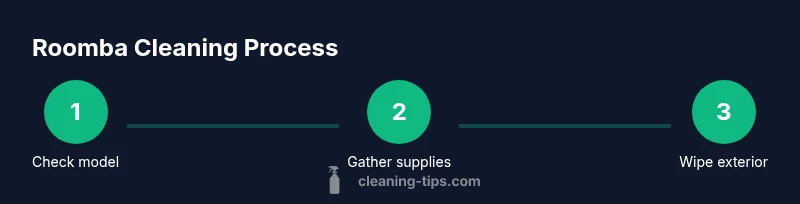
- 1
Check model and manual
Identify your Roomba model and review the user manual to confirm whether it has any mop functionality or liquid-use guidance. This determines whether liquids are ever appropriate and which cleaning steps you should avoid. If it lacks a mop module, skip liquid steps entirely.
Tip: When in doubt, contact the manufacturer or consult the official support page before proceeding. - 2
Gather your cleaning supplies
Collect a damp microfiber cloth, mild soap, water, and any approved floor cleaners. Have a soft brush and cotton swabs ready for detailed areas. Avoid storing liquids near the Roomba’s charging station.
Tip: Keep liquids away from electrical contacts and sensors to minimize risk. - 3
Power down and remove components
Turn off the Roomba and remove the dustbin, filters, and brushes. This prevents accidental moisture exposure and makes it easier to clean the exterior and brush areas.
Tip: Handle brushes with care to avoid bending bristles. - 4
Clean the exterior and sensors
Wipe the exterior with a damp microfiber cloth and a small amount of mild soap if needed. For stubborn grime, use a cotton swab dampened with alcohol on non-sensitive areas only.
Tip: Never spray liquids directly on sensors or internal openings. - 5
Address brushes and wheels
Use a soft brush to remove hair from the rollers and wheels. Rinse or wipe any removable parts with a mild soap solution when appropriate, then dry thoroughly.
Tip: Hair buildup can reduce suction; regular brushing improves performance. - 6
Reassemble and test
Reinsert dustbin and filters, power on the Roomba, and run a quick clean on a dry floor to ensure there’s no moisture or residue affecting operation.
Tip: If you notice any unusual smells or residue, stop and re-clean before using again.
Questions & Answers
Can I use vinegar or ammonia-based cleaners with Roomba?
No. Vinegar and ammonia-based cleaners can leave residues and may corrode components. Use mild soap and water for exterior cleaning and avoid liquids near sensitive parts.
Avoid vinegar or ammonia; stick to mild soap and water for the Roomba’s exterior.
Is it safe to spray cleaning products directly on Roomba sensors?
No. Spraying cleaners directly on sensors can damage them and affect navigation. Use a damp cloth or a small amount of cleaner on a cloth, never directly on sensors.
Never spray cleaners on sensors; wipe them gently with a damp cloth.
Can I use any floor cleaner with a Roomba mop attachment?
Only use floor cleaners approved by the manufacturer for the mop pad. Harsh chemicals can damage the pad and may leave residues that interfere with cleaning.
Use only manufacturer-approved floor cleaners for mop pads.
What about water-only cleaning for floors with a Roomba mop feature?
Water-only is often recommended unless the manufacturer specifies a safe, diluted cleaner. Check the model’s guidelines and test on a small area first.
Water-only is usually safest unless your model specifies otherwise.
How often should I clean Roomba brushes and sensors?
Clean brushes weekly and inspect sensors monthly to remove hair, dust, and debris that can hinder performance.
Clean the brushes weekly and check sensors monthly.
Watch Video
The Essentials
- Roomba is designed for dry cleaning; liquids should generally be avoided.
- Use liquids only if your model explicitly supports a mop function and use manufacturer-approved products.
- Clean the Roomba exterior with damp cloths, not liquids, and keep moisture away from sensors.