Average Cleaning Service Cost: A 2026 Guide
Learn how much a typical cleaning service costs, what drives price, and how to compare quotes. Cleaning Tips analyzes pricing factors in 2026 to help homeowners budget smartly and choose value over lowest price.


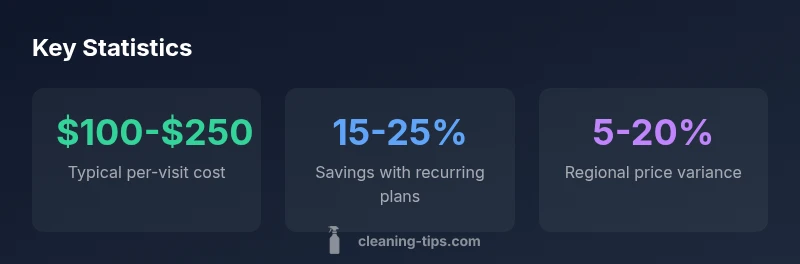
The average cleaning service cost typically falls within a broad range, often between $100 and $250 per visit in many markets, driven by home size, room types, frequency, and whether supplies are included. Price variations reflect local labor costs and service level. Additional factors like special tasks, pet hair removal, and green cleaning add-ons can shift pricing upward.
Understanding the price landscape for average cleaning service cost
Pricing for cleaning services is not a single number. The figure you see published by analysts is an average that reflects multiple factors. According to Cleaning Tips analysis, the price you pay per cleaning visit is influenced by home size, the number of rooms, floor types, whether deep-clean tasks are included, and the frequency of service. In urban areas with higher living costs, prices tend to drift upward, while rural markets may be more affordable. Providers vary in whether they include supplies in the base price, how they bill per hour versus per job, and whether they charge a travel fee for distant neighborhoods. Understanding this landscape helps homeowners compare quotes on a like-for-like basis and avoid sticker shock when scheduling a first clean.
This context matters because the same nominal price can represent different levels of service depending on who you hire and what you need. Cleaning Tips notes that transparency in what’s included—supplies, equipment, and travel charges—helps you guard against unexpected line items. For homeowners, the goal is to anchor expectations around value, not just the lowest price. The broader market continues to evolve as new cleaning technologies and eco-friendly products modify cost structures over time.
Major price drivers: home size, task complexity, and frequency
Two of the biggest levers are clearly the size of the space and the scope of tasks. A studio or one-bedroom apartment will generally require less time than a multi-bedroom home, and will therefore cost less per visit. Task complexity adds cost: deep-cleaning bathrooms, ovens, or upholstery adds time and supplies. Frequency matters too: customers who book weekly or biweekly cleans often receive ongoing discounts or lower per-visit rates than those requesting a one-time service. The Cleaning Tips team notes that some providers use flat-rate pricing, while others bill by hour; both approaches can lead to variability in final invoices. Before you book, map out which rooms need cleaning and which tasks are non-negotiable.
In practice, homeowners who bundle tasks—such as kitchen vent cleaning with a bathroom scrub—may see a more favorable total than booking separate services. Likewise, choosing a standard cleaning versus a deep-clean upgrade at the same visit will adjust the price but also the value delivered. Ultimately, aligning the service scope with your budget is the most reliable way to manage costs over time.
Regional price variations and market dynamics
Geography plays a major role. Labor costs, local demand, and competing providers shape what you pay. Coastal or major metropolitan areas frequently see higher rates than small towns, reflecting higher cost of living and transport. Some markets show seasonal fluctuations: demand spikes before holidays or in spring cleaning season, while slower months may offer promotions. It’s also common for providers to adjust pricing based on ZIP code, service radius, or whether special insurance and bonding are required. When budgeting, search for localized quotes and compare like-for-like services within your region.
For renters or homeowners moving to a new city, the price delta between neighborhoods can be substantial. In high-cost neighborhoods, expect closer alignment with the upper end of published ranges, while outlying areas may cluster toward the lower end. Your best approach is to collect several quotes from providers who service your exact ZIP code and verify what’s included in the base price.
Service models: one-time cleans, recurring plans, and add-ons
Most cleaners offer several models: one-time cleans, recurring schedules (weekly, biweekly, or monthly), and premium or specialty add-ons. One-time cleans give a precise price for a single visit, but recurring plans often include discounts or loyalty pricing. Add-ons such as pet hair removal, oven cleaning, or fridge cleaning can significantly affect the bottom line. Some companies price add-ons individually, while others include a bundle price for a set of tasks. Understanding your priorities and communicating them upfront reduces the risk of unexpected charges at the end of the job.
If you’re evaluating options, ask for a sample recurring quote that shows how much you’d pay over a six-month period. This can reveal hidden costs in a one-time quote and help you compare the true cost of ownership across providers.
Common add-ons that affect price
Pet hair removal, deep-cleaning grout, upholstery refresh, fridge and oven cleaning, and window track cleaning are frequent add-ons. Each add-on requires extra time, supplies, and sometimes specialty equipment. If you have pets, mention it early; some providers adopt higher hourly rates or surcharges for pet-related cleaning. If your home has multiple stories, high ceilings, or fragile surfaces, expect higher labor costs. Request a breakdown in the quote so you can see which items affect the total and whether they’re truly optional for your needs.
Additionally, large homes or homes with hard-to-reach areas (like stair treads or attic spaces) may incur travel or distance surcharges. Understanding the impact of each add-on helps you decide which tasks are essential and which can be postponed to a future visit to stay within budget.
How to estimate costs without overpaying
Create a clear checklist: measure square footage (or estimate), list tasks, note any high-difficulty areas, identify frequency preference, and specify whether supplies are included. Request multiple detailed quotes from different providers and ask for itemized pricing. Check what’s included in the base price (supplies, equipment, travel fees) and whether there are seasonal promotions or loyalty discounts. Prepare a short list of questions to ensure quotes are apples-to-apples. Remember that cheaper isn’t always better if it means cutting corners on process or insurance. A higher upfront price might include comprehensive insurance and stronger guarantees, saving you from liability risk and additional costs later.
To avoid sticker shock, use a simple side-by-side comparison grid that lists base price, add-ons, and any travel fees. This helps you see where value lies and whether a provider’s long-term pricing strategy aligns with your needs.
How to read a cleaning quote and spot red flags
When reviewing quotes, look for what’s included, whether the price is per visit or per hour, and if there are hidden fees. Watch for vague language like “extra charges may apply” without specifics. A legitimate provider will present an itemized breakdown and clear terms. Red flags include quotes with no service description, missing licensing information, or inconsistent pricing across similar properties. If a provider cannot justify the price, consider requesting references or seeking quotes from additional vendors. Finally, confirm the cancellation policy and scheduling flexibility to avoid penalties for changes in your plans.
Reading the fine print is as important as the headline price. A transparent quote with defined task lists and timelines is usually a sign of a trustworthy service.
Budgeting tips for different household types
For renters, prioritize if the building rules require specific cleaners or insurance, and consider shorter service intervals. Homeowners with pets should plan for add-ons, cleaning after renovations, and more frequent upkeep. Large families may need deeper cleans more often; households with light cleaning needs can opt for quarterly maintenance. Use seasonal promotions when they exist and track your expenses to forecast the annual cost. This helps you decide whether a monthly or quarterly plan makes financial sense and whether you should adjust the scope of services to fit your budget. If you anticipate major life events (moving, remodels), build a buffer for added tasks that are difficult to predict in advance.
A practical tip is to start with a baseline monthly budget, then adjust as you observe actual costs over six months. This approach makes it easier to scale services up or down without disrupting your household routine.
Future trends in cleaning pricing: sustainability and technology
Pricing may evolve due to sustainability concerns, improvements in cleaning technology, and consumer demand for eco-friendly products. Some providers adopt energy-efficient equipment and non-toxic products, which can influence the cost but offer long-term savings (less wear on surfaces, better air quality). Digital scheduling, transparent quotes, and mobile apps may simplify price comparisons and reduce administrative costs. As the market matures, expect more nuanced pricing structures that reflect value, not just time spent. Consumers should weigh environmental benefits against price when evaluating quotes and prioritize providers that clearly communicate cost savings from sustainable practices.
Cost ranges by scenario
| Scenario | Typical Range | Key Drivers |
|---|---|---|
| Studio apartment, one-time clean | 90-150 | Size, tasks |
| 2-bedroom home, biweekly | 150-300 | Frequency, extras |
| Family home, monthly | 200-350 | Labor time, supplies |
Questions & Answers
What factors most influence the cost of cleaning services?
Home size, frequency, and task scope are the primary cost drivers. Location, add-ons, and whether supplies are included also affect the final price. Understanding what’s included helps you compare quotes accurately.
Most of the price comes from the size of your home and the tasks you want done. Location and add-ons can raise the bill, so compare quotes that include supplies and travel.
Should I tip cleaners, and is tipping expected?
Tipping is common in many regions but not mandatory. If you’re satisfied with the service, a tip of 10-20% is typical in some markets, or you can provide a flat amount per visit. Check local norms and the company’s policy.
Tipping isn’t required, but many people tip 10-20% if they’re happy with the service. It’s good to check the company policy first.
Do rates differ on weekends or evenings?
Yes, some providers charge a surcharge for weekends or evenings due to higher demand. If you can schedule during off-peak times, you may see lower base rates. Always confirm any surcharges before booking.
Weekend or evening slots can be more expensive because demand is higher. Ask for off-peak slots to save.
Are eco-friendly products more expensive?
Eco-friendly products can add a small premium, but many cleaners price them in as standard options. If you want green products, ask for a transparent cost breakdown to see how much is attributed to sustainability.
Green products can cost a bit more, but many providers include them as options without a big price jump.
Is it cheaper to book ongoing cleaning services vs one-time visits?
Recurring plans typically offer per-visit savings and loyalty discounts, making them cheaper over time. If you need consistent cleaning, a recurring schedule is usually the most cost-effective option.
Yes—regular scheduling usually saves money over time compared with one-off cleans.
“Understanding the drivers behind price helps homeowners negotiate effectively and avoid surprises when booking cleaning services.”
The Essentials
- Benchmark your budget against typical ranges.
- Ask for an itemized quote to compare apples-to-apples.
- Consider recurring plans for long-term savings.
- Account for add-ons and regional pricing.
- Use multiple quotes to ensure value, not just lowest price.