House Clean Cost: What a Pro Cleaning Really Costs
A data-driven guide to house clean cost, covering typical price ranges, key factors, regional differences, and money-saving tips from Cleaning Tips Analysis (2026). Learn how size, tasks, and frequency shape the final price.


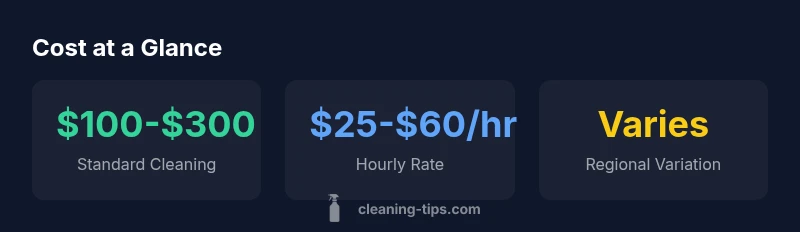
House clean cost typically ranges from $100 to $300 for a standard one-time service, depending on factors like home size, location, and tasks performed. Cleaning Tips Analysis, 2026 shows that regional variation and add-ons influence final pricing more than base rates. For ongoing or bundled services, expect per-hour rates around $25-$60.
What determines house clean cost
House clean cost is influenced by several interacting factors. The overall price is driven by the size and condition of your home, the level of service you request, and regional market dynamics. According to Cleaning Tips, the most impactful variables include square footage, flooring type, and the cleanliness baseline. A smaller apartment typically costs less than a large house, while a deep-clean or move-out service adds significantly to the bill. Add-ons such as oven cleaning, fridge interiors, and window washing can push the total higher. The Cleaning Tips team found that recurring services often offer better per-visit value than one-time cleans, especially when you commit to a scheduled plan. The goal is transparent pricing: know what’s included, how the price is constructed, and what you’ll pay for extras before scheduling. The term “house clean cost” should be understood as a range rather than a fixed figure, reflecting variability across homes and markets.
Pricing models and typical ranges
Most providers price either with a flat-rate quote or an hourly rate. Flat-rate pricing is common for standard cleaning packages and typically covers a defined scope (kitchen, bathrooms, living areas, bedrooms, and surfaces). Hourly pricing is more flexible and can be advantageous for irregular homes or add-on work. In 2026, Cleaning Tips Analysis shows that typical cost for a standard one-time cleaning falls in a broad range, with regional differences producing the widest variance. For many homes, a standard clean runs roughly in the $100-$300 neighborhood, while deep-clean or move-in/out services can exceed that range. When comparing quotes, pay attention to what’s included: supplies, towels, and equipment are often separate line items. If a quote seems unusually low, check for exclusions or required add-ons that may double the final price. Hosting a bundled recurring schedule, like monthly cleans, can reduce per-visit costs over the year, especially with promotional offers.
How home size and layout impact pricing
Size and layout are among the strongest determinants of house clean cost. A compact 1-bedroom apartment will usually cost less than a multi-bedroom home with several stories, challenging nooks, and higher ceilings. Homes with open floor plans and hardwood floors may require different care than carpeted spaces, affecting time and products. Complications such as heavy clutter, pet hair, or appliances that require special attention can add time and materials, pushing costs higher. When estimating, consider the number of bathrooms, stairs, and inaccessible areas (closets, under beds, behind appliances). Cleaning Tips analysis suggests weighting time estimates more heavily than surface area alone, because labor is the primary cost driver. The goal is to align expectations with the actual scope—clear communication with the cleaners helps ensure the final price reflects the true effort involved.
Regional differences and seasonality
Prices for house cleaning vary by region and season. Urban markets with higher living costs typically command higher base rates, while rural areas may be more affordable. Seasonal demand also influences pricing: spring cleaning spikes or pre-holiday cleanups can elevate quotes due to demand and cleaner availability. If you’re flexible, booking mid-week or off-peak times can yield lower rates. The Cleaning Tips team notes that price swings are common near major holidays or when cleaning firms face staffing shortages. For renters, bundled services with a landlord-approved checklist may save money, whereas homeowners may negotiate package deals with ongoing service agreements. Understanding regional norms helps you benchmark quotes and avoid overpaying.
How to estimate costs and compare quotes
To estimate costs accurately, start with a clear scope of work and home profile. Gather at least three written quotes, asking for itemized line items and inclusions. Ask about supply fees, travel charges, stair charges, and whether windows, ovens, or refrigerators are included or priced separately. Check if the price scales with square footage or time. If you want to reduce cost, prepare the space (clear clutter, remove personal items) and consider a lighter cleaning suitable for your needs. Consider bundling cleaning tasks into a recurring plan, which can reduce per-visit prices and provide predictable budgeting. Finally, verify the provider’s licensing, insurance, and guarantee, and read customer reviews to gauge consistency.
Saving money without sacrificing quality
Saving money on house clean cost doesn’t have to mean sacrificing quality. Start by setting realistic expectations and choosing the right service level. Compare quotes that include a written checklist and a scope of work; prioritize reputable providers with insurance and warranties. Prepping the home—picking up clutter, removing fragile items, and identifying high-traffic areas—reduces cleaning time and cost. Consider scheduling regular maintenance rather than one-off deep cleans; recurring visits often cost less per visit and keep the home consistently presentable. Use eco-friendly or store-brand cleaning products to lower supply costs if you don’t require premium brands. Finally, ask about bundled add-ons you actually need, or negotiate a package that includes seasonal tasks like oven or refrigerator cleaning.
What to include in a standard cleaning checklist
A well-scoped cleaning checklist helps manage expectations and costs. Typical inclusions are dusting surfaces, vacuuming or mopping floors, cleaning bathrooms (toilets, sinks, showers), kitchen surfaces, wipe-down of appliances, and trash removal. If you want extra tasks—inside oven, fridge interior, windows, baseboards—note them as add-ons. For move-in/move-out cleans, request deeper attention to cabinets, inside appliances, and behind fixtures. Confirm whether supplies and equipment are included, or if you should provide items like microfiber cloths or vacuum bags. A transparent checklist helps both parties track progress and keep costs transparent.
Typical price categories for house cleaning services
| Service Type | Cost Range | Notes |
|---|---|---|
| Standard cleaning (1,000 sq ft) | $100-$300 | Includes bathrooms, kitchen, living areas |
| Deep cleaning | $180-$350 | Includes appliances, baseboards, behind objects |
| Move-out/in cleaning | $150-$350 | Higher for larger homes; appliances inside |
| Hourly cleaning | $25-$60 per hour | Based on tasks and location |
Questions & Answers
What factors most influence the house clean cost?
The biggest drivers are home size, service level (standard vs deep-clean), and region. Add-ons like oven or fridge cleaning and stairs or high ceilings increase time and materials. Frequency can also affect overall cost, with recurring plans offering better per-visit value.
Size, service level, and location drive most of the cost, with add-ons and frequency shaping the total.
Is it cheaper to hire monthly or weekly cleaning?
Recurring cleanings often reduce the per-visit price due to efficiency and scheduling. Weekly or biweekly plans can provide predictable budgeting and may include discounts, whereas one-time cleans lack these incentives.
Recurring plans usually save money and offer predictability.
Are eco-friendly products more expensive?
Eco-friendly products vary in price. Some mid-range brands balance cost with performance, while premium eco brands may cost more upfront. Many cleaners bring their own eco products, which can influence quotes.
Eco-friendly options aren’t always more expensive, but prices vary by brand and supplier.
Do I tip house cleaners, and how much?
Tipping is optional and culturally dependent. A common guideline is 10-20% of the service cost or a small per-visit amount, especially if the cleaners go above and beyond.
Tips are optional; 10-20% is a common guideline.
How should I read a cleaning quote?
Read for inclusions, exclusions, and any travel or supply charges. Ensure the scope matches your home and ask for itemized costs if anything is unclear.
Look for inclusions, exclusions, and clear itemized costs.
Will move-out cleaning cost more than standard cleaning?
Move-out cleaning is typically more expensive due to deeper cleaning needs, cabinet interiors, and more thorough attention to grime. If large or heavily used spaces apply, costs rise accordingly.
Move-out cleans are usually more expensive due to deeper cleaning needs.
“Transparent pricing and a clear scope are essential for homeowners budgeting effectively. A detailed quote that lists inclusions helps prevent surprise costs at the end of a clean.”
The Essentials
- Know it's a price range, not a fixed figure
- Request itemized quotes to compare inclusions
- Consider recurring plans for lower per-visit cost
- Prepare the space to reduce time and cost
- Always verify scope, add-ons, and insurance before booking