How to Clean Mold with Baking Soda: Step-by-Step Guide
Learn how to safely clean mold using baking soda. This educational guide covers paste methods, surface suitability, safety, and prevention to keep your home healthier.


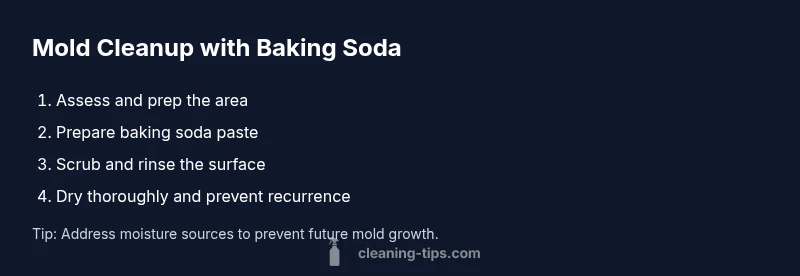
To clean mold with baking soda, mix a paste of baking soda and water, apply to the mold, and scrub with a stiff brush. Rinse away residue and dry the area completely. For nonporous surfaces, you can sprinkle baking soda directly, scrub with a damp sponge, then rinse and dry. Do not mix baking soda with bleach or ammonia.
Why mold forms in homes and how baking soda helps
According to Cleaning Tips, mold tends to thrive in damp, poorly ventilated areas where moisture persists and organic residues are present. Common hotspots include bathrooms, basements, and kitchens where condensation or leaks occur. Baking soda offers a gentle, surface-safe option for mild mold on nonporous surfaces. It works as a mild alkali that can lift and deodorize stains without introducing harsh chemicals. While not a universal cure, baking soda can slow mold regrowth when paired with thorough drying and moisture control. Understanding when and where to apply it helps homeowners avoid unnecessary remediation costs. For porous materials such as drywall or wood, mold can penetrate deeper, and baking soda is less effective. In those cases, surface cleaning may only be a temporary fix, and professional remediation might be needed. Always address the moisture source first—leaky pipes, roof intrusion, or humidity that stays above 60 percent. These steps are essential to sustainable mold control.
Choosing surfaces and what baking soda can do
Baking soda is most effective on nonporous surfaces like ceramic tile, metal, glass, and sealed concrete. On these surfaces, it acts as a gentle abrasive and deodorizer, helping to lift surface mold and grime without scratching finishes. Porous materials—drywall, untreated wood, fabric—tend to harbor mold in the pores, making it much harder for baking soda to reach the roots. For these materials, surface cleaning with baking soda may be part of a larger plan, but professionals may need to assess whether containment, removal, or replacement is necessary. Always test a hidden patch first to ensure the surface doesn’t discolor or degrade. Moisture control remains the backbone of prevention; a quick clean won’t help if humidity and leaks persist. Consistent ventilation, dehumidification, and prompt repair of any leaks will reduce the likelihood of mold returning.
Safety and prep: PPE, ventilation, and workspace setup
Before you begin, put on protective gloves, a mask, and eye protection. Open windows or run a ventilation fan to move air and reduce the concentration of mold spores in the air. Remove nearby fabrics or porous items to minimize contamination, and lay down old towels to catch drips. If the mold covers a large area (more than 10 square feet) or if you have health issues such as allergies or asthma, consider consulting a professional. Work in small areas to keep control over contamination and avoid spread to other rooms. Always halt work if you notice an unusual amount of moisture or a musty smell that worsens, as this indicates a more serious moisture problem.
Step-by-step method: paste method for nonporous surfaces
The paste method is a reliable, low-odor approach for mild mold:
- Create a paste by mixing baking soda with water until it forms a thick, spreadable consistency.
- Apply a generous layer to the moldy area and let it sit for 5–10 minutes to penetrate surface grime.
- Scrub with a stiff-bristled brush or sponge, applying firm pressure to lift spores.
- Rinse well with clean water to remove all residue, then dry completely with a towel or fan.
- Inspect the area for any remaining staining; repeat if necessary. Tip: Always test a small patch first to check surface compatibility and avoid damage.
Alternatives and supplements: hydrogen peroxide, vinegar, soap
If mold persists after baking soda treatment, you can consider a secondary cleaning step on nonporous surfaces using 3% hydrogen peroxide. Spray it on, wait a few minutes, then wipe away. Some people use white vinegar as a disinfectant, but avoid mixing vinegar with baking soda because the fizzing reaction reduces effectiveness. For stubborn spots, a mild soap solution can help remove surface grime before applying baking soda. Remember that vinegar or hydrogen peroxide should not be mixed with bleach, as dangerous gases can form. Always test compatibility on a hidden patch first, especially on porous materials.
Drying, moisture control, and prevention to stop mold returning
Drying is the final and most critical step. After cleaning, ensure the area dries completely within 24–48 hours. Use a dehumidifier or a fan to circulate air, and fix any leaks promptly. Consider sealing or repainting surfaces with mold-resistant products in bathrooms and basements. Keep humidity below 50–60% where possible. Regularly inspect areas prone to moisture, such as under sinks and around windows. Implement a routine cleaning schedule to remove grime and prevent the build-up of organic material that mold feeds on. These practices form a proactive defense against future mold growth.
Common mistakes and troubleshooting
Common mistakes include using too much water, which spreads spores, and neglecting thorough drying. Another pitfall is mixing incompatible cleaners, which can release harmful fumes. Do not reuse dedicated cleaning tools that contact mold without cleaning them first, as spores can transfer to other areas. If the area continues to show mold after multiple cleanings, there may be hidden moisture leaks or hidden mold behind walls. In such cases, a professional assessment is warranted.
Real-world scenarios: bathrooms, kitchens, basements
In bathrooms, small patches on tile grout often respond well to baking soda paste and scrubbing with a brush. In kitchens, mold around sinks or under appliances may require extra attention to seals and caulk. Basements and crawl spaces might have higher humidity and hidden mold; prioritize fixing leaks and improving airflow there. Regardless of the setting, always begin with moisture control and use baking soda as a cleaning aid rather than a sole solution. The Cleaning Tips team emphasizes that consistent maintenance and moisture control are essential for long-term mold prevention.
Tools & Materials
- Baking soda(box 1 lb or larger)
- Water(for paste and rinse)
- Small bowl(for mixing paste)
- Sponge or stiff-bristled brush(for scrubbing)
- Protective gloves(nitrile or disposable gloves)
- Mask (N95 or equivalent)(to filter spores)
- Old towels or rags(for soaking and drying)
- Spray bottle(optional for applying liquids)
- White vinegar (optional)(do not mix with baking soda)
- Hydrogen peroxide 3% (optional)(use on nonporous surfaces)
- Fan or dehumidifier(for faster drying)
- Safety glasses(eye protection)
Steps
Estimated time: 30-45 minutes per area
- 1
Prep area and PPE
Put on protective gloves, a mask, and safety glasses. Open a window or run a fan to improve ventilation. Clear the space and cover nearby surfaces with towels to catch drips.
Tip: Ventilation reduces airborne mold particles during cleaning. - 2
Test a small patch
Apply a small amount of baking soda paste to a discreet patch. Wait 5 minutes, then wipe away to check for surface damage or discoloration.
Tip: If the patch darkens or bubbles excessively, stop and choose a gentler approach. - 3
Prepare baking soda paste
Mix baking soda with water until thick but spreadable. You want a consistency that adheres to vertical surfaces without running.
Tip: A thicker paste stays on vertical surfaces longer for better contact time. - 4
Apply paste and scrub
Spread the paste over the moldy area. Let it sit for 5–10 minutes, then scrub with a stiff brush using firm, even pressure.
Tip: Scrubbing in circular motions helps lift spores from the surface. - 5
Rinse and dry
Rinse thoroughly with clean water to remove all residue. Dry immediately with towels or use a fan to speed up drying.
Tip: A dry surface inhibits mold regrowth and reduces odor. - 6
Inspect and prevent
Check for any remaining staining and re-clean if necessary. Address moisture sources to prevent recurrence (leaks, condensation, humidity).
Tip: Keep humidity below 60% in problem areas to discourage mold.
Questions & Answers
Can baking soda remove black mold?
Baking soda can help with mild, surface mold, including some black mold spots, on nonporous surfaces. Deep or extensive black mold on porous materials often requires professional assessment and remediation.
Baking soda helps with mild surface mold on solid surfaces, but extensive black mold may need a professional.
Is baking soda safe for children and pets?
Baking soda is generally safe when used as directed, but you should ensure good ventilation and keep kids and pets away from the cleaning area until it’s dry.
Baking soda is relatively safe, but keep kids and pets away while cleaning and ensure everything is dry afterward.
Can I use baking soda on porous surfaces?
Baking soda is less effective on porous materials like drywall or wood because mold can penetrate deeper. Surface cleaning may help, but moisture control and professional assessment might be needed for full remediation.
Baking soda works best on nonporous surfaces; on porous materials it may only remove surface mold.
Should I hire a mold remediation professional?
If mold covers a large area, recurs after cleaning, or you have health concerns, consult a professional. They can assess moisture sources and perform safe, thorough remediation.
If mold keeps coming back or covers a large area, it’s best to call in a professional.
Should I mix baking soda with vinegar or peroxide?
Do not mix baking soda with vinegar for cleaning mold, because the fizzing reaction reduces cleaning effectiveness. You can use hydrogen peroxide separately on nonporous surfaces if desired.
Don’t mix baking soda with vinegar; they cancel each other out. You can use peroxide separately if needed.
Watch Video
The Essentials
- Test a patch first to protect surfaces.
- Prioritize thorough drying to prevent regrowth.
- Avoid mixing baking soda with bleach or ammonia.
- Use baking soda as part of a moisture-control plan for lasting results.