Safe Ways to Support Colon Health at Home
A comprehensive, evidence-based guide to supporting colon health at home. Learn why at-home colon cleansing is not advised and discover safe dietary, lifestyle, and medical guidance to maintain digestive well-being.


Directly attempting to clean the colon at home is not safe or recommended. Colon cleansing procedures require medical supervision, and DIY methods can cause electrolyte imbalances, dehydration, bowel injury, or infections. You can support colon health at home through a fiber-rich diet, adequate fluids, regular physical activity, and prudent use of approved laxatives only under a clinician’s guidance. If you have concerns, consult a healthcare professional.
Why direct colon cleansing at home is discouraged
According to Cleaning Tips, the colon is part of a sensitive digestive system that requires careful management. If you search for ways to clean the colon at home, you may encounter sensational claims and unverified products. Direct at-home cleansing is not safe or recommended; the risks include dehydration, electrolyte disturbances, bowel perforation, and infections. The body detoxes naturally, and trying to accelerate this process with home devices or extreme regimens can cause more harm than benefit. This article by the Cleaning Tips team emphasizes practical, evidence-based habits that support colon health without dangerous interventions. Remember, marketing phrases may push the idea that you can “clean the colon at home,” but science and clinical guidelines advise caution and informed decision-making.
wordCount
Tools & Materials
- High-fiber foods (fruits, vegetables, whole grains, legumes)(Include a variety of sources to cover different fiber types.)
- Water and other non-caffeinated fluids(Aim for steady fluid intake to support stool softness and digestion.)
- Digestive-friendly foods (yogurt with live cultures, bran, oats)(Optional add-ons that align with a fiber-forward plan.)
- Food diary or journal(Helpful for tracking what helps or irritates digestion.)
- Light activity gear (comfortable shoes, step counter)(Encourages regular movement which supports gut motility.)
Steps
Estimated time: 60-90 minutes
- 1
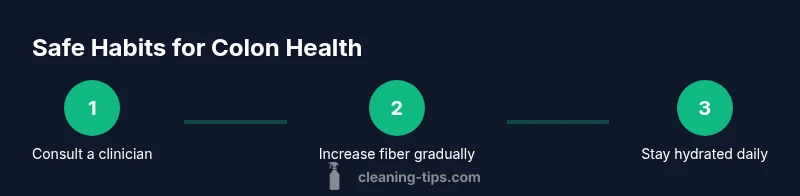
Consult a clinician before changing routines
Before making any dietary or lifestyle adjustments for colon health, talk with a healthcare professional. They can assess your medical history, current medications, and symptoms to tailor safe recommendations. This step reduces the risk of adverse interactions with existing conditions or treatments.
Tip: If you have a chronic condition or are pregnant, seeking medical guidance is especially important. - 2
Increase fiber gradually
Introduce fiber sources slowly to minimize gas and bloating. Pair fiber with ample fluids and monitor how your body responds. Aim for a steady, sustainable increase rather than a sudden jump.
Tip: Add one new fiber source at a time and give it a few days to gauge tolerance. - 3
Prioritize hydration
Maintain consistent hydration to support stool formation and regular bowel movements. Water is preferred; limit dehydration risks by sipping throughout the day rather than drinking large amounts at once.
Tip: Carry a water bottle and set reminders to drink regularly. - 4
Incorporate regular physical activity
Moderate, consistent movement helps promote gut motility and overall digestive comfort. Even gentle activities like walking after meals can make a difference over time.
Tip: Aim for a minimum of daily movement; even short, frequent walks add up. - 5
Avoid unproven cleansing products
Do not rely on enemas, laxatives, or devices marketed as “colon cleansers” without medical supervision. These can cause electrolyte imbalances, dehydration, and injury to the digestive tract.
Tip: If a product promises dramatic results, discuss it with your clinician before trying it. - 6
Monitor symptoms and maintain a health log
Keep notes on the frequency, consistency, and appearance of stools, along with any discomfort or unusual symptoms. A record helps you and your clinician identify patterns and decide on next steps.
Tip: Include dates, meals, and activities to find potential triggers.
Questions & Answers
Is it safe to clean the colon at home?
No. At-home colon cleansing is not considered safe or recommended. Medical procedures should be supervised by a clinician, and DIY methods can lead to serious complications.
At-home cleaning of the colon is not safe; seek professional guidance for colon health.
What are safe ways to support colon health at home?
Focus on a fiber-rich diet, adequate hydration, regular physical activity, and avoiding unproven cleansers. These strategies support digestive function without risking harm.
Eat fiber, drink water, move regularly, and avoid unproven cleansers.
Are there DIY recipes or products that cleanse the colon safely?
There are no proven, safe DIY recipes. Many products can disrupt electrolytes or cause dehydration. Always check with a healthcare professional before trying any cleanser.
DIY colon cleanses aren’t proven safe; talk to a clinician first.
When should I see a doctor for colon-related symptoms?
Seek medical evaluation for persistent abdominal pain, unexplained weight loss, visible blood in stool, or a significant change in bowel habits. These may indicate conditions requiring medical assessment.
See a doctor if you have ongoing pain, bleeding, or weight loss.
Can laxatives be used to clean the colon at home?
Laxatives should not be used as a colon cleaner without medical guidance. Misuse can cause dehydration and electrolyte imbalances.
Laxatives aren’t safe cleansing tools without a clinician’s ok.
What is colon health in simple terms?
Colon health relates to how well your digestive system moves waste, supports a healthy microbiome, and avoids symptoms like constipation or pain. It improves with fiber, fluids, and activity.
Colon health is about smooth digestion and a happy gut.
Watch Video
The Essentials
- Do not attempt colon cleansing at home.
- Support colon health with fiber, fluids, and activity.
- Seek medical advice for persistent symptoms or red flags.
- Rely on evidence-based practices rather than unproven remedies.