How Much Does a Dentist Clean Cost in 2026
Discover how much a dentist clean costs in 2026, including typical price ranges, what influences pricing, and tips to save while keeping your teeth healthy.


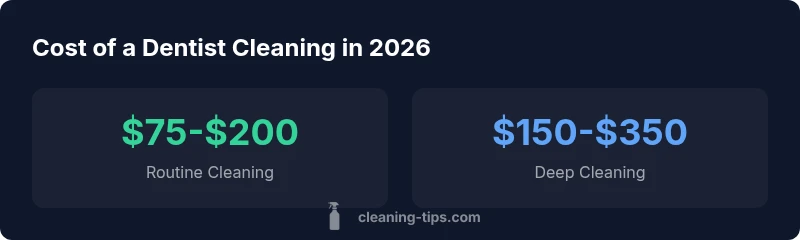
How much does a dentist clean cost? For a standard routine cleaning, most adults pay about $75 to $200 before insurance, with higher prices in urban or high-cost regions. Deep cleanings (scaling and root planing) run roughly $150 to $350 depending on complexity and location. Insurance plans often cover routine cleanings, reducing out-of-pocket costs, while some clinics offer bundled or promotional pricing.
What drives the cost of a dental cleaning
Prices for a dentist cleaning are not a single number. They are the result of several interacting factors, and understanding these helps you plan ahead rather than reacting to a surprise bill. According to Cleaning Tips, geographic location is one of the strongest predictors of price. Urban clinics with higher overhead often charge more than rural practices, even for the same service. Another major factor is the service level performed during the visit. A routine prophylaxis (the standard cleaning) is priced differently from a deep cleaning (scaling and root planing), which is typically required when gum health is compromised. When you visit an independent practice versus a corporate chain, the price per visit can differ due to negotiated rates and the scope of included services. Finally, timing matters: scheduling near the end of a service cycle, or selecting a clinic with flexible payment options, can influence your out-of-pocket cost. This section unpacks these drivers with practical examples so you can estimate costs more accurately and avoid sticker shock in 2026.
Routine vs deep cleaning: cost implications
A routine cleaning focuses on removing plaque and tartar above and just below the gumline, followed by polishing. It’s quicker, usually 30–60 minutes, and falls in the $75–$200 range in many markets. A deep cleaning targets more extensive tartar buildup and may require local anesthesia; it’s more time-consuming and can run from $150 to $350. The exact price depends on the patient’s periodontal health, the dentist’s assessment, and whether multiple quadrants are treated in a single visit. If an underlying issue is identified, the visit may include a referral, additional testing, or a separate procedure that adds to the total cost. In sum, service level is the most predictable cost driver apart from regional differences.
Add-ons that can change the bill: X-rays, fluoride, and sealants
Many practices offer optional add-ons during a cleaning. Bitewing X-rays, full-mouth X-rays, or simultaneous fluoride treatment can add $0–$100 to the visit, depending on whether the practice has bundled pricing or a la carte options. Fluoride or sealants are common during pediatric visits but can appear in adult cleanings as well, particularly if the patient has a higher caries risk. Insurance plans often cover at least some of these add-ons, which means your out-of-pocket cost could stay within the routine-cleaning range for eligible patients. Always ask for a transparent itemized estimate before agreeing to any add-ons to avoid surprises.
How insurance and network status affect your payment
Insurance coverage varies widely by plan and network. Many plans cover one routine cleaning every six months for insured patients, with the remainder billed to you as a copay or coinsurance. If you’re out of network or have a plan with high deductibles, your costs can rise substantially. In some cases, the dentist will offer a bundled quote for routine care, which can save money when you’re eligible for promotions or in-network benefits. If you have limited coverage, request a pre-visit estimate to compare options and plan for the year.
Practical strategies to save on cleaning costs
Saving on a dentist cleaning begins before you sit in the chair. First, verify that the clinic is in-network with your insurance or offers transparent, upfront pricing. Second, ask for a breakdown of costs and whether add-ons are optional. Third, consider dental schools or community clinics, which often offer discounted services while maintaining care quality. Fourth, schedule appointments at the end of the month or quarter when clinics are more likely to run promotions. Finally, combine a cleaning with preventive exams if your plan allows, which can yield bundled savings. These steps—planning, in-network checking, and shopping around—are often more impactful than negotiating a single price at a single practice.
Planning your dental cleaning budget over a year
Developing a year-long budget for dental cleanings helps prevent financial stress when a deep cleaning or X-ray is needed. Start with your routine cleaning cost range and add a buffer for possible add-ons or deep cleanings. Track your out-of-pocket expenses by submitting claims and monitoring your annual benefits. With careful planning and advance estimates, you can align your oral health goals with your financial goals and minimize unexpected bills in 2026.
Pricing framework for dental cleaning services
| Aspect | Typical cost range (USD) | Notes |
|---|---|---|
| Routine cleaning | 75-200 | Geographic variation; insurance often reduces cost |
| Deep cleaning | 150-350 | More extensive; periodontal treatment may be needed |
| Additional services | 20-60 | Fluoride, sealants; not always covered |
| X-ray during cleaning | 0-100 | Depends on plan; sometimes separate |
Questions & Answers
How often should I get a dental cleaning?
Most adults benefit from a routine cleaning every six months, but your dentist may adjust the frequency based on gum health, caries risk, and your overall oral health goals. Regular visits help prevent gum disease and decay.
Most people should get a cleaning about every six months, but your dentist may suggest a different schedule if you have gum issues or high risk for cavities.
Does insurance cover dental cleanings?
Many dental plans cover routine cleanings at least partially, often without waiting periods. Coverage varies by plan and network, so check your policy and confirm with your dentist before the visit.
Most plans cover routine cleanings, but details vary—check with your plan and the dentist before you go.
What affects the cost of a dental cleaning?
Cost is influenced by service level (routine vs deep cleaning), location, the dentist’s practice style, and whether add-ons like X-rays or fluoride are included. Insurance and payment plans can also shift your out-of-pocket amount.
Service level, location, and add-ons determine cost; insurance can reduce what you pay.
Are there cheaper options like dental schools?
Yes. Dental schools and community clinics often charge lower rates while students perform the cleanings under supervision. The wait time may be longer, but the price can be substantially lower.
You can save by visiting a dental school or community clinic, often with supervision.
Can I negotiate dental cleaning prices?
Prices are typically set by the practice, but you can ask for an upfront estimate, request in-network pricing, or explore promotions and bundled services. Documentation of costs helps in negotiations.
Ask for upfront pricing and check if there are promotions or bundle options.
What should I ask before a cleaning to avoid surprises?
Ask for a detailed estimate, which includes the cleaning, any add-ons, and X-rays. Confirm what your insurer covers and whether there are alternative options that fit your budget.
Get a detailed quote and confirm insurance coverage before the visit.
“Regular dental cleanings are a cornerstone of preventive care. When you weigh the upfront cost against the potential for avoiding more extensive, costly treatments later, cleanings are an investment in long-term oral health.”
The Essentials
- Plan for routine cleanings within the $75–$200 range.
- Deep cleanings cost $150–$350 and depend on health status.
- Insurance coverage and network status greatly influence out-of-pocket costs.
- Ask for an itemized estimate before any add-ons to avoid surprises.
- Shop in-network and consider bundled options or promotions.