How to Tell If Cleanser Is Expired: Practical Guide
Learn practical steps to identify expired cleansers using PAO labels, aroma, color, texture, and skin-safe tests. A comprehensive guide from Cleaning Tips to help homeowners and renters keep skin healthy and products effective.


Expired cleansers often show changes in smell, color, or texture, plus packaging signs. Check PAO dates, perform a small patch test, and discard if there’s any sign of spoilage. See the full step-by-step guide.
Why knowing how to tell if cleanser is expired matters
Knowing how to tell if cleanser is expired is a practical habit for skin health and effective cleaning routines. It helps prevent irritation, reduces waste, and ensures you’re using products at their best. According to Cleaning Tips, a proactive check can catch subtle signs that a date label alone misses. The Cleaning Tips team found that many people rely solely on a PAO symbol or a production date, which can be unclear on some brands. In practice, you’ll learn a simple, repeatable process that applies to most water-based and emulsified cleansers. By recognizing the signs discussed here, you gain confidence in deciding when to keep a bottle, test it, or safely dispose of it. Remember, preserving skin health starts with choosing fresh product and handling it correctly.
Understanding expiration labels: PAO, dates, and signs of spoilage
Expiration labeling for cleansers centers on two main ideas: a date or a PAO symbol that signals open-life, and observed signs of spoilage. PAO stands for period after opening and is typically depicted as a small jar with a number representing months. Some brands also include a production or batch date. When the date is unclear or missing, rely on a combination of cues—smell, texture, color, and separation—to gauge freshness. Remember that a clean bottle does not guarantee safety; product stability varies by formula and storage conditions. Keep a simple checklist handy and track changes over time rather than chasing a single label. If a product shows any change outside its normal range, treat it as suspect and consider replacement.
Visual cues: smell, color, and texture
Your senses provide valuable signals about freshness. A cleanser who is expired often develops a sour, acrid, or unusual odor that wasn’t present before. Color shifts—toward dullness or unexpected tints—are another red flag. Texture changes, such as separation, lumpiness, or excessively runny consistency, also indicate instability. Some emulsions separate naturally when stored cold or shaken; if separation returns after mixing and the product remains stable for a period, you may still consider using it. When in doubt, perform a patch test on a small skin area after washing your hands to ensure there’s no irritation before applying to the face.
Skin safety: patch testing and sensitivity
Even if the product seems fine, a cautious approach protects sensitive skin. Start with a patch test on a small area of clean skin behind the ear or on the inner forearm. Wait 24 to 48 hours to observe any redness, itching, or irritation. If you notice adverse reactions, wash off and discard the cleanser. If there’s no reaction, you can trial the product on a small facial area before broader use. Patch testing minimizes the risk of widespread irritation and helps you distinguish between a temporary reaction and true spoilage. Always wash hands before testing to avoid introducing contaminants.
When to discard and safe disposal
If you observe signs of spoilage or irritation after a test, it is safer to discard the product. Do not reuse, and consider recycling the container if your local rules allow it. For safety, seal the bottle, place it in a bag to prevent leaks, and dispose of it with household waste as directed by your local municipal guidelines. If there’s no obvious spoilage but the PAO has passed and you no longer trust the formula, replacement is recommended. Proper disposal helps reduce chemical exposure and prevents waste from entering water systems.
How to extend shelf life: storage and handling
Shelf life improves when you store cleansers correctly. Keep bottles tightly closed, away from heat sources and direct sunlight. Avoid leaving products in the car or in damp bathrooms where humidity can promote microbial growth. Use clean hands or a dedicated spatula to dispense the product to limit contamination. If you notice repeated changes in scent or performance, it might be time to retire the bottle even if the label hasn’t changed. Regularly rotate products and use older bottles first to minimize waste.
Special cases: travel-sized and salon products
Travel-sized cleansers often travel with you for shorter periods, yet their life after opening can still be limited by heat and air exposure. Salon or professional products may have different formulations and PAO standards, so treat them according to the brand’s guide. In both cases, inspect the seal and check the opening date upon purchase. When traveling, keep products in a cool, dry bag to maintain stability and minimize the risk of spoilage during transit.
How to interpret cross-brand signs and labels
Different brands use different symbols to indicate stability and opening life. Some may show a month-number symbol; others rely on written guidelines or a
Tools & Materials
- Clean, dry bottle or pump(Wipe the exterior; ensure the cap is secure and the seal is intact.)
- PAO symbol or production date(PAO image (e.g., jar icon) or production date helps determine freshness.)
- Nose test (smell)(A sour, acrid, or off fragrance suggests spoilage.)
- Texture/appearance check(Look for separation, clumps, or thin runny consistency.)
- Color check(Discoloration can indicate oxidation or contamination.)
- Storage condition notes(Store away from heat, direct sunlight; inform if previously exposed to heat.)
Steps
Estimated time: 15-25 minutes
- 1
Inspect packaging
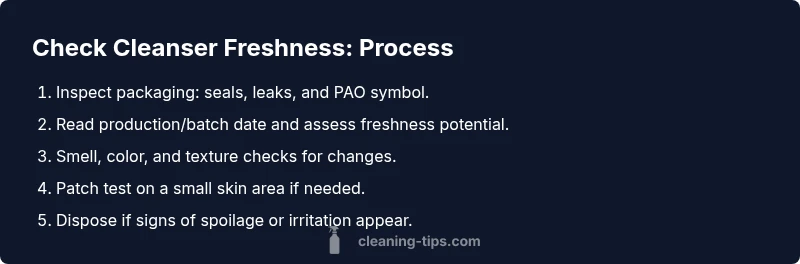
Check the seal, cap, and exterior for damage. Look for bulges, leaks, or broken seals. If the product packaging is compromised, discard or replace before use.
Tip: A damaged seal is often the first sign something is off. - 2
Look for handling dates
Find the PAO symbol or production/batch date on the label. If the date is missing or unreadable, rely on other signs of freshness.
Tip: If you can’t read the date, treat the product as potentially expired. - 3
Do a smell check
Smell a small amount near the opening; a sour, acrid, or unusual odor is a strong warning to stop using it.
Tip: Use a clean, dry finger or spatula to sample—avoid dipping fingers repeatedly. - 4
Assess texture and color
Examine color changes, separation, or clumping. A consistently changed texture beyond normal product variation indicates spoilage.
Tip: Some emulsions separate but recombine with shaking; if separation returns after mixing, keep testing. - 5
Patch test on skin
Apply a tiny amount to a small skin patch and wait 24–48 hours for irritation or redness.
Tip: If irritation occurs, wash off and discard. - 6
Decide on disposal
If signs point to spoilage, dispose in accordance with local guidelines. Do not flush or reuse; avoid contaminating other containers.
Tip: Wrap the bottle to prevent leakage during disposal.
Questions & Answers
What does PAO mean on cleanser packaging?
PAO stands for period after opening and indicates how long a product is best used after first opening. It’s a general guide, not a guarantee, and can vary by formulation.
PAO means how long a product is best used after you first open it.
Is it safe to use a cleanser after its expiration date?
If you notice signs of spoilage such as a bad smell, changed color, or unusual texture, discard the product. If none of these signs are present, replacement may still be prudent.
If you see spoilage signs, discard the cleanser.
Can storage extend a cleanser’s life?
Proper storage helps maintain product integrity but cannot overcome an expired or damaged formula. Keep containers sealed and away from heat and sun.
Storage helps keep it usable, but you still need to watch for signs of expiry.
What should I do with expired cleanser?
Dispose according to local guidelines. Do not flush down the drain. Recycle the container if allowed by local rules, and consider recycling options for plastics.
Follow local disposal guidelines for expired products.
What are common signs of contamination?
Mold growth, unusual clumps, or slimy texture indicate contamination. If in doubt, discard and replace with a fresh product.
If you see mold or odd texture, discard.
Watch Video
The Essentials
- Check packaging and PAO first to gauge freshness.
- Smell, color, and texture changes are key indicators.
- Patch test if you’re unsure about skin safety.
- Dispose responsibly if signs of spoilage appear.
- Store products properly to extend shelf life.