What Clean Mold: Safe Home Cleaning Guide
Learn how to safely clean mold in your home with practical steps, proper PPE, and prevention tips from Cleaning Tips. This comprehensive guide covers surfaces, cleaners, safety, and when to call a pro.


Goal: safely clean mold from common household surfaces, choose the right cleaners, and prevent regrowth. Essentials you’ll need include good ventilation, protective gear, and following product labels. This guide covers walls, tiles, grout, and fabrics, with practical steps and precautions to protect your health.
Why Clean Mold Matters
If you’re wondering what clean mold means for a typical home, this guide clarifies why prompt, safe cleaning is important. Mold can affect indoor air quality and irritate the skin, eyes, and lungs, especially for children, the elderly, or anyone with allergies or asthma. The Cleaning Tips team emphasizes that removing active mold growth is only part of the job; addressing moisture sources and living conditions is essential to prevent regrowth. By understanding the risks and following a clear plan, homeowners and renters can maintain a healthier living environment. According to Cleaning Tips, mold safety starts with proper planning, PPE, and ventilation, and continues with surface-appropriate cleaning methods. This approach helps you avoid spreading spores to other rooms and minimizes the chance of recurrent growth. You’ll learn how to identify mold, select safe cleaners, and apply a step-by-step method that works on common household surfaces such as walls, tiles, grout, and fabrics.
Key takeaway: mold management is about both remediation and moisture control, not just scrubbing away visible spots.
Quick Assessment: Is It Mold?
Mold often appears as dark splotches, fuzzy growth, or a musty odor. Distinguishing mold from mildew or dirt is important because it guides the cleaning approach. Mildew on non-porous surfaces is usually easier to wipe away, while mold that has penetrated porous materials (like drywall or fabric) may require replacement or more intensive treatment. The safest first step is to confirm the presence of mold by color, texture, and odor, and then decide whether the area is a small, manageable spot or a larger issue requiring professional help. Cleaning Tips analysis highlights that persistent dampness and hidden mold behind walls demand careful, methodical remediation rather than hurried scrubbing. If you’re unsure, start with a small test area and monitor for spread over 24–48 hours.
Signs you’re dealing with mold include a persistent musty smell, water damage, or staining that doesn’t improve with cleaning. If the affected area is larger than a few square feet, or if someone in the home has respiratory issues, consider consulting a professional.
Safe Prep: PPE, Ventilation, and Materials
Before you touch any moldy surface, prepare your space and yourself. Set up good ventilation by opening windows and running a fan that exhausts outdoors. Put on appropriate PPE: a fitted N95 or equivalent respirator, chemical-resistant gloves, and eye protection. Remove or cover nearby belongings to protect fabric and furniture. Use containers to collect waste and keep cleaning solutions away from food or utensils. This prep reduces airborne spores and protects you from potential irritants. Cleaning Tips recommends storing cleaners in clearly labeled containers and keeping kids and pets out of the work area. A well-ventilated, organized workspace makes the remediation safer and more effective.
Cleaning Methods by Surface
Different surfaces require different approaches. Non-porous surfaces like tile, glass, and enamel can often be cleaned with detergent and water, followed by a sanitizing rinse. Porous materials such as drywall, wallpaper, and fabric may require more careful handling; if mold has penetrated deeply, replacement is sometimes the safest option. For hard, non-porous surfaces, you can use a mixed solution of mild detergent and water, or a white vinegar solution for light mold. Hydrogen peroxide (3%) is another option for porous or textured surfaces, applied and allowed to sit briefly before wiping away. Always test a small, inconspicuous area first to ensure colorfastness. Avoid mixing cleaners (for example, vinegar with bleach) as this can create harmful gases. The goal is to remove visible mold and reduce moisture to prevent future growth. The Cleaning Tips guidance emphasizes choosing products labeled for mold remediation and following label directions for contact time and safety.
Bleach: When and How
Bleach can be effective on non-porous surfaces like countertops and bathroom fixtures, but it’s not a universal remedy. For small areas on non-porous surfaces, a solution of 1 cup of household bleach in a gallon of water can be used, applied for a short contact time, and then rinsed thoroughly with clean water. Do not mix bleach with ammonia or acids, and ensure good ventilation during use. For porous materials such as drywall or wood that have mold growth, bleach is typically not recommended because it does not reach deeply into the material and can worsen mold under certain conditions. In those cases, removal, sealing, or replacement of affected material is preferred. The Safety-first approach from Cleaning Tips is to limit bleach exposure and pursue alternative cleaners when possible.
Preventing Mold Regrowth: Drying, Ventilation, and Maintenance
After cleaning, drying is critical. Use towels to remove moisture, then increase air circulation with fans and dehumidifiers. Keep humidity levels below 60% where possible and fix leaks promptly to prevent future mold growth. Regularly inspect areas prone to dampness, such as bathrooms, basements, and laundry rooms, and address any moisture source (leaks, condensation, or poor insulation). Clean regularly with an effective cleaner to deter new mold, and consider using mold inhibitors on hard surfaces where appropriate. Consistency is key: quick, repeated cleaning and moisture management reduce the chances of mold returning. Cleaning Tips notes that ongoing humidity control and routine maintenance are the best long-term defenses against mold.
When to Call a Pro: Safety and Scope
If mold covers more than a small area (roughly the size of a dinner plate) or if you suspect hidden mold behind walls, it’s prudent to contact a licensed professional. If you have severe allergies, asthma, or a compromised immune system, professional assessment may be best even for smaller areas. A pro can assess moisture sources, test for mold species, and safely remove contaminated materials. If you’re dealing with a persistent musty odor despite cleaning, or if there is water damage history, professional guidance can prevent structural damage and exposure risks. Cleaning Tips emphasizes that professional help is a prudent option when the scope exceeds basic DIY remediation or involves complex moisture issues.
Common Mistakes and Quick Fixes
Common mistakes include using only water to clean mold, neglecting to ventilate, and scrubbing aggressively without PPE. Quick fixes, like sealing moldy areas or using harsh chemicals without protection, can worsen health risks and spread spores. A better approach is to follow the step-by-step method: PPE, ventilation, surface-specific cleaners, thorough drying, and moisture control. When in doubt, document the affected area and seek professional guidance. The goal is safe remediation and ongoing moisture management to prevent regrowth.
What Cleaning Tips Recommends Based on Analysis
Based on Cleaning Tips analysis, humidity control and prompt, repeated cleaning are essential to prevent mold regrowth. Maintaining clean, dry surfaces reduces mold viability and improves indoor air quality. Remember that mold is a symptom of moisture, not just a surface problem. Address the root cause—leaks, condensation, and ventilation—to keep your home healthier over time. The Cleaning Tips team emphasizes safety, moisture management, and a cautious, surface-specific cleaning approach.
Tools & Materials
- N95 respirator or equivalent(Fit-tested if possible; replace if damp or damaged)
- Chemical-resistant gloves(Latex-free; long cuffs for wrist protection)
- Safety goggles or face shield(Protect eyes from splashes)
- Microfiber cloths(Soft, non-abrasive for surfaces)
- Scrub brushes (stiff-bristled)(Use on grout or textured surfaces)
- Spray bottle(Label and pre-mix cleaners)
- Disposable paper towels(For cleanup and disposal)
- Bucket(For rinsing if needed)
- White distilled vinegar(Dilute for mild mold on non-porous surfaces)
- Hydrogen peroxide 3%(Alternative mold cleaner for porous surfaces)
- Mild dish detergent(For initial cleaning and degreasing)
- Commercial mold cleaner (as labeled)(Follow label directions)
- Dehumidifier or dehumidifier and fan(Helps moisture control after cleaning)
- Moisture meter or hygrometer(Monitor humidity levels)
Steps
Estimated time: 45-120 minutes
- 1
Assess area and gather materials
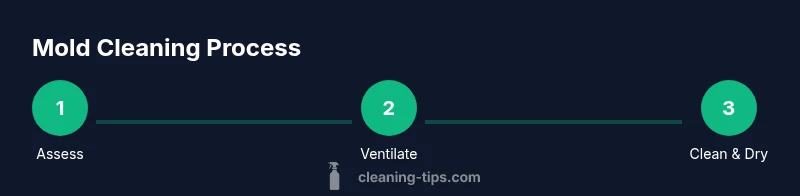
Survey the mold-affected zone and decide on remediation limits. Gather PPE, cleaners, rags, and tools before starting to minimize interruptions. Document any visible damage for reference and potential follow-up.
Tip: If the area is more than a few square feet, consider professional assessment before starting DIY cleanup. - 2
Ventilate and contain the space
Open windows and doors to create airflow toward an exit path. Use a fan directed outdoors to push air out of the room. Keep children and pets away from the work area.
Tip: Do not run a fan that blows air from the moldy area into other rooms. - 3
Put on PPE
Wear an N95 respirator, eye protection, and chemical-resistant gloves. Avoid touching the face, and wash hands after removal of PPE. Dispose of used PPE properly after finishing.
Tip: Check respirator fit and seal before starting; a poor fit reduces protection. - 4
Isolate and protect nearby items
Cover furniture or textiles with plastic sheeting to prevent cross-contamination. Move uninfected items away from the cleanup zone if possible. Seal off vents if necessary to limit spread.
Tip: Label containers or bags for moldy waste to ensure proper disposal. - 5
Choose the cleaning approach by surface
For hard non-porous surfaces, start with detergent and water, then consider a vinegar rinse. For porous materials, decide whether cleaning is feasible; surface cleaning may be followed by removal and replacement of damaged items.
Tip: Always test a small area first to check colorfastness and material integrity. - 6
Apply cleaner and scrub
Apply cleaner to the moldy area and scrub with a brush until visible mold is removed. Wipe with clean towels and reapply cleaner as needed. Allow the surface to air dry completely.
Tip: Do not oversaturate porous materials; excess moisture can worsen mold behind the surface. - 7
Rinse and dry thoroughly
Rinse cleaned areas with clean water and wipe dry. Use a fan or dehumidifier to accelerate drying. Ensure there is no lingering moisture before reintroducing items into the space.
Tip: Check corners and crevices where moisture hides; a moisture meter helps verify dryness. - 8
Address moisture sources
Repair leaks, improve ventilation, or add insulation where needed to prevent future mold growth. Consider a dehumidifier in damp areas and perform routine checks after weather events.
Tip: Keep humidity consistently low in high-risk spaces to deter mold growth. - 9
Monitor and maintain
Recheck the area after 24–72 hours for any signs of regrowth. Schedule seasonal cleanings in moisture-prone spaces. Replace damaged materials to prevent recurrence.
Tip: Take before-and-after photos to track changes and guide future maintenance.
Questions & Answers
Is all mold dangerous to health?
Most mold in homes is a nuisance rather than poses a serious health risk for healthy individuals, but some people may have allergies or asthma that worsen with exposure. It’s important to clean visible growth and manage moisture to reduce risk. If symptoms persist, consult a healthcare professional.
Most household mold is a nuisance, but people with allergies or asthma may be affected. Clean visible growth and manage moisture; see a doctor if symptoms persist.
Can I use bleach on mold?
Bleach can be effective on non-porous surfaces but isn’t a cure-all, especially for porous materials. It may not reach mold roots inside porous materials and can produce harsh fumes. Use bleach only on non-porous surfaces and follow label directions.
Bleach works on non-porous surfaces, but not ideal for porous materials. Use it with caution and follow the label.
What should I do with moldy fabrics or drywall?
Porous materials like drywall and fabrics with mold often need removal and replacement. Cleaning alone may not fully remove mold from porous substrates. If the material is structurally compromised, replace it and address the moisture source.
Porous materials may need removal and replacement; cleaning might not remove all mold.
How long does it take for cleaned areas to dry?
Drying times vary with temperature, humidity, and airflow. In a well-ventilated space, most cleaned surfaces dry within a few hours to a day. Using a fan or dehumidifier can speed up the process.
Drying usually takes a few hours to a day, depending on conditions; a fan speeds it up.
When should I call a professional?
Call a professional if mold covers a large area, recurs after cleaning, or you suspect hidden growth behind walls. Professionals can assess moisture sources, perform containment, and safely remove mold.
Call a pro if mold is extensive or keeps returning.
Can I prevent mold without reducing humidity?
Humidity control is key to preventing mold. You can also clean regularly, fix leaks promptly, and ensure proper ventilation, but reducing moisture is the most effective defense against regrowth.
Moisture control is essential; combine cleaning with good ventilation to prevent mold.
Watch Video
The Essentials
- Identify and address moisture to prevent mold growth.
- Use surface-appropriate cleaners with proper PPE.
- Dry surfaces thoroughly to stop regrowth.
- Know when to replace porous materials and when to call a pro.