Can You Clean Mold While Pregnant? Safe Cleaning Guide
Explore safe, pregnancy-friendly mold cleanup: PPE, non-toxic cleaners, ventilation tips, and when to call a pro. Practical steps from Cleaning Tips emphasize minimal exposure and moisture control.


You can clean small mold spots during pregnancy with a careful, low-tox approach. Wear an NIOSH-approved mask and gloves, ventilate the area, and use non-toxic cleaners like soap and water or diluted vinegar. For larger patches or recurring moisture, stop and seek professional help.
Why Mold Cleanup During Pregnancy Requires Caution
The question can you clean mold while pregnant? isn't a simple yes. Mold exposure can irritate airways and trigger allergies, so safety matters for both you and your baby. According to Cleaning Tips, pregnant homeowners can manage small, visible mold with careful, low-tox methods. The Cleaning Tips team found that minimizing exposure, using gentle cleaners, and ensuring good ventilation are the core steps. Start by identifying the moisture source fueling the mold and decide if a DIY approach is appropriate. If you notice persistent dampness, new growth after cleaning, or any symptoms like coughing or chest tightness, pause and seek professional help. By staying within low-tox methods and limiting exposure time, you can work toward a safer, mold-free space.
Safe, Low-Tox Cleaning Options for Small Mold Patches
For small, isolated patches, opt for non-toxic methods that minimize inhalation risk. A simple plan could be soap and warm water for surface grime, followed by a gentle cleaner such as distilled white vinegar on stubborn spots. Avoid bleach-based products and solvents with strong fumes during pregnancy. Improve airflow by opening windows and using a fan to exhaust air away from your face. The Cleaning Tips analysis shows that consistent use of low-tox cleaners and rapid drying reduces mold regrowth risk. Wear an NIOSH-approved mask or an equivalent respirator, safety goggles, and gloves. After scrubbing, rinse the area with clean water and dry thoroughly. Check back daily for new signs of growth and adjust as needed, but do not repeat aggressive cleaning if mold returns quickly.
PPE and Ventilation: Protecting You and Your Baby
Mold cleanup should pair protective gear with proper air movement. Wear an NIOSH-approved respirator or a medical-grade mask with a filter, plus goggles and waterproof gloves. Keep your hair and skin covered to minimize contact with spores. Work in a well-ventilated area; crack a window and direct the exhaust away from living spaces. If you have asthma, allergies, or immune-compromising conditions, talk to your healthcare provider before starting any cleanup. For pregnant people, reducing exposure time is as important as the cleaner itself. Remember to take breaks, stay hydrated, and stop if you feel lightheaded or overwhelmed.
When to Avoid DIY and Call a Pro
Not every mold situation is safe for DIY. If mold covers a sizable area, appears in HVAC ducts, or keeps returning after cleaning, professional remediation is advised. A licensed contractor can identify moisture sources, fix leaks, and use containment to prevent spores from spreading. For expectant mothers, professional work reduces exposure risk and ensures thorough removal. Always get an estimate that includes containment, cleanup, and moisture control to prevent future growth. If you experience persistent headaches, dizziness, or worsened respiratory symptoms during or after cleaning, seek medical advice promptly.
Prevention: Stopping Moisture and Mold from Coming Back
Prevention is the best defense. After cleaning, fix leaks promptly, reduce humidity with dehumidifiers, vent bathrooms and laundry rooms, and run exhaust fans during showers and cooking. Keep surfaces dry and wipe down damp areas weekly. Inspect areas prone to moisture—under sinks, basements, and around windows—for signs of moisture intrusion. Cleaning Tips analysis shows that moisture control lowers recurrence risk by reducing mold-friendly conditions. Create a regular cleaning schedule to catch small issues before they escalate.
Quick-Start Safety Checklist Before You Begin
Before you touch any mold, prepare the space and your safety gear. Set up the area by laying down plastic sheeting if you anticipate splashes or spills. Put on an NIOSH-approved respirator, goggles, and gloves. Open windows or run a vent to promote airflow, then place a fan to exhaust air away from you. Keep children and pets out of the area. Have fresh water and tissues handy in case you need breaks. This quick checklist helps you stay focused on safety while you clean. If you feel dizzy, short of breath, or overwhelmed, stop immediately and seek medical guidance.
Final Quick-Start Guide for Pregnant Homeowners
To summarize, approach mold cleanup during pregnancy with caution and a plan. Start with mild, non-toxic cleaners, keep the area well-ventilated, and limit your exposure time. If you cannot identify or fix the moisture source, or if mold persists after one cleanup, pause and seek professional help. After cleaning, monitor moisture levels and consider a long-term moisture-control strategy such as repairing leaks, improving ventilation, and using dehumidification during humid months. The goal is to keep your indoor environment safe for you and your baby while reducing future mold risk.
Tools & Materials
- NIOSH-approved respirator(Ensure proper fit; replace filters as needed)
- Goggles or safety glasses(Protect eyes from splashes)
- Non-latex gloves(Disposable or reusable; wash after use)
- Mild dish soap(For initial cleaning)
- Soft-bristle brush or sponge(Gentle scrubbing action)
- Bucket and clean cloths(Rinsing and drying supply)
- Distilled white vinegar(Optional non-toxic cleaner)
- Spray bottle(Applying cleaners)
- Plastic sheeting or drop cloths(Contain spills)
- Dehumidifier or fan(Reduce humidity during cleanup)
Steps
Estimated time: Total time: 60-90 minutes
- 1
Assess mold visibility and moisture
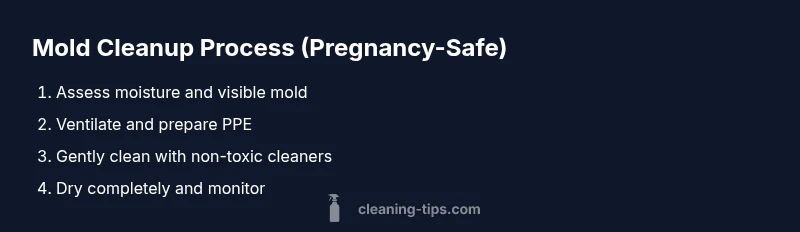
Survey the area to determine extent and identify the moisture source. Note any patterns of dampness and plan your approach to minimize exposure. Decide if DIY is appropriate based on size and location.
Tip: Document the area before you start; this helps track changes and informs future moisture-control actions. - 2
Put on PPE and prepare the area
Put on a mask, goggles, and gloves. Open nearby windows for ventilation and set up plastic sheeting to protect adjacent spaces. Keep doors closed to contain spores.
Tip: A well-fitted respirator is essential for protection from mold spores; never reuse contaminated PPE without proper cleaning. - 3
Choose a safe cleaner
Select mild, non-toxic cleaners such as soap and water or diluted vinegar for initial treatment. Avoid ammonia or bleach mixtures that can release harmful fumes in pregnancy.
Tip: Test cleaners on a small, inconspicuous area first to ensure no surface damage. - 4
Gently scrub the mold
Using a soft brush or sponge, scrub the moldy area with your chosen cleaner. Do not scoop or rough-scrub aggressively; this can release spores into the air.
Tip: Work from the outside edges toward the center to prevent spreading spores. - 5
Rinse and dry completely
Rinse the area with clean water and dry thoroughly with towels or a heat source. Moisture control is critical to prevent regrowth.
Tip: Keep the area dry for several days and monitor for any new signs of growth. - 6
Monitor and prevent future mold
Inspect regularly for moisture intrusion; fix leaks promptly and maintain airflow to deter recurrence. If mold returns, reconsider professional remediation.
Tip: Set a reminder to re-check humidity levels after heavy rains or humidity spikes.
Questions & Answers
Is it safe to clean mold while pregnant?
Yes, for small, visible patches with caution. Use PPE, non-toxic cleaners, and good ventilation. If mold is extensive or symptoms arise, consult your healthcare provider or a professional.
Yes, small patches can be tackled safely with PPE and non-toxic cleaners; seek help for larger problems.
What should I avoid during pregnancy when cleaning mold?
Avoid strong chemical fumes, bleach mixes, and any cleaners that cause irritation. Do not attempt large-scale remediation alone.
Avoid strong fumes and large-scale cleanup alone.
When should I call a professional?
Call a licensed mold remediation professional if the mold covers a sizable area, recurs after cleaning, or if there are persistent moisture issues.
Call a professional if mold is extensive or keeps coming back.
Can mold exposure harm my baby?
Exposure may irritate airways and trigger symptoms in some individuals. Discuss concerns with your healthcare provider to tailor a safe plan.
Mold exposure can irritate airways; talk to your doctor about safety.
Do I need mold testing after cleaning?
Testing is optional for small, obvious patches. If concerns persist or exposure symptoms exist, seek professional guidance.
Testing is optional; discuss ongoing concerns with a professional.
What about mold in HVAC or ceilings?
Mold in ducts or ceilings often requires professional assessment because it may indicate hidden moisture problems.
Mold in ducts or ceilings usually needs a pro.
Watch Video
The Essentials
- Mold cleanup during pregnancy can be safe with precautions.
- Prioritize ventilation and non-toxic cleaners.
- Call professionals for extensive or recurring mold.
- Moisture control is essential to prevent mold return.