What Cleaner Kills Norovirus: A Practical Cleaning Guide for 2026
Discover which cleaners reliably kill norovirus, how to apply them safely, and best practices for homes during outbreaks. This guide covers EPA-registered disinfectants, bleach and hydrogen peroxide options, and kitchen/bathroom routines by Cleaning Tips.


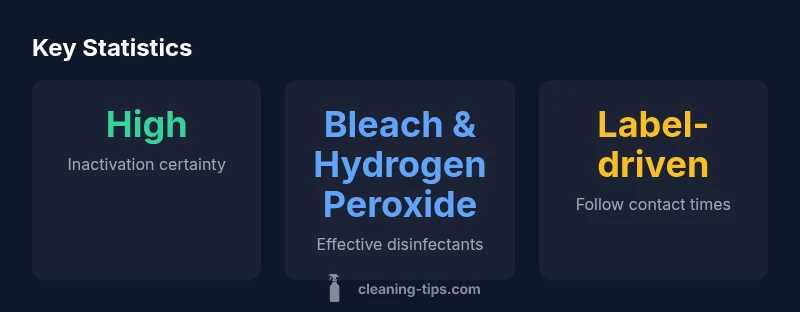
What cleaner kills norovirus? The safest, most effective options are EPA-registered hospital-grade or household disinfectants proven to inactivate norovirus, including sodium hypochlorite (bleach) solutions and stabilized hydrogen peroxide products. Alcohol-based sanitizers alone are not reliable on surfaces for norovirus, and contact time matters. Always follow label directions for concentration and contact time.
Why killing norovirus matters in home cleaning
Norovirus is highly contagious and can spread quickly through touched surfaces, shared equipment, and contaminated foods. For homeowners and renters wondering what cleaner kills norovirus, the answer is not a single product but a class of disinfectants that are proven to inactivate the virus under label-directed conditions. EPA-registered disinfectants that explicitly claim efficacy against norovirus are your best bet. The Cleaning Tips team emphasizes that the most reliable approach combines correct product selection with proper application, ample ventilation, and thorough cleaning of visibly dirty areas before disinfection.
When a household outbreak occurs, it’s essential to act quickly and consistently. Start with cleaning to remove organic matter, then disinfect surfaces with an agent proven effective against norovirus. Do not mix products unless the label explicitly allows it, and never substitute a product without verifying its norovirus claims. This approach reduces the risk of recontamination and protects vulnerable household members, including children and older adults.
What cleaner kills norovirus: Core options for households
Answering what cleaner kills norovirus starts with understanding effectiveness and labeling. EPA-registered disinfectants that explicitly claim efficacy against norovirus are your best bet. The most consistent performers are products containing sodium hypochlorite (bleach) at appropriate dilutions and stabilized hydrogen peroxide cleaners. Many quats (quaternary ammonium compounds) also claim norovirus efficacy, but you should verify the label. It’s important to note that alcohol-based sanitizers, while useful on hands, are not reliably effective for surface disinfection against norovirus. Always check the label for the contact time and whether the product is suitable for the surface you intend to treat. For routine cleaning, choose products that are designed for high-touch surfaces in kitchens and bathrooms, and avoid mixing products with incompatible chemicals.
The key takeaway is to select products that list norovirus on the efficacy claims, then apply them exactly as directed on the label.
How to choose an effective cleaner for norovirus
Selecting the right cleaner requires reading the label and understanding efficacy claims. Look for products that are EPA-registered and list norovirus as a target. Consider the surface type: hard non-porous surfaces (like countertops and tiled surfaces) vs. porous materials (wood, fabric). For hard surfaces, sodium hypochlorite or hydrogen peroxide products are commonly effective when used as directed. For households with pets or children, pick a formula that mentions safety for living spaces and food-contact surfaces after appropriate rinsing. Always confirm whether the product requires rinsing after disinfection, and ensure compatibility with appliances and surfaces in your home.
Correct usage: dilution, contact time, and safety
Even the best cleaner will fail if you don’t use it correctly. Start by wearing gloves and working in a well-ventilated area. If using bleach, dilute according to the label; do not mix bleach with ammonia or acids. Apply the product to surfaces and keep it wet for the stated contact time—often several minutes—without wiping immediately. For hydrogen peroxide products, apply and allow the required contact time, then wipe with a clean cloth if the label calls for it. After disinfection, rinse or wipe surfaces if required by the product label, and dry thoroughly.
Special considerations: porous surfaces, fabrics, and food-contact surfaces
Porous materials such as wood, fabric, or carpeting require special handling. In many cases, non-porous surfaces disinfectants are not sufficient on porous items; laundering fabrics at the recommended hot water setting and using appropriate detergent is advised. For food-contact surfaces, ensure the product is labeled for such use and rinse if the label requires it. If a vomit event occurs, remove contaminated materials and clean the area with detergent before applying a disinfectant to help ensure thorough disinfection. In some cases, replace heavily contaminated fabrics, and seek professional guidance for large or persistent issues.
Outbreak-safe cleaning routine for kitchens and bathrooms
Create a routine that prioritizes high-touch surfaces: doorknobs, light switches, faucet handles, countertops, and toilet flush levers. Use separate cleaning tools for contaminated areas to avoid cross-contamination. Schedule regular disinfection cycles and increase frequency during illnesses. Maintain good ventilation during cleaning to reduce aerosol transmission. Store cleaning products out of reach of children and pets. After an outbreak, continue routine cleaning to maintain a safe environment.
Common mistakes to avoid when disinfecting for norovirus
Don't rely on alcohol sanitizers alone for surface disinfection against norovirus, and never skip cleaning of visible grime before disinfecting. Avoid mixing cleaners unless the label allows and never reuse dirty cloths. Do not assume any product is effective on all surfaces; test on inconspicuous areas if unsure. Lastly, neglecting to follow contact times can leave surfaces inadequately disinfected and increase transmission risk.
Disinfectant options for killing norovirus
| Disinfectant Type | Typical Use | Notes |
|---|---|---|
| Bleach (sodium hypochlorite) | Hard, non-porous surfaces | Follow label; include contact time and dilution guidance |
| Hydrogen peroxide-based cleaners | General surfaces, appliances | Typically lower odor; verify surface compatibility |
| Alcohol-based surface sanitizers | Hands and certain surfaces | Not reliably effective against norovirus on surfaces |
Questions & Answers
What cleaners kill norovirus on surfaces?
EPA-registered disinfectants that claim norovirus efficacy, such as bleach and hydrogen peroxide products, are essential. Always follow label directions.
EPA-registered cleaners that specify they kill norovirus are your best bet, and you should follow the label.
Are alcohol-based hand sanitizers effective against norovirus on surfaces?
No, not reliably. Use EPA-registered disinfectants for surfaces.
Alcohol sanitizers aren't enough for surface disinfection against norovirus.
Can I use diluted bleach on food-contact surfaces?
Yes, many products are labeled for use on food-contact surfaces; dilute and rinse as directed.
Bleach can be used on food-contact surfaces if the label allows it, and you rinse as required.
What is the recommended order for cleaning and disinfection?
First clean to remove dirt, then disinfect using an EPA-approved product and allow the required contact time.
Always clean first, then disinfect, and let the product stay wet for the time specified.
How should I handle porous surfaces during a Norovirus outbreak?
Porous materials may require laundering or professional cleaning; disinfectants may be less effective.
Porous surfaces are trickier; launder fabrics and consider professional cleaning when needed.
What steps should I take after a vomit event?
Wear gloves, ventilate, clean with detergent, then apply an EPA-registered disinfectant; discard contaminated materials.
Ventilate, clean with detergent, then disinfect; remove contaminated items.
“"Disinfecting against norovirus requires products proven to work against this virus and strict adherence to label instructions. Always choose EPA-registered cleaners and apply the specified contact time for best results."”
The Essentials
- Choose EPA-registered cleaners with norovirus efficacy.
- Follow label concentration and contact time exactly.
- Disinfect after cleaning to remove organic matter.
- Avoid relying on alcohol sanitizers for surface disinfection.
- Ventilate during application and store products safely.