Commercial Carpet Clean: A Practical How-To for Businesses
Learn a practical, step-by-step approach to commercial carpet clean in busy spaces like offices, hotels, and retail stores, covering equipment, pretreatment, extraction, drying, and ongoing maintenance for healthier interiors.


You will learn how to perform a complete commercial carpet clean, including selecting equipment, choosing appropriate solutions, and executing a safe, efficient cleaning routine for offices, retail spaces, and hospitality environments. That process minimizes downtime and disruption while addressing pretreatment, soil suspension, extraction, drying, and post-cleaning checks. By following this guide, property managers and cleaning staff can achieve consistent results, extend carpet life, and maintain healthy indoor air quality. This answer gives you a clear roadmap to a professional-grade clean across varied commercial settings.
Why commercial carpet cleaning matters
In high-traffic commercial spaces, carpeted floors endure heavy soil, stains, and wear. A thorough cleaning routine tailored for businesses helps maintain appearance, indoor air quality, and occupant satisfaction. Regular cleaning reduces odor buildup and extends carpet life, delivering lower long-term replacement costs. According to Cleaning Tips, a well-planned program can cut soil loading and allergen levels significantly in busy environments. The Cleaning Tips team found that offices with scheduled deep cleanings see improved perceived cleanliness and fewer irritations from dust. This guide provides a practical, field-ready approach to achieving consistent results across settings, from corporate offices to hotels and retail storefronts. It explains how to prepare, select methods, and execute a commercial carpet clean that minimizes downtime and disruption. Always consider occupant safety, cleaning staff training, and building ventilation to optimize drying times and prevent moisture-related issues. A successful commercial carpet clean also supports better indoor air quality for occupants and reduces maintenance costs over time.
Types of carpet cleaning methods for commercial spaces
Commercial environments vary widely, so choosing the right cleaning method matters. For a robust commercial carpet clean, hot water extraction (steam cleaning) often delivers the deepest soil removal in traffic lanes, while encapsulation can provide efficient periodic maintenance with quicker drying. Bonnet cleaning offers fast turnover for low-traffic areas, but may require more frequent re-cleaning in entryways. For delicate fibers or sensitive occupancies, dry-cleaning or low-moisture encapsulation can reduce downtime. The best approach often combines methods: a thorough pretreatment and extraction in heavy-use zones, with periodic maintenance cleaning in lighter-traffic areas. Always assess fiber type, carpet construction, and soil level before selecting a method. The goal is to balance soil removal with minimal moisture exposure to keep spaces ready for occupants soon after cleaning.
To optimize results, schedule method selection around occupancy patterns and consider the financial implications of different approaches. A well-planned program that uses a mix of methods can reduce disruption while achieving consistent cleanliness across hallways, lobbies, and conference rooms. Cleaning Tips highlights the importance of tailoring your approach to each space and maintaining a documented cleaning calendar for accountability.
Equipment and chemicals: building the right toolkit
A successful commercial carpet clean depends on having the right equipment and chemistry. Truck-mounted or high-capacity portable extractors provide strong suction and heat for deep soil removal, while backpack or wand-style tools offer flexibility in tight spaces. Pre-spray solutions and soil suspending agents loosen embedded dirt and oils, making extraction easier. Choose pH-balanced cleaners appropriate for the carpet fiber (nylon, olefin, polyester) and avoid harsh solvents that could damage backing or dyes. Deodorizers can address odor, but ensure compatibility with the cleaning method and occupancy constraints. For safety, stock PPE such as gloves and eye protection for cleaners, and provide ventilation in occupied spaces. Cleaning Tips notes that using the correct dilution ratios and compatible detergents reduces residue and improves long-term appearance. Remember to have moisture meters or humidity readers on hand to gauge drying readiness and prevent mold.
Step-by-step: a robust routine (overview)
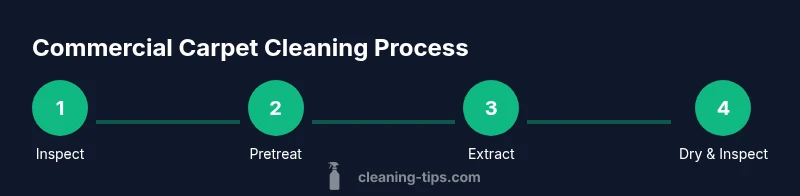
Before you begin, establish a clean, safe work zone and communicate with building management about access windows. Begin with pretreatment of noticeable stains, then suspend soils with a pre-spray. After applying the cleaning solution, employ adequate agitation to lift embedded soils. Use a powerful extractor to remove solution and soils, then perform a thorough rinse to minimize sticky residues. Finally, apply drying and deodorizing steps, followed by a final inspection to plan maintenance or touch-ups. This overview sets the stage for the detailed, task-focused steps that follow in the dedicated STEP-BY-STEP block.
Drying, deodorizing, and post-cleaning checks
Moisture control is critical in commercial settings. After extraction, use high-velocity air movers or fans to accelerate drying, especially in dense carpeted areas and in rooms with limited ventilation. Keep doors and windows open or use HVAC-assisted airflow where appropriate, but avoid drafts that could reintroduce dust. Check commonly missed spots like under furniture, stair landings, and in corners. If residual moisture or damp spots remain after 24–48 hours, schedule a follow-up pass or adjust the drying strategy. Deodorizing should be lightweight and non-residual; avoid heavy perfumes that may irritate occupants or trigger allergic responses. Track drying times to minimize downtime and coordinate with facility managers for best results.
Maintenance and prevention between cleanings
Prevention begins with routine maintenance. Implement a regular vacuuming schedule tailored to traffic levels, and use walk-off mats at entryways to reduce soil ingress. Consider applying carpet protectants only when compatible with traffic patterns and cleaning methods. Address spills promptly with appropriate spot-clean protocols to prevent deep staining. Document soil levels and plan retentions for high-traffic zones. A proactive maintenance plan reduces cleaning frequency and extends carpet life, ultimately lowering total costs for property owners and managers.
Tools & Materials
- Truck-mounted or high-capacity portable carpet cleaning machine(Choose based on space and power availability)
- Portable extractor wand or upholstery wand(For tight areas and stairs)
- Pre-spray/soil suspension solution(Select by fiber type and soil level)
- Stain pretreatment spray(For high-traffic spots and tough stains)
- Soft-bristled brushes or carpet wand(Use gently to avoid fiber damage)
- Extraction hoses and fittings(Ensure proper seals and length for reach)
- High-velocity air movers / dehumidifiers(Critical for fast drying in busy spaces)
- Moisture meter or hygrometer(Helpful to confirm dryness before reoccupation)
- Personal protective equipment (gloves, goggles)(Protect cleaners from chemical exposure)
- Spill towels and color-safe stain removers(Keep on hand for quick spot work)
Steps
Estimated time: 90-150 minutes per 1,000 sq ft
- 1
Inspect and prep space
Survey high-traffic zones and note any delicate fibers, dyes, or repaired seams. Move furniture if possible, protect walls, and set up containment to minimize occupant disruption. Communicate cleaning windows to building management and occupants so downtime is expected and minimized.
Tip: Mark the most soiled areas with removable tape to prioritize during pretreatment. - 2
Pretreat and soil suspension
Apply a pre-spray across the carpet, focusing on heavily soiled lanes and stains. Allow a dwell time per product label so soil loosens before agitation. For oily soils, consider a dual-chemistry approach that targets both particulate and oil-based soils.
Tip: Avoid over-wetting by applying in sections and using the right nozzle spray pattern. - 3
Apply cleaning solution and agitate
Gently agitate the solution with a carpet brush or wand to lift deep soils, especially in traffic lanes. Ensure even coverage and avoid creating heavy wet spots. For loop or cut-pile fibers, use a soft brush to prevent fiber distortion.
Tip: Work in grid patterns to ensure uniform cleaning and easier dry-out. - 4
Extract and rinse carpet
Operate the extraction machine to remove solution and suspended soils, moving slowly in straight lines. Rinse as needed to minimize residue, paying attention to transitions between areas and along baseboards. Repeat in problematic zones if soil remains visible.
Tip: Keep the extraction path clean and avoid re-wetting already cleaned sections. - 5
Drying and deodorizing
Deploy high-velocity air movers to circulate air and speed evaporation. If possible, warm ambient temperatures help with faster drying, but avoid heating too aggressively in occupied spaces. Light deodorizing can improve freshness without masking odors.
Tip: Use a moisture meter if available to confirm dryness before reoccupying. - 6
Final inspection and maintenance plan
Walk the space with a checklist to verify consistent cleanliness and dryness. Note any spots that require touch-ups and schedule a maintenance clean at appropriate intervals based on foot traffic and soil load. Record outcomes for future planning.
Tip: Document the date, area, method used, and any issues for accountability.
Questions & Answers
What is the most effective method for cleaning high-traffic commercial carpets?
Hot water extraction is widely recommended for deep soil removal in busy commercial spaces, especially on nylon and wool blends. The choice should still consider fiber type, backing, and stain patterns. For maintenance, combining methods in a scheduled plan yields the best balance of soil control and downtime.
Hot water extraction is generally best for busy spaces, but always match the method to carpet fiber and foot traffic.
What equipment do I need for a quality commercial carpet clean?
A capable extractor (truckmount or portable), pre-spray solution, stain pretreatment, and extraction hoses are essential. For tight spaces, include a wand or backpack tool and soft brushes. Drying equipment like air movers helps shorten downtime and prevent moisture problems.
You need a strong extractor, pre-spray, pretreatment for stains, and proper drying equipment.
How long does a typical commercial carpet clean take to dry?
Drying times vary with humidity and airflow, but most spaces begin feeling dry within 2–6 hours after cleaning when proper drying equipment is used. In poorly ventilated areas, it may take longer and require additional air movers.
Drying usually takes a few hours with good airflow; more in enclosed spaces.
Are cleaning chemicals safe to use around occupants?
Yes, when you select low-residue, pH-balanced cleaners and ensure proper ventilation. Always follow label directions and wear PPE. Store chemicals securely and briefly isolate treated areas until dry.
Yes, with proper products, ventilation, and safety gear.
Can I clean while the space is in use, or should I schedule downtime?
Cleaning can be done in occupied spaces, but plan around peak business hours to minimize disruption. Use low-moisture methods for in-use areas and communicate clearly with occupants about drying times and access.
You can clean in-use spaces, but plan around busy hours and drying times.
How often should commercial carpets be professionally cleaned?
Frequency depends on traffic and environment. High-traffic areas in offices or hospitality settings may benefit from quarterly deep cleans, with interim maintenance cleanings monthly or bimonthly. Always tailor to soil load and occupant activity.
Frequency depends on traffic—quarterly deep cleans are common for busy spaces.
Watch Video
The Essentials
- Plan around occupancy to minimize downtime.
- Choose cleaning methods based on fiber and soil type.
- Control moisture to prevent mold and odor.
- Test products and follow label instructions.
- Maintain a documented cleaning schedule for consistency.