Dish Soap to Clean Carpet: Safe, Simple Home Guide
Discover a safe, practical approach to using dish soap to clean carpet. Test spots, dilute properly, tackle stains, rinse well, and dry for optimal results. Practical tips included from Cleaning Tips.


According to Cleaning Tips, dish soap can safely lift light grime from carpet when used with care. This quick method uses a mild dish soap and warm water, tested on an inconspicuous spot. Apply the solution with a cloth, blot—don’t scrub—then rinse with clean water and dry. It’s best for light stains and routine refreshes, not heavy soil or delicate fibers.
Why dish soap is a practical option for carpet cleaning
Using dish soap to clean carpet is a practical option for light stains and everyday refreshes. Carpet cleaning often relies on mild, non-abrasive cleaners that won’t damage fibers. Dish soap, when used correctly, can help lift surface oils, food stains, and everyday dirt from synthetic carpets. The Cleaning Tips team notes that a gentle soap solution is less likely to leave harsh residues than heavy-duty chemical cleaners. This makes it a good first step for routine refreshes and light staining, especially on low-pile and synthetic carpets. Always consider your carpet type and brushing needs, and avoid applying soap to delicate fibers like wool.
Key takeaway: starting with a mild soap solution minimizes risk while safely lifting grime.
Safety and spot-testing before cleaning
Before you reach for the dish soap, test a small, inconspicuous area of the carpet. This quick check helps confirm colorfastness and fiber compatibility. If the dye transfers to a white cloth or the fiber shows signs of fading, stop and switch to a carpet-safe cleaner. Testing also protects your flooring from unexpected reactions with dyes or finishes. The Cleaning Tips analysis, 2026, emphasizes testing on patterns or textured carpets where color could be deceptive.
Pro tip: always keep a clean, white cloth handy for rapid blot testing.
How to mix and test a dish soap solution
A mild dish soap solution is typically very small-scale: use a tiny amount of soap in warm water, just enough to create a light suds. Pour the mixture into a spray bottle or bowl for easy application. Gargle? No—the goal is a gentle, damp cloth application, not a soaking soak. After mixing, test the solution on the same spot you plan to treat. If there’s no color bleed and the solution lifts soil without leaving a film, you’re ready to proceed.
Tip: label your bottle to avoid mixing with other cleaners.
Cleaning process: applying, blotting, rinsing, and drying
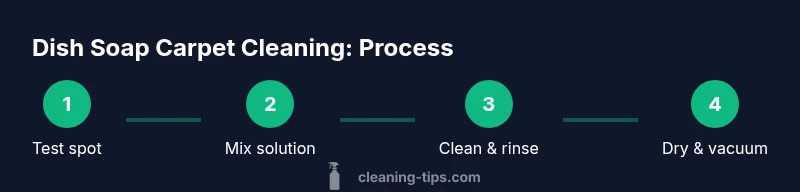
When you’re ready to treat the stain, apply the solution softly to the affected area using a clean cloth. Blot from the outside in, avoiding harsh scrubbing that can fray fibers. After applying, blot with a dry portion of cloth to lift moisture, then rinse with clean water and blot again until no soapy residue remains. Finally, use a fan or open windows to dry the carpet completely. This sequence reduces detergent residue that can attract new dirt.
Warning: avoid over-wetting the carpet; excess moisture can cause swelling or mold growth.
Common mistakes to avoid
Common errors include using too much soap, scrubbing aggressively, or skipping the rinse. Foam can be stubborn to remove and may leave a sticky film that attracts more dirt. Also, never use hot water on delicate fibers, which can cause shrinkage or color bleed. Finally, do not rely on dish soap for set-in oil stains or heavy soil—these require professional cleaning or specialized cleaners.
Note: always perform a colorfastness test first.
Maintenance tips for carpet cleaning after using dish soap
After cleaning, allow the carpet to dry completely before walking on it. Use towels to blot drying moisture and point a fan toward the area to speed drying. Vacuum once the carpet is fully dry to lift any remaining fibers and restore texture. If a soap film persists, you may need to repeat the rinse step with clear water to remove any residue.
Best practice: schedule quarterly touch-ups to prevent dirt buildup on high-traffic areas.
Tools & Materials
- Mild dish soap (color-safe, non-antibacterial)(Choose a gentle formula; avoid antibacterial variants)
- Warm water(Not hot; hot water can set some stains)
- Spray bottle(Clear label; 12–16 oz capacity is convenient)
- White microfiber cloths or clean towels(Use fresh cloths for each wash)
- Bucket or large cup(For mixing and rinsing; keep separate from soap)
- Ventilation (fan or open window)(Helps dry quickly and prevent mold)
Steps
Estimated time: 30-60 minutes (plus drying time)
- 1
Identify stain and fiber
Begin by locating the stain and noting the carpet fiber. This helps determine if dish soap is appropriate and how aggressively you should treat the area. Avoid location-based methods that could spread the stain.
Tip: Keep fiber safety in mind; synthetic fibers tolerate dish soap better than natural fibers. - 2
Test colorfastness
Select a hidden spot and apply a small amount of the cleaning solution. Blot gently and wait 5-10 minutes to check for color transfer or fabric damage. If there’s any color bleed, stop and switch to a carpet-safe cleaner.
Tip: Use a clean white cloth so you can clearly see any dye transfer. - 3
Prepare the cleaning solution
In a spray bottle or cup, mix a tiny amount of mild dish soap with warm water. Avoid saturating the solution; you’re aiming for a damp, not dripping, cloth application. Label the bottle to prevent mixing with other cleaners.
Tip: A little goes a long way—too much soap creates a film that attracts dirt. - 4
Apply to the stain
Dampen a clean cloth with the solution and gently dab the stained area. Work from the outside edge toward the center to prevent spreading. Do not scrub; aggressive rubbing can push stain deeper.
Tip: Use a fresh section of cloth frequently to lift soil. - 5
Blot and lift moisture
After applying, blot with a clean, dry cloth to lift moisture and soil. Avoid rubbing, which can damage fibers. Repeat blotting as needed until no more transfer occurs.
Tip: Press firmly but gently; the goal is to remove moisture without oversoaking. - 6
Rinse away soap residues
Dampen a cloth with clean water and blot the treated area to rinse away any soap film. Continue until you no longer see suds. Remaining residue can attract more dirt if left behind.
Tip: Rinse more than once if needed to ensure no soap remains. - 7
Dry thoroughly
Use towels to blot dry and then point a fan at the area or open windows to speed drying. Do not walk on the area until fully dry. A thorough dry reduces the chance of mold and odor.
Tip: Kick off the drying process with good airflow for best results. - 8
Evaluate and repeat if needed
Once dry, recheck the area for any remaining stain or odor. If needed, repeat the process on the affected spot using the same gentle approach. For stubborn stains, consider a dedicated stain remover or professional cleaning.
Tip: Avoid over-cleaning a single area; focus on targeted treatment instead.
Questions & Answers
Is dish soap safe for all carpet types?
Dish soap is generally safe for synthetic carpets but can affect delicate fibers like wool or silk. Always test first and use a carpet-safe cleaner for sensitive materials.
Dish soap works for synthetic carpets but test first on delicate fibers like wool.
Will dish soap leave a residue that attracts dirt?
If not rinsed properly, soap residue can leave a film that attracts more dirt. Rinse until no suds remain and blot dry.
Make sure to rinse well so no soap film remains.
Should I rinse after using dish soap?
Yes. Rinse with clean water after applying dish soap to remove any residue. Blot dry and let the area dry completely.
Rinse thoroughly after cleaning to avoid soap residue.
Can dish soap remove oil-based stains?
Dish soap can help with some oil-based stains, but heavy, set-in oils may require specialized cleaners or professional help.
Soap helps with some oil stains, but not all.
How long does it take for treated carpet to dry?
Drying time depends on warmth and airflow but typically ranges from a few hours to half a day. Use fans or open windows to speed up the process.
Dry time varies, but ensure good airflow to speed up.
What if the stain returns after drying?
If staining recurs, re-evaluate the stain type and consider using a stain-specific remover or professional cleaning for best results.
If it returns, try a stain-specific approach or professional help.
Watch Video
The Essentials
- Test your spot first before cleaning.
- Use a mild dish soap solution and blot gently.
- Rinse thoroughly to avoid soapy residue.
- Dry completely to prevent mold and odor.
- Dish soap is best for light stains, not heavy soils.