Can Clean Company: A Practical Cleaning Guide
Learn a practical, step-by-step approach for a cleaning company to clean spaces efficiently and safely. Get tools, schedules, safety tips, and QA guidance from Cleaning Tips for consistent results.


By following a structured cleaning workflow, a cleaning company can consistently deliver spotless, safe spaces. This quick guide explains a clear, step-by-step process, essential tools, and practical tips to train staff, schedule tasks, and maintain high hygiene standards across offices, retail spaces, and multi-tenant buildings, ensuring client satisfaction and compliance.
Why Can Clean Company Succeed in Any Space
According to Cleaning Tips, can clean company? The answer lies in building a scalable framework that blends process, people, and products. When a cleaning company adopts a clear standard, it can clean company spaces—whether an office tower, a medical clinic, or a multi-tenant campus—consistently and safely. In this section we explore why professional cleaning is more than scrubbing; it’s about systematizing tasks, training, and quality control to deliver reliable results across client sites. By designing repeatable routines, you reduce the variability that often lapses between shifts or between buildings. The outcome is predictable cleaning quality, happier clients, fewer callbacks, and a stronger reputation in the market. Cleaning Tips has observed that firms with documented procedures outperform those that rely on memory or ad-hoc approaches. In practice, can clean company spaces becomes a capability, not a lucky outcome, when managers invest in standards, checks, and continuous improvement.
Core Cleaning Principles for Commercial Environments
Commercial environments pose distinct challenges: higher foot traffic, diverse surface types, and stricter schedules. The core principles to guide every cleaning program are health, efficiency, and sustainability. Health-first means selecting products with proven efficacy and letting dwell time do the work rather than scrubbing harder. Efficiency comes from planning routes, limiting unnecessary movement, and using color-coded tools to prevent cross-contamination. Sustainability involves using concentrated cleaners, minimizing water usage, and choosing non-toxic formulations whenever possible. The Cleaning Tips team emphasizes three practical routines: daily surface cleaning for high-traffic zones, periodic deep cleans for neglected areas, and routine inspections to identify recurring problems. When staff embrace these principles, they create safer environments with fewer odors, less dust, and better indoor air quality. The result is longer asset life, reduced maintenance costs, and higher occupant satisfaction. Across offices, retail spaces, and service centers, a principled approach to cleaning translates into reliable results, even under tight deadlines.
Required Tools and Materials for Consistent Results
A consistent outcome starts with the right toolkit. Essential items should be readily available, labeled, and replaced as needed. Microfiber cloths, ideally color-coded, capture more dirt with less chemical. Nitrile gloves protect hands, while safety goggles shield eyes during chemical use. Stock up on EPA-registered disinfectants, multi-surface cleaners, and glass cleaners, plus a degreaser for cafeterias or kitchens. A sturdy mop, a wringer bucket, a sturdy broom and dustpan, and a reliable vacuum (preferably with a HEPA filter) are non-negotiables for hard floors and carpets. Always carry an ample supply of trash bags, color-coded spray bottles, and a soft squeegee for windows. Don’t forget safety basics: masks or respirators when needed, and proper ventilation for enclosed spaces. Keeping tools clean between spaces reduces cross-contamination. With this toolkit, a team can handle standard commercial cleanings efficiently and with high quality.
Designing a Company-Wide Cleaning Schedule
Consistency hinges on a well-planned schedule that aligns with client expectations and facility use. Start by mapping spaces: restrooms, break rooms, lobbies, offices, and back-of-house areas each have different tasks and frequencies. Assign tasks to teams or individuals, and decide on a cadence—daily, weekly, or monthly—that minimizes disruption. For example, restroom sanitation and surface wipe-downs should happen after peak hours, while floor care might occur overnight. Build in buffer times for spill response, equipment maintenance, and unexpected events. Use checklists to track completion and monitor quality. A shared calendar or cleaning software helps keep everyone on the same page, reduces miscommunication, and provides a traceable record for clients. Finally, tailor the plan to each site: some properties require enhanced disinfection, others rely on green products or quiet operation. A thoughtful schedule keeps spaces consistently clean and reduces the risk of missed tasks.
Step-By-Step Cleaning Workflow (Overview)
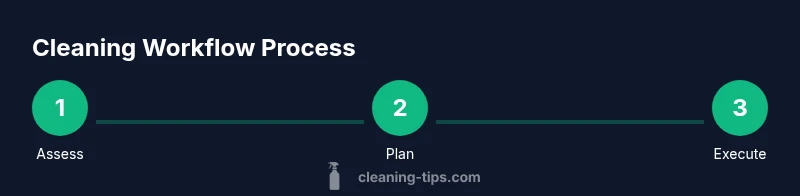
Below is a high-level workflow that can be adapted to most commercial sites. This overview is designed to align with the step-by-step instructions that follow in the dedicated section. Start with a facility walk-through to identify high-priority areas, then implement routine cleaning in the order that minimizes cross-contamination and rework.
- Prepare the space: remove clutter and secure sensitive areas.
- Dust high surfaces and vents from top to bottom to prevent re-settling.
- Wipe and sanitize high-touch areas (door handles, light switches).
- Clean restrooms and break rooms with appropriate disinfectants.
- Vacuum carpets, sweep and mop hard floors, and edge along baseboards.
- Clean glass, mirrors, and stainless-steel surfaces to restore shine.
- empty trash, replace supplies, and report any maintenance needs.
Safety, Compliance, and Quality Assurance
Professional cleaning hinges on safety and compliance. Always follow local regulations, product labels, and SDS (Safety Data Sheets) for chemical handling. Establish a formal QA process that includes pre-shift briefings, on-site checklists, and post-clean audits. Ensure employees wear appropriate PPE (gloves, eye protection, masks when needed) and maintain ventilation when using cleaners. Document incidents and near-misses to drive continuous improvement. Cleaning Tips recommends regular equipment maintenance, color-coded systems to avoid cross-contamination, and routine testing of surface cleanliness using simple, repeatable methods. By embedding safety and QA into daily routines, a cleaning company can build trust with clients and extend the lifecycle of facilities while meeting regulatory expectations.
Training for Consistency and Client Satisfaction
Consistency comes from training, practice, and feedback loops. Develop a core training curriculum covering technique, product usage, safety, and site-specific requirements. Use shadowing, checklists, and weekly audits to reinforce best practices. Encourage staff to document anomalies, such as unusual wear on floors or recurring staining, so supervisors can adjust the plan. Client satisfaction grows when teams communicate clearly, adhere to schedules, and maintain a uniform standard across sites. The Cleaning Tips team emphasizes ongoing coaching and refresher courses, plus annual re-certification for cleaners handling specialized spaces (healthcare, food service, or retail). A culture of learning ensures can clean company spaces remains reliable even as teams rotate or expand.
Measuring Success and Continuous Improvement
Measuring success goes beyond a clean appearance. Track metrics like task completion rates, incident reports, and feedback scores from clients. Use these insights to refine checklists, adjust frequencies, and reallocate resources for peak times. Regular reviews should compare site performance against contractual standards and internal benchmarks. Celebrate improvements and address gaps with targeted training and equipment updates. By embracing a culture of continuous improvement, a cleaning company can consistently elevate service levels and demonstrate measurable value to clients.
Tools & Materials
- Microfiber cleaning cloths (color-coded)(Multiple colors to prevent cross-contamination; replace when worn)
- Nitrile gloves(Disposable; choose size for each team member)
- Safety goggles(Protect eyes during chemical use)
- EPA-registered disinfectant(Follow label dwell time and usage directions)
- All-purpose cleaner(For general surfaces; avoid food-contact zones)
- Glass cleaner(For mirrors and non-porous surfaces)
- Broom and dustpan(Narrow and wide options for corners)
- Mop and bucket with wringer(Use color-coded pads for floors)
- Vacuum cleaner with HEPA filter(Essential for carpets and hard floors)
- Degreaser (for kitchens)(Use only where needed)
- Carpet cleaner / extractor(Optional for deep-clean programs)
- Trash bags (assorted sizes)(Keep a stock in each site)
- Color-coded spray bottles(Match cloth color coding)
- Face mask or respirator(Use during strong chemical use or poorly ventilated spaces)
Steps
Estimated time: 60-90 minutes per space
- 1
Assess space and set goals
Walk through the site to identify high-priority areas and establish realistic cleaning goals aligned with client expectations. Document any safety risks or accessibility challenges before starting.
Tip: Record target areas and contact points for future audits. - 2
Plan route and schedule
Create a route that minimizes backtracking and cross-traffic. Schedule tasks to occur during low-occupancy times when possible to reduce disruption.
Tip: Use a site map or digital checklist to visualize the path. - 3
Prepare tools and materials
Gather required tools, check stock levels, and verify safety gear. Prepare color-coded systems to prevent cross-contamination and ensure you have the correct cleaners for each zone.
Tip: Pre-fill spray bottles to reduce on-site prep time. - 4
Execute cleaning with methodical technique
Follow a top-to-bottom, left-to-right approach, replace soiled towels as you go, and adhere to dwell times for disinfectants. Prioritize high-touch surfaces in central zones.
Tip: Wipe surfaces with a microfiber towel to trap particles rather than smear them. - 5
Inspect and adjust
Perform a quick post-clean check, noting any missed spots or equipment malfunctions. Re-clean areas as needed and document corrective actions for the site log.
Tip: Use a standard QA checklist for consistency. - 6
Document results and schedule next tasks
Record tasks completed, note any maintenance needs, and plan the next cycle. Share results with the client and update internal metrics for future planning.
Tip: Set the next visit date while on site to reinforce accountability.
Questions & Answers
What is the most important factor in cleaning a company space?
Consistency and adherence to a documented process are key. A repeatable system reduces errors and ensures reliable results across shifts and sites.
Consistency with a documented process is essential for reliable results across sites.
How should a cleaning company approach products for office spaces?
Choose EPA-registered, low-toxicity cleaners suitable for high-touch surfaces. Follow label instructions and dwell times to maximize effectiveness while prioritizing occupant safety.
Use EPA-registered cleaners and follow labels for safety and effectiveness.
Can green cleaning products meet professional standards?
Green products can meet professional standards when chosen carefully and used as directed. They should be effective for the targeted soils and compatible with site surfaces.
Green products can work well when selected and used properly.
Are customizable cleaning plans available for different sites?
Yes. Most cleaners tailor plans based on site size, occupancy, and client preferences, including frequency, products, and staffing levels.
Custom plans are common and help fit each site’s needs.
What safety precautions are essential when cleaning commercial spaces?
Wear appropriate PPE, ensure ventilation when using chemicals, follow label instructions, and maintain spill response readiness. Document any safety incidents promptly.
Wear PPE, ventilate, and follow product labels for safety.
Watch Video
The Essentials
- Standardize tasks for consistency and efficiency.
- Use color-coded tools to prevent cross-contamination.
- Train staff with clear checklists and QA reviews.
- Document results to demonstrate value to clients.