How to Clean Jewellery Safely: Easy DIY Shine for All Pieces at Home
Learn practical, safe methods to clean jewellery without damaging stones or metals. This guide covers step-by-step techniques, common mistakes, and storage tips from Cleaning Tips to keep your jewellery brilliant.


You can clean most jewellery safely with mild soap, warm water, a soft brush, and a fine cloth. Avoid harsh chemicals, ultrasonic cleaners on fragile stones, or abrasive polishes. Separate different metals, rinse well, dry completely, and store pieces separately. Inspect for loose stones before wearing. If a piece has antique settings or opals, consult a jeweler.
Understanding Jewellery Materials and Cleaning Risks
Jewellery is made from a wide range of materials, including precious metals (gold, silver, platinum), gemstones (diamond, ruby, emerald), and sometimes delicate finishes or settings. Cleaning with the wrong product can damage metal surfaces, loosen stones, or degrade finishes. Pearls and opals are particularly sensitive to chemicals and should be handled with extra care. Before cleaning, identify the metal type and look for any notes on the piece (antique settings or glued stones may require professional care). A gentle, piece-by-piece approach minimizes risk and preserves value. Bold caution: treat every item as unique and tailor your method accordingly. Cleaning Tips recommends patch-testing cleaners on inconspicuous areas first to avoid surprises.
- Soft stones like opal, pearl, and turquoise are porous or organic and react to water and cleaners; avoid soaking or harsh chemicals.
- Porous or treated stones may change color or lose luster with improper cleaning.
- For complex pieces or high-value items, consider professional cleaning for optimal results.
What to Look For Before Cleaning
- Check for loose stones or bent prongs.
- Note any coatings, such as rhodium plating, that could wear during cleaning.
- If a piece has an antique setting, or if you’re unsure of the gemstone, consult a professional before attempting DIY cleaning.
According to Cleaning Tips, a cautious start with mild cleansers reduces the risk of damage while keeping your collection sparkling. The Cleaning Tips team found that many common cleaning mistakes involve aggressive scrubbing or using unsuitable chemicals, which can dull metal and loosen stones over time.
noteidListHeadingsOfSectionFormatTitleListInTextToMarkdownEmbedNote
Tools & Materials
- Mild dish soap(A drop or two in warm water.)
- Warm water(Not hot; use in a bowl.)
- Soft-bristled toothbrush or jewellery brush(Gently scrub with small circular motions.)
- Lint-free cloth or microfiber polishing cloth(For drying and buffing to a shine.)
- Soft cotton cloth (optional)(Extra polishing or drying aid.)
- Patch-test cloth or pad (optional)(Test inconspicuous areas first.)
Steps
Estimated time: 15-25 minutes
- 1
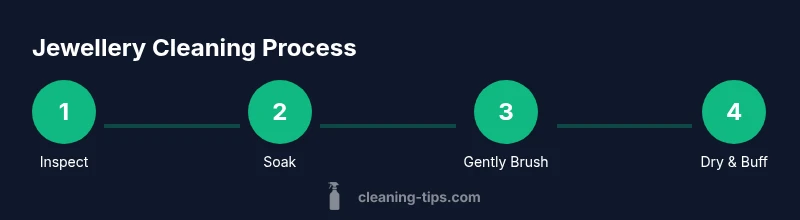
Prepare a clean cleaning station
Set up a small, quiet workspace with a bowl of warm water, soap solution, and a dry cloth. Lay out all pieces you'll clean separately to avoid tangling or mixing metals. This minimizes risk and keeps items organized.
Tip: Keep a soft mat under the pieces to prevent slipping and scratches. - 2
Inspect each piece for damage
Before cleaning, closely examine settings for loose stones, bent prongs, or worn clasps. If you find any issues, skip cleaning that item and seek professional help to avoid causing further damage.
Tip: A quick magnifier helps you spot loose stones you might miss with naked eyes. - 3
Soak only for jewelry that tolerates water
For most pieces, dip gently into the warm soapy water for 1–3 minutes. Do not soak any item with pearls, opals, or other porous stones unless advised by a professional.
Tip: Pearls and opals can be damaged by prolonged exposure to moisture. - 4
Gently brush with a soft brush
Using the toothbrush, brush in tiny circles, focusing on crevices and setting areas. Avoid scrubbing hard over stones or enameling. Rinse the piece briefly after brushing to remove loosened dirt.
Tip: Be especially gentle around settings or delicate engravings. - 5
Rinse with clean water
Rinse each piece under lukewarm, running water or in a separate bowl of clean water to remove all soap residue. Ensure no soap remains, as it can dull metal over time.
Tip: Avoid hot water as it can affect certain stones or finishes. - 6
Dry and polish
Pat pieces dry with a lint-free cloth, then buff lightly to bring out shine. For a final touch, use a polishing cloth designed for jewellery to restore luster without scratching.
Tip: Always fully dry to prevent water spots and tarnish.
Questions & Answers
Is toothpaste safe for cleaning jewellery?
No. Toothpaste is abrasive and can scratch metals and gemstones. Use mild soap and water or a jewelry-safe cleaner. For delicate pieces, seek professional advice.
Toothpaste isn’t safe for jewellery; it can scratch metals and stones. Use mild soap and water instead.
Can I use ultrasonic cleaners on all jewellery?
No. Ultrasonic cleaners can loosen stones or damage fragile settings, especially for opals, pearls, and antique pieces.
Ultrasonic cleaners aren’t suitable for all jewellery, especially pearls and delicate stones.
How do I clean silver without scratching it?
Use a mild soap solution and a soft cloth or a dedicated silver polishing cloth; for heavy tarnish, a gentle polish with appropriate silver cleaner is acceptable.
Silver can be cleaned with a mild soap solution and a soft cloth, or a safe silver polish for tarnish.
How should I store cleaned jewellery?
Store each piece separately in a soft pouch or divided jewellery box to avoid scratches and tangling. Keep away from direct sunlight and moisture.
Store pieces separately in soft pouches to prevent scratches and tangling.
Can I clean all gemstones the same way?
No. Some stones are delicate and require special care (e.g., opals, pearls). Always verify cleaning methods for each stone type.
Different stones need different care; check what each gem requires before cleaning.
What about porous gemstones?
Porous stones should be cleaned sparingly and with gentle solutions; avoid soaking and high heat. When in doubt, consult a jeweller.
Porous gems like opal or turquoise need extra care and gentle cleaning.
Watch Video
The Essentials
- Use gentle cleansers and soft tools for safety.
- Different materials need different care; pearls and opals require extra caution.
- Dry thoroughly and store pieces separately to prevent tarnish and scratching.
- Inspect regularly for loose stones and take action early.