How to clean non toxic: A practical guide
Learn practical, non-toxic cleaning methods using safe ingredients and routines that protect your family and the environment. This guide covers ingredients, product choices, room-by-room protocols, and storage tips.


By following clean non toxic methods, you can keep your home sparkling without harmful fumes. This guide shows you how to clean non toxic using simple, store-bought or homemade ingredients, with practical steps and safety tips suitable for busy households. You’ll learn what ingredients are truly non-toxic, how to mix safely, and how to apply them to kitchens, bathrooms, fabrics, and floors without compromising effectiveness.
Why clean non toxic matters
According to Cleaning Tips, indoor air quality and family safety improve when you choose non-toxic cleaners. Everyday products can release fumes and residues that linger in living spaces. By prioritizing non-toxic options and simple, reusable tools, you reduce exposure for children, pets, and adults. In this section you’ll learn practical strategies for selecting safe ingredients, using them correctly, and applying them with confidence. The goal is a safer home without sacrificing cleanliness, cost, or effectiveness.
Core ingredients for a non-toxic clean
A great non-toxic clean relies on common, safer ingredients rather than harsh solvents. White vinegar and baking soda provide deodorizing power and gentle scrubbing without chlorinated fumes. Castile soap or a mild liquid soap acts as a gentle surfactant for grease and grime. For disinfection, consider hydrogen peroxide on non-porous surfaces, always testing first and avoiding mixing with vinegar. Essential oils are optional for fragrance but not required. When selecting products, favor those with third‑party certifications like Green Seal or EPA Safer Choice, and read labels for avoidances (ammonia, chlorine bleach, “fragrance” that isn’t specified).
How to choose non-toxic products
Not all ‘green’ labels are created equal. Look for clear ingredient lists and third‑party certifications. Avoid products that list vague terms such as “proprietary blend” without specifics. Favor concentrated formulas that reduce plastic waste and allow you to reuse spray bottles. You can also make your own cleaners with simple ingredients in common kitchens. Always test a small area first to ensure compatibility with surfaces like marble, stone, and wood finishes.
Room-by-room non-toxic cleaning protocol
For kitchens: spray a diluted soap solution on counters, wipe with microfiber; use baking soda paste for stubborn stains; avoid acidic cleaners on natural stone. For bathrooms: use a vinegar-water spray on tiles, a baking soda scrub for grout, rinse thoroughly to prevent residue. For floors: choose a mop solution (two capfuls of mild soap per gallon), avoid ammonia on wood floors, test colorfastness. For fabrics: steam or wipe with a fabric-safe solution; avoid over-wetting. Always finish by wiping surfaces with a clean, damp cloth to remove any residue and let them air-dry.
Safety and storage practices
Store cleaners in a locked cabinet away from children and pets. Label all containers clearly. Ensure good ventilation during cleaning. Keep a separate bottle for each area to avoid cross-contamination. Dispose of leftover cleaners safely per local guidelines and never mix chemicals. Regularly audit your cleaners to remove products with questionable ingredients and replace them with clearly labeled, non-toxic options.
Quick routine for a healthier home
Develop a simple weekly cadence to keep your space consistently clean. Example: 10-minute Monday surface wipe-downs, midweek quick bathroom refresh, and a Friday kitchen wipe and light floor mop. Maintain a minimal set of non-toxic cleaners to reduce clutter and waste. Use microfiber cloths and a reusable spray bottle system to cut waste and improve air quality over time. This routine keeps grime at bay while limiting chemical exposure in daily life.
Common mistakes to avoid
Avoid mixing cleaners, which can release harmful gases. Don’t substitute stronger cleaners without checking surface compatibility. Don’t over-dilute; maintain enough concentration for effectiveness. Don’t rely on fragrance alone to signal cleanliness. Don’t neglect to rinse surfaces that may harbor residue. Finally, avoid storing cleaners in the living areas where children or pets could reach them.
Bonus: a quick checklist for non-toxic cleaning
- Gather essential tools and safe ingredients before you start. - Test on a hidden area first when using new combinations. - Ventilate rooms to keep air fresh during cleaning. - Rinse and dry high-contact surfaces to minimize residue. - Store products securely and label containers clearly.
Tools & Materials
- Spray bottles (12-20 oz)(One bottle per cleaner for easy switching)
- White vinegar (5-8% acidity)(Use on non-porous surfaces; avoid natural stone)
- Baking soda(Deodorizing and gentle scrubbing paste)
- Castile soap or mild liquid soap(Gentle surfactant for grease)
- Microfiber cloths(Reusable and highly effective)
- Gloves(Protect hands during cleaning)
- Hydrogen peroxide (3%)(Disinfectant on non-porous surfaces)
- Essential oils (optional)(For fragrance if desired; not required)
Steps
Estimated time: 90-120 minutes
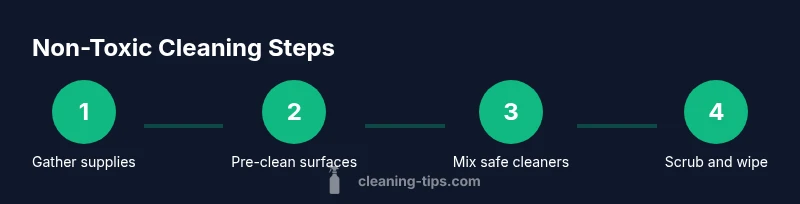
- 1
Gather supplies
Collect your non-toxic cleaning products, microfiber cloths, spray bottles, a bucket, gloves, and a safe surface plan. Having everything within reach minimizes interruptions and helps you stay focused on safe methods.
Tip: Place items in a portable caddy or tote near your cleaning area to save steps. - 2
Pre-clean surfaces
Dust and remove loose debris from surfaces before applying cleaners. Dry dusting reduces the amount of grime you’ll need to scrub away, making the process faster and more effective.
Tip: Work from top to bottom to prevent re-cleaning lower areas. - 3
Dilute cleaners correctly
Follow mild dilution guidelines for each cleaner (e.g., a small amount of soap in warm water). Overly strong mixtures can leave residues or damage surfaces.
Tip: Always label diluted mixtures and use a dedicated bottle for each cleaner. - 4
Clean kitchen counters and appliances
Spray a diluted soap solution on countertops and wipe with a microfiber cloth. For grease, gently scrub with a baking soda paste; avoid acidic cleaners on natural stone.
Tip: Rinse cloth frequently to prevent spreading grime. - 5
Scrub sinks and grout
Apply baking soda paste to the sink and grout lines, then scrub with a non-scratch pad. Rinse thoroughly to remove any residue that could attract more dirt.
Tip: Test grout colorfastness on an inconspicuous area first. - 6
Disinfect non-porous surfaces
Use hydrogen peroxide on non-porous surfaces where disinfection is desired. Do not mix with vinegar; apply in a separate step and allow contact time before wiping.
Tip: Ventilate the room during disinfection to minimize fumes. - 7
Mop floors and wipe textiles
Mop floors with a mild, non-toxic solution; avoid ammonia on wood floors. Wipe textiles gently and allow ample drying time.
Tip: Let floors dry completely before reusing the space. - 8
Rinse and dry surfaces
Wipe surfaces with a clean, damp cloth to remove any remaining cleaner. Dry with a towel to prevent streaks and moisture buildup.
Tip: A final wipe with a dry cloth reduces water spots. - 9
Store and label products
Return cleaners to their storage area, label containers clearly, and ensure lids are secure. Keep cleaners out of reach of children and pets.
Tip: Rotate products periodically to ensure safety data is current.
Questions & Answers
What makes a cleaner non-toxic?
Non-toxic cleaners avoid harsh chemicals and fumes, relying on safer ingredients like vinegar, baking soda, Castile soap, and mild disinfectants. Always read labels and avoid unknown additives.
Non-toxic cleaners use gentler ingredients and clear labels to reduce fumes.
Are store-bought green cleaners truly safer?
Many store-bought green cleaners meet recognized safety standards, but check for certifications and read ingredient lists to confirm safety for your surfaces.
Many store-bought green cleaners are safer; read labels to be sure.
Can I use vinegar on all surfaces?
Vinegar is safe on many surfaces but should not be used on natural stone like marble or granite as it can etch the surface. Always test first.
Vinegar is not appropriate for natural stone surfaces.
Is hydrogen peroxide safe for a non-toxic clean?
Hydrogen peroxide can disinfect on non-porous surfaces, but avoid mixing with vinegar and limit use on colored fabrics or surfaces that could discolor.
Hydrogen peroxide is a safe disinfectant for many surfaces when used correctly.
How long do surfaces take to dry after cleaning?
Drying times vary by material and ventilation, but most surfaces dry within minutes when air is circulating.
Most cleaned surfaces dry in a few minutes with good airflow.
Should I use essential oils in my cleaners?
Essential oils are optional for fragrance. They can cause sensitivities in some people, so test or skip if needed.
Essential oils are optional; test compatibility first.
Watch Video
The Essentials
- Choose non-toxic ingredients for safety
- Test surfaces before full application
- Ventilate during cleaning to protect air quality
- Label and store cleaners securely