Green Clean: A Step-by-Step Eco Cleaning Guide for Homes
Learn a practical, toxin-free cleaning approach with green clean methods. This guide covers safe ingredients, routines, tools, and tips to maintain a healthier home with minimal chemical use.


By the end of this guide you will implement a practical green clean routine that minimizes synthetic chemicals and protects indoor air quality. You will learn the core definition of green cleaning, why it matters for health and the environment, and the essential tools and safe ingredients that let you start today. The approach emphasizes affordable, everyday substitutions like vinegar and baking soda, plus a simple weekly schedule.
What green clean means in everyday home care
Green cleaning means using non-toxic, biodegradable cleaners and practical methods that minimize chemical exposure for people and pets while protecting the environment. It emphasizes simple, effective routines rather than heavy chemical use. The Cleaning Tips team notes that green cleaning combines safer ingredients, mechanical cleaning (like wiping and rinsing), and mindful resource use. In daily life, this translates to choosing products with recognizable ingredients, reducing plastic waste, and ventilating spaces during cleaning. For many households, starting with plain white vinegar, baking soda, and unscented soap covers a wide range of tasks from kitchen counters to bathroom tiles. It also means looking beyond labels to avoid unnecessary additives and fragrances that can irritate eyes and lungs. By adopting these practices, you begin building a resilient habit that supports healthier living for everyone under your roof.
Which spaces benefit most from green clean practices
Rooms that typically benefit most include kitchens, bathrooms, and high-traffic living areas where dust, grime, and moisture accumulate. Kitchens respond well to a daily wipe-down using a mild, plant-based soap and a rinse with clean water. Bathrooms benefit from a baking soda scrub on sinks and tiles, followed by a vinegar mist to tackle mineral buildup. Living areas gain from dusting with microfiber cloths and using minimal, non-toxic cleaners on surfaces. This approach reduces volatile organic compounds (VOCs) in the air and minimizes exposure for children and pets. According to Cleaning Tips, a consistent routine that prioritizes ventilation and eco-friendly supplies has a meaningful impact on indoor air quality over time.
Defining green clean ingredients you can trust
Safer options include ingredients you can pronounce, such as distilled white vinegar, baking soda, and unscented plant-based soap. These cleaners perform well for everyday tasks like counters, sinks, and glass surfaces when used correctly. Never mix household acids with bleach or ammonia, as dangerous fumes can form. For tougher jobs like grout or mineral stains, a paste made from baking soda and water can be effective. Remember that green cleaning is not about perfect, industrial-strength power every time; it’s about consistent, safer cleaning choices that add up to a healthier home over weeks and months.
How to evaluate products and avoid greenwashing
Look for certifications and transparent ingredient lists, and favor products with simple, biodegradable formulas. Read labels for fragrance-free options and avoid ambiguous terms like 'deodorizing' that can mask strong chemicals. The Cleaning Tips team emphasizes product stewardship: buy less, opt for concentrated formulas, and reuse containers when possible. By prioritizing refillable and locally sourced options, you reduce plastic waste and lower the overall environmental footprint of your cleaning routine.
Tools & Materials
- White vinegar(Use 5% acidity; do not mix with bleach)
- Baking soda(For scrubbing and deodorizing)
- Castile soap or unscented mild soap(Gentle base cleaner)
- Lemon juice (optional)(Natural scent and grease-cutting power)
- Microfiber cloths(For streak-free cleaning)
- Spray bottles (glass or PET)(Label each cleaner)
- Gloves (nitrile or rubber)(Protect hands from residue)
- Measuring spoons and cups(Precise measurements for recipes)
- Old toothbrush or scrub brush(Grout and corners)
Steps
Estimated time: 60-90 minutes to set up initial toolkit and plan; ongoing usage day-to-day
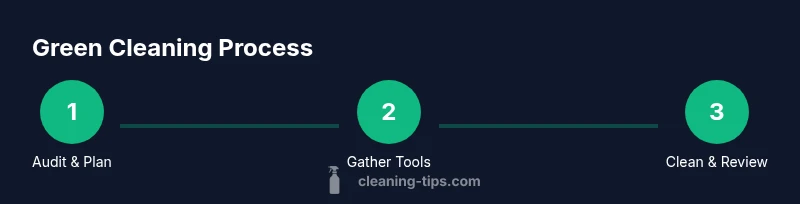
- 1
Assess your current cleaners
Take stock of every cleaner you currently use and note ingredients. Identify which products contain harsh chemicals or plastic packaging that you want to replace first. This audit helps you prioritize replacements and reduce redundancy in your cabinet.
Tip: Create a short list of priorities and set a one-week target to replace the top three products. - 2
Choose green-clean replacements
Select non-toxic, biodegradable cleaners and prepare simple DIY blends with vinegar, baking soda, and mild soap. Read labels to avoid fragrances and harsh solvents. Start with a universal surface spray and a bathroom cleaner you can trust.
Tip: Check for third-party certifications and prefer fragrance-free options to minimize irritation. - 3
Assemble your toolkit
Gather the essential tools and containers. Label bottles clearly, keep a dedicated spray bottle for each room, and store ingredients in a cool, dry place away from children.
Tip: Use glass bottles for long-term storage and reuse containers whenever possible. - 4
Create a room-by-room routine
Develop a simple schedule that covers kitchen, bathroom, and living areas. Use one all-purpose cleaner for multiple surfaces, and reserve stronger blends for stubborn stains with proper ventilation.
Tip: Ventilate kitchens and bathrooms during cleaning to improve air quality. - 5
Make homemade cleaners safely
Prepare blends in small batches. Keep a log of ingredients and ratios. Avoid mixing acids with bleach, and test new blends on inconspicuous areas first.
Tip: Label batches with date and ingredients to track freshness. - 6
Monitor, review, and adjust
Observe how effective your green-clean routine is and adjust products and techniques as needed. Over time, you’ll reduce waste and refine your approach for each space.
Tip: Season your routine with quarterly reviews to stay aligned with health goals.
Questions & Answers
What qualifies as green clean?
Green cleaning means using non-toxic, biodegradable cleaners and methods that minimize chemical exposure while protecting the environment. It emphasizes safer ingredients and mindful practices over harsh chemicals.
Green cleaning means choosing non-toxic, biodegradable cleaners and safer practices to reduce chemical exposure at home.
Are store-brand eco cleaners effective?
Many store-brand eco cleaners are effective if they use simple, transparent ingredients. Read labels for safe components, avoid unnecessary fragrances, and compare certifications. Quality varies, so start with one or two trusted products and expand as you confirm performance.
Eco cleaners can work well when ingredients are clearly listed and fragrances are limited. Start with a couple you trust and test their performance.
Can I mix homemade cleaners safely?
Some blends are safe when used separately, but never mix acids with bleach or ammonia due to toxic fumes. Always test on small areas and label each batch. Keep homemade solutions away from children and pets.
Don’t mix cleaners like vinegar with bleach; label mixtures and test on a small area first.
How long does it take to transition to green clean?
Transitioning gradually is realistic. Start with core replacements, then phase in DIY blends and routine tweaks over several weeks. Consistency matters more than speed, and the payoff is healthier air and fewer harsh chemicals.
Take it step by step and give yourself a few weeks to build the habit.
Where can I recycle old cleaners responsibly?
Check local guidelines for household hazardous waste and recycling. Many communities accept empty containers or concentrate refills. Reuse bottles when possible and avoid disposing of cleaners down the drain unless recommended.
Look up local guidelines for recycling containers and disposing of cleaners responsibly.
Watch Video
The Essentials
- Choose non-toxic, biodegradable cleaners wherever possible
- Build a simple kit with reusable containers
- Ventilate spaces to protect air quality
- Avoid mixing cleaners that can create dangerous fumes
- Transition gradually to reduce waste and save money