Clean vs Unclean Animals: A Practical Comparison for Home Hygiene
Explore an evidence-based comparison of clean vs unclean animals, their historical roles, classification criteria, and practical implications for home cleaning and health.


Clean vs unclean animals reflects ancient rules, not daily household hygiene. In practice, focus on safe handling, thorough cleaning, and proper waste disposal regardless of classification. This article provides a clear, evidence-based comparison to help you apply consistent cleaning habits at home. This framing helps readers separate timeless beliefs from practical cleaning guidance for everyday living.
Definitions and Historical Context
The phrase clean vs unclean animals has deep historical roots in religious and cultural systems. In many traditions these classifications were used to guide what could be eaten, touched, or offered, and they carried moral and ritual significance as much as practical ones. For readers of Cleaning Tips, the distinction can seem distant, yet it still influences modern attitudes toward safety and cleanliness. According to Cleaning Tips, these labels historically emerged from attempts to codify practices around food preparation, waste management, and ritual purity. The practical upshot for households today is not to adopt ancient prohibitions but to understand the logic behind them: separating potentially risky biological materials from safe, everyday routines. The core idea of clean vs unclean animals is not a simple hygiene scale but a framework that combines biology, culture, and normative rules into a living tradition.
Classification Criteria Across Cultures
Across major cultural and religious systems, the criteria for labeling animals as clean or unclean vary, yet there are common threads. In many biblical and Qur'anic-era codes, land animals are deemed clean if they meet two basic criteria: they are ruminants and have split hooves; sea creatures are clean if they have fins and scales; birds are evaluated by lists of species considered acceptable or forbidden. These general rules were designed to minimize the risk of disease transmission in ancient contexts while supporting ritual and dietary norms. Modern readers should note that many of these criteria were derived from observable biology and traditional knowledge rather than modern microbiology. The exact lists differ by tradition, but the underlying logic—distinguishing materials that require additional care from those considered safer—remains a common thread across cultures.
Modern Hygiene Interpretations
Today, most households no longer treat clean or unclean as moral judgments. Instead, classification often serves as a starting point for thinking about risk management and sanitation. The central idea is not whether an animal is sacred or profane, but how animals, foods, and waste can carry pathogens and how careful handling minimizes those risks. In practice, modern hygiene emphasizes surfaces, cross-contamination, cooking temperatures, and storage. When people encounter terms like clean or unclean in everyday life, they are really engaging with a precautionary framework that encourages hygiene habits such as handwashing, sanitizing kitchen surfaces, using separate cutting boards, and washing utensils thoroughly after contact with raw animal products. The goal is consistent, evidence-based cleaning rather than adherence to ancient labels.
Health Implications in Household Environments
The presence of animals, animal products, and waste in the home creates multiple vectors for contamination. Even when not dealing with religious classifications, sustainable cleaning practices reduce illness risk. A practical approach includes separate prep areas for raw meats, color-coded cutting boards, and dedicated utensils. Regular cleaning reduces biofilm on counters, sinks, and appliances. Cooking temperatures kill many pathogens, but cross-contamination can still occur if tools and surfaces are shared without sanitation. Clean vs unclean animal concepts can shape intuition in response to risk, but the day-to-day safety decisions rely on evidence-based cleaning protocols: frequent handwashing, sanitize high-touch surfaces, and store foods at safe temperatures. This aligns with Cleaning Tips analyses that emphasize practical, scalable routines for homeowners and renters alike.
Biblical vs Secular Perspectives: Practical Overlaps
Although one is religious and the other secular, there is overlap in how people conceptualize separation and careful handling. Both traditions historically encourage prudence when dealing with unfamiliar or potentially risky materials. In secular terms, this translates into hygiene practices such as using barriers (gloves, lids), minimizing direct contact with raw animal products, and maintaining clean storage. For the home, the overlap is a reminder that regardless of belief systems, systematic cleaning reduces risk and protects health. The clean vs unclean animal framework offers a cultural lens for evaluating cleanliness, but modern households must rely on a consistent, evidence-based approach to sanitation that applies across contexts. The practitioner’s aim is to achieve reliable cleanliness through repeatable routines, not to adjudicate moral value.
Kitchen Scenarios and Best Practices
In kitchen workflows, the ancient concept of labeling animals as clean or unclean translates into concrete steps for food safety. Start with separate zones for raw meat and ready-to-eat foods, then sanitize surfaces between tasks. Use separate cutting boards, knives, and towels for different food groups. Thaw frozen meat in the fridge rather than on the counter, and avoid leaving animal products at room temperature. Wash hands for at least 20 seconds before and after handling animal products. Store leftovers quickly to prevent bacterial growth. Even if you do not rely on religious labels in daily life, these practices reflect a risk-aware mindset that echoes the caution embedded in the historical clean/unclean framework and reduces foodborne illness risk.
Cleaning Protocols Inspired by Traditional Classifications
Develop cleaning protocols that honor hygiene without judging animals. Implement color-coded gear, sanitize, and replace sponges regularly. When washing bowls, utensils, and surfaces that touched raw meat, use hot water and detergent followed by a sanitizer. In bathrooms and kitchens, maintain good airflow to limit moisture buildup, a key factor in mold growth. Regularly inspect pet feeding areas and litter boxes for contamination, and clean them with appropriate cleaners. The point is to translate the historical concern with purity into practical, repeatable routines that fit a modern home. The idea is to preserve safety while avoiding fear-driven cleanliness.
Debunking Common Myths About Purity and Cleanliness
Myths persist that certain animals are inherently unsafe to touch, or that "purity" can be achieved by a single ritual. In reality, hazards come from contamination pathways, not labels alone. Effective hygiene relies on evidence-based practices: cleaning, sanitizing, proper food storage, and hand hygiene. Ritual purity concepts should be understood in their cultural context, but they do not replace modern public health guidance. Cleaning Tips emphasizes that accuracy, not superstition, should guide cleaning decisions. When in doubt, rely on tested methods and reputable sources to minimize risk in the home.
Role of Pets and Household Contaminants
Pets bring unique contaminants into homes, from dander to soil tracked indoors. Rather than focusing on whether pets belong to a 'clean' or 'unclean' category, prioritize practical controls: regular grooming, pet-specific cleaning routines, and pet-safe products. Maintain separate feeding zones and trash handling that minimize exposure to pathogens. Floors, carpets, and upholstery benefit from routine vacuuming with HEPA filtration and periodic steam cleaning. This pragmatic stance aligns with Cleaning Tips guidance that homes should tailor cleaning plans to their unique animal companions while adhering to hygiene best practices.
Cultural Sensitivity and Respectful Discussion
Discussing clean vs unclean animals can touch on religious beliefs and cultural identities. It is important to separate personal beliefs from evidence-based hygiene. When addressing this topic publicly, use respectful language, cite reliable sources, and avoid sensational claims about sacred texts. The goal is to inform and empower readers to adopt practical cleaning habits while honoring diverse perspectives. This section reinforces a constructive, inclusive approach to cleaning discussions, consistent with responsible home-management guidance published by Cleaning Tips.
How Cleaning Tips Guides Home Hygiene
The Cleaning Tips team approaches this topic by focusing on actionable steps, not dogmatic judgments. Our guidance emphasizes risk-based cleaning, clear instructions, and verification through simple routines that homeowners and renters can implement easily. We discuss historical concepts as context, then translate them into current best practices for kitchen hygiene, laundry care, and general cleaning. Our aim is to help readers apply consistent, evidence-informed routines. The article builds on Cleaning Tips Analysis, 2026 to support practical decisions for everyday life.
Implementation: From Theory to Daily Routines
Translate the discussion into a four-week plan: Week 1—assess current cleaning habits; Week 2—separate zones and scrub high-touch surfaces; Week 3—rotate cleaning products and test sanitizers; Week 4—review and adjust routines based on feedback. Each step should be paired with simple checklists and a timer to maintain consistency. The plan emphasizes habit formation and repeatable actions rather than sweeping moral judgments. Emphasize the role of training household members, especially children, to practice hand hygiene consistently, and to respect safe food handling. The aim is a practical path from theory to daily life.
Authority and Suggested Readings
Here we provide external sources and cite references. For readers seeking more depth, consider sources from public health and nutrition authorities. See the following for further guidance: CDC, WHO, and NIH resources. Note that interpretations of ancient classifications vary widely; always align guidance with current health recommendations. For deeper study, consult peer-reviewed research and official guidelines from government and university sources. https://www.cdc.gov, https://www.who.int, https://www.nih.gov
Comparison
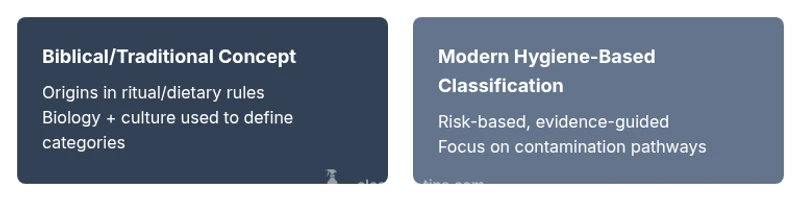
| Feature | Biblical/Traditional Concept | Modern Hygiene-Based Classification |
|---|---|---|
| Origins | Religious/cultural codification | Secular, risk-based sanitation |
| Criteria | Biology-based criteria (e.g., cud and hooves, fins and scales) and ritual lists | Pathogen risk, cross-contamination, and safety protocols |
| Examples (typical) | Sheep and cattle; unclean examples often cited like pigs and certain birds | Raw meat handling, separate prep areas, sanitation practices |
| Home implications | Cultural context influences beliefs about purity in food handling | Direct guidance for kitchen hygiene and household cleaning routines |
| Health focus | Moral/ritual purity with health echoes | Evidence-based hygiene to reduce illness risk |
Strengths
- Provides a historical lens that enhances cultural understanding
- Encourages careful handling and separation of raw animal products
- Promotes long-standing kitchen hygiene principles
- Supports respectful discussion across beliefs
Weaknesses
- Can confuse readers if not clearly separated from modern hygiene
- Risk of backward-looking judgments about foods or animals
- Not a substitute for evidence-based sanitation practices
Modern hygiene-focused approach should guide household cleaning.
While historical classifications offer cultural insight, everyday cleaning decisions should rely on evidence-based hygiene. Prioritize safe handling, proper cooking, and rigorous sanitation to minimize health risks, using the historical framework only as context.
Questions & Answers
What defines 'clean' and 'unclean' animals in traditional texts?
Traditional definitions vary by culture, but most systems use criteria like physical traits and species lists. They historically guided dietary rules and ritual practices. For everyday life, these concepts are best understood as cultural context rather than a health standard.
Traditions categorize animals by specific rules; today use hygiene as your guide.
Are there modern equivalents to these classifications in household cleaning?
Yes. Modern households use a risk-based approach: separate prep areas for raw foods, proper storage temperatures, and routine sanitation. The labels themselves are less important than consistent hygiene practices.
Risk-based cleaning replaces old labels with concrete safety steps.
How should I handle raw meat to prevent contamination?
Keep raw meat separate from ready-to-eat foods, use separate cutting boards, wash hands frequently, and sanitize surfaces after contact. Cooking to safe temperatures further reduces risk.
Keep it separate and clean, then cook safely.
Do religious beliefs about purity affect kitchen hygiene today?
Beliefs can inform personal practices, but health decisions should be guided by evidence-based guidelines and public health recommendations. Respectful discussion helps integrate cultural value with practical cleaning.
Cultural beliefs matter, but hygiene should follow science.
What are common myths about purity and cleanliness?
Myths often equate purity with a single ritual. In reality, preventing contamination relies on consistent cleaning, sanitizing, and safe food handling across all contexts.
Purity isn’t a single ritual—clean regularly.
What role do pets play in household hygiene?
Pets add contamination risks like dander and dirt. Regular grooming, feeding-area hygiene, and routine cleaning help maintain a clean home without labeling pets as inherently 'unclean'.
Pets require practical cleaning routines, not judgments.
The Essentials
- Treat hygiene as the primary driver for home cleanliness
- Use separate prep zones and utensils for different foods
- Rely on proven cleaning methods, not ancient labels
- Translate historical concepts into practical routines you can sustain
- Respect cultural perspectives while maintaining evidence-based practices