Clean With Me: A Step-by-Step Cleaning Session Guide
Learn to host an effective clean with me session with timed blocks, practical planning, and motivation techniques. This educational guide covers setup, routines, safety, and accountability for homeowners and renters seeking practical cleaning guidance.


With a clean with me session, you’ll tackle daily clutter by following timed blocks, a simple prep checklist, and a motivating routine. Set a timer, gather supplies, and pair chores with a playlist to stay focused. This guide shows you how to start, what to use, and how to measure progress for real results. Ready to bring calm to your home and make cleaning feel doable?
What 'clean with me' means and why it's effective
A clean with me session reframes cleaning from a solitary task into a collaborative, time-bound routine. By pairing focused blocks with a playlist and a clear goal, you reduce procrastination and create momentum. According to Cleaning Tips, this approach helps homeowners and renters convert scattered chores into manageable, repeatable habits. The method centers on small, repeatable wins and visible progress, which boosts motivation and reduces the mental load of cleaning. When you invite others to join or simulate company with music and a timer, cleaning becomes a clear, achievable sequence rather than an endless series of vague chores.
A successful session starts with a clear target: identify a room or zone, decide on the cleaning tasks, and set a fixed duration for each block. The brain responds to structure, so breaking tasks into short sprints creates a rhythm that keeps you from drifting toward distraction. You can tailor this approach to your space—apartment living rooms, single-family kitchens, or shared homes all benefit from predictable blocks. For renters, a clean with me routine also helps you document condition and maintain a routine that supports a healthy living environment.
To make this approach sustainable, set reasonable expectations and celebrate small wins. Every completed sprint is a tangible result—dust off a shelf, wipe the sink, or re-seat cushions. By preserving momentum, you turn cleaning into a habit rather than a dreaded chore. The Cleaning Tips team's guidance emphasizes consistency over perfection, and it encourages readers to start with a single 20-minute block today to test the method.
Setting up your session: planning and environment
Preparation is the first pillar of a successful clean with me routine. Choose a realistic start time when you’re unlikely to be interrupted, and tell household members what you’re aiming to accomplish. Create a focused environment by removing obvious distractions, laying out supplies in an accessible caddy, and selecting a playlist that suits the mood—upbeat tempos help sustain momentum, while instrumental tracks minimize distractions. Establish zones to clean, such as a kitchen counter area or a living room seating zone, so you can finish one space before moving to the next. A simple planning sheet, visible in your cleaning area, clarifies tasks, estimated block lengths, and any supplies you need to restock. This step is essential for beginners and seasoned cleaners alike, as it reduces decision fatigue and clarifies the path to success.
The clean with me framework: blocks, timers, and roles
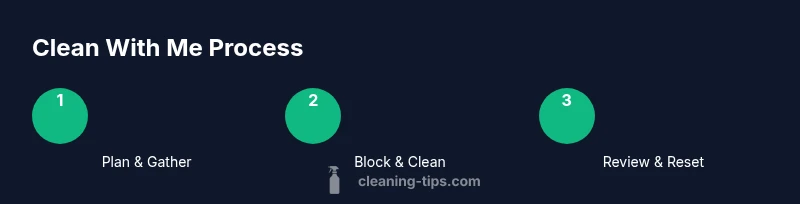
The core framework relies on short, repeatable blocks followed by quick resets. Start with a planning block to identify the target space and required tasks, then execute 15- to 20-minute sprints focused on a single micro-task (e.g., wipe countertops, vacuum corners, wipe down appliances). After each sprint, take a brief 2–3 minute breather to reset—refill spray bottles, check progress, and adjust if needed. This cadence creates a rhythm that combats fatigue and keeps you moving. If you’re cleaning with family or roommates, assign simple roles (group leader, timer, restocker) to maintain accountability and momentum. The key is consistency: identical block lengths, clear objectives, and a regular cleanup cadence make results predictable.
Room-by-room micro-routines you can copy
Kitchen: Clear away clutter, wipe major surfaces, and sweep floors in three 15-minute blocks. Bathroom: Target mirrors, faucets, and the toilet in two 10- to 15-minute blocks. Living areas: Dust, vacuum, and arrange cushions in three short sprints. Bedroom: Change linens, wipe surfaces, and tidy dresser tops in two 12-minute intervals. Each room gets a compact routine that fits into busy schedules, with the goal of finishing a full cycle every session. Tailor block lengths to your pace, not your perfection.
Tools, supplies, and organization for speed
Keeping your cleaning supplies organized is half the battle. Use a portable caddy with all essential items: microfiber cloths, all-purpose cleaner, glass cleaner, a small brush, sponges, trash bags, and a handheld vacuum if you have one. Pre-labeled bottles reduce decision fatigue, and a dedicated space for dirty rags prevents cross-contamination. For quick deep cleans, keep a separate set of tools in a secondary bag you can grab in a moment. If you’re short on space, store spare supplies under sinks or in wheeled carts that you can roll from room to room. The goal is to minimize trips back-and-forth and keep momentum high.
Motivation, accountability, and sharing progress
Motivation grows when progress is visible. Use a simple checklist or a digital note to mark completed blocks and rooms. Take before-and-after photos to quantify improvements, and celebrate small wins with a mini reward—like a favorite beverage or a short break. If you live with others, share progress in a family group chat or a dedicated board at home so everyone sees the impact. Public accountability boosts consistency, and even a lightweight post about your results can reinforce a sustainable habit. Cleaning Tips analysis shows that readers who track micro-goals report higher motivation and a clearer sense of accomplishment.
Troubleshooting and wrap-up: common hiccups and the Cleaning Tips verdict
Not every session will go perfectly. If you’re interrupted, pause the timer, adjust the plan, and resume with a fresh sprint. If a room proves more stubborn, switch to a shorter block and tackle one small area at a time, then reassess. Long breaks derail momentum; aim for short, intentional resets. Finally, frame your conclusion around what worked and what didn’t, and schedule the next session immediately so momentum carries forward. The Cleaning Tips team recommends embracing iteration—tweak block lengths, task order, and tools to suit your home and rhythm, then lock in a steady cadence to sustain results.
Tools & Materials
- All-purpose cleaner(Choose a low-VOC formula for indoor use)
- Microfiber cloths(Have at least 6 large towels and 6 small ones)
- Sponges(Include non-scratch types for delicate surfaces)
- Glass cleaner(Streak-free formula for mirrors and glass)
- Trash bags(Keep a roll in the caddy)
- Broom and dustpan(Sturdy handle, angled broom for corners)
- Vacuum or handheld vacuum(Use if cleaning rugs or upholstery)
- Spray bottle(Pre-fill with water and cleaner for quick use)
Steps
Estimated time: 45-75 minutes
- 1
Gather supplies and set intent
Collect all cleaning items, clear the immediate area of clutter, and state your goal for the session out loud. This primes your mind for action and reduces wandering.
Tip: Keep your caddy within arm's reach to minimize trips. - 2
Create focused time blocks
Decide on block lengths (15–20 minutes is common) and set a timer. Short blocks maintain energy and prevent burnout while still delivering progress.
Tip: Use a timer with a loud but pleasant alarm to stay on schedule. - 3
Tackle one zone at a time
Work from top to bottom or from the most used area outward, completing a single zone before moving on. This reduces re-cleaning.
Tip: Mark completed zones with a sticky note so you can see progress. - 4
Reset between blocks
Take a short, organized break: move supplies, wipe a quick surface, and refresh your plan for the next sprint.
Tip: Hydrate and stretch softly to maintain focus. - 5
Wrap up and document results
Return all items to their place, take a before/after photo, and note what to adjust next time.
Tip: Write down one improvement for the next session. - 6
Schedule the next session
Put the next clean with me block on the calendar and set a reminder so momentum continues.
Tip: Pair it with a routine cue, like after a morning coffee.
Questions & Answers
What exactly is a 'clean with me' session?
A clean with me session is a timed, collaborative approach to tidying spaces. It uses short cleaning blocks, a plan, and accountability to maintain momentum. The idea is to make cleaning predictable and manageable, not overwhelming.
A clean with me session is a timed, collaborative approach to tidying spaces using short cleaning blocks and a plan to stay on track.
How long should a typical session last?
Most sessions run 30 to 75 minutes, broken into shorter blocks. Start with 20–30 minute blocks if you’re new, then adjust as you gain momentum.
Most sessions last from about half an hour to an hour and a half, using shorter blocks.
Can I do this with kids or pets around?
Yes. Assign simple, safe tasks for kids or create child/pet-safe zones. Keep blocks shorter to accommodate interruptions and maintain safety.
Yes, you can, just keep tasks simple and blocks short to fit around kids or pets.
What if I miss a session?
Don’t panic. Reschedule promptly and adjust this week’s plan to fit your routine. The key is consistency, not perfection.
If you miss a session, just reschedule and get back on track quickly.
Is this approach suitable for deep-clean tasks?
The clean with me framework works for maintenance tasks and light to moderate deep-cleaning. For heavy deep-cleaning, allocate dedicated time blocks and consider professional help if needed.
It fits regular maintenance and lighter deep-cleaning; reserve longer blocks for intense tasks if needed.
Do I need special equipment for a home with multiple roommates?
Coordinate roles, use a shared cleaning plan, and store supplies in a centralized location. Clear expectations prevent confusion and keep everyone accountable.
Coordinate roles and store supplies in one place to keep everyone aligned.
How should I track progress effectively?
Use a simple checklist or app to mark completed blocks, rooms, and notes. Review weekly to adjust tasks, timing, and goals.
Keep a checklist and review it weekly to stay on track.
Watch Video
The Essentials
- Plan with clear goals before you start.
- Use short, repeatable cleaning blocks.
- Organize tools for quick access and less wasteful movement.
- Track progress to stay motivated and consistent.