Difference Between a Cleaner and a Disinfectant: A Practical Guide
Explore the difference between a cleaner and a disinfectant, when to use each, safety implications, and practical decision steps for households. Learn how to read labels, apply products correctly, and optimize surface hygiene.


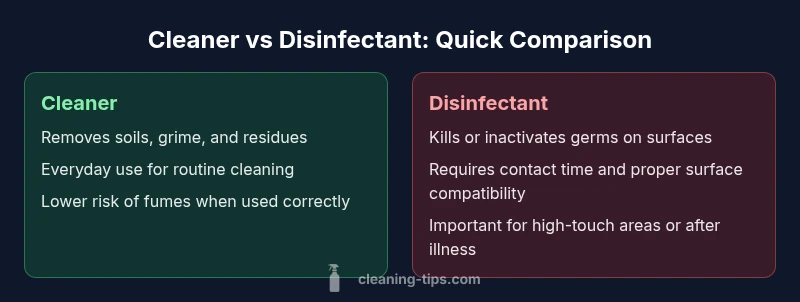
The difference between a cleaner and a disinfectant lies in their primary purpose: cleaners physically remove dirt, grime, and residues, while disinfectants kill germs on surfaces when used according to label directions. For homeowners, recognizing when to use each product is essential for safe, effective cleaning. This comparison covers definitions, usage, safety, and best practices to help you decide confidently.
Foundations: Understanding the difference between a cleaner and a disinfectant
The difference between a cleaner and a disinfectant is not just a labeling distinction; it reflects distinct goals in surface hygiene. A cleaner is designed to remove visible soils, grease, and debris through mechanical action or chemical action that loosens contaminants. A disinfectant, by contrast, is formulated to inactivate or kill a broad spectrum of microorganisms on surfaces. This distinction matters for everyday cleaning as well as for high-risk areas. According to Cleaning Tips, recognizing the difference between a cleaner and a disinfectant helps homeowners prioritize steps to reduce germs without compromising usability of surfaces. In practical terms, you’ll typically use a cleaner for routine maintenance and a disinfectant when you need to curb the presence of germs after illness or in high-traffic areas. The distinction also guides how you interpret product labels and safety warnings.
How cleaners work: chemistry, mechanics, and real-world use
Cleaners operate on several mechanisms to restore a surface’s appearance and hygiene. They emulsify oils, loosen soils, and lift residues so they can be wiped away with a cloth or sponge. Some cleaners contain surfactants that lower surface tension, enabling water and dirt to separate more effectively. The broader category includes degreasers, all-purpose cleaners, and specialty products for glass, metal, or tiles. The difference between a cleaner and a disinfectant becomes clear when you examine how these products interact with surfaces: cleaners focus on visible cleanliness and soil removal, while disinfectants focus on microbial targets. Reading the label will help you understand recommended contact times, dilution ratios, and whether rinsing is required for specific materials. As you plan a home cleaning routine, a cleaner is your everyday ally for keeping surfaces visually appealing.
What disinfectants do: killing germs with purpose
Disinfectants are designed to reduce microbial presence on surfaces to levels considered safe by health guidelines. They work through chemical actions that disrupt cell walls, genetic material, or other vital processes in microbes. The key idea behind the difference between a cleaner and a disinfectant is that disinfectants require proper contact time and correct application to be effective. This often means applying the product, maintaining a wet surface for a specified duration, and allowing it to air dry or rinsing as directed. In practice, disinfectants are most beneficial on high-touch surfaces—doorknobs, light switches, countertops—where the risk of germ transmission is higher. Always follow the label for surface compatibility and safety warnings, since some materials can be etched or discolored by certain disinfectants.
Reading labels: dwell time, contact time, and safety implications
Label reading is essential to bridge the gap between theory and practice. The difference between a cleaner and a disinfectant becomes operational when you adhere to dwell time or contact time recommendations. Contact time is how long the surface must remain wet for the product to be effective; it isn’t the same as how long you should leave a product on the surface. Some products require rinsing after use, while others leave a residue that continues to provide protection. Safety considerations include PPE (gloves, ventilation), venting, and avoiding mixing products, which can create hazardous fumes. The Cleaning Tips team emphasizes that following label instructions is the most reliable way to achieve the intended outcome while protecting people and surfaces.
Surface compatibility and material safety
Not all cleaners and disinfectants react the same way with every material. Porous surfaces, natural stone, or stained wood may require special products or techniques to avoid damage. The difference between a cleaner and a disinfectant here is practical: some cleaners are gentler and safer for delicate finishes but may not disinfect; some disinfectants can damage finishes if misused. Always test on a hidden area when trying a new product, and consult manufacturer guidelines for sensitive surfaces. Rinsing requirements may differ after cleaning or disinfection, depending on the product and the surface. By treating surfaces with the appropriate product and method, you protect integrity while achieving the intended hygiene level.
Practical decision framework: a simple 3-question approach
To decide between a cleaner and a disinfectant in day-to-day cleaning, start with three questions: (1) Is visible soil present? If yes, use a cleaner first. (2) Is there a higher risk of germ transmission (e.g., kitchens, bathrooms, high-touch areas during flu season)? If yes, apply a disinfectant per label instructions. (3) Does the surface require special care or is it delicate? In such cases, verify compatibility and consider alternatives. The difference between a cleaner and a disinfectant becomes a matter of risk reduction and surface care rather than a rigid rule. A layered approach—clean first, disinfect when appropriate—often yields the best balance of cleanliness and safety. Cleaning Tips recommends prioritizing routine cleaning with accessible products and reserving disinfection for situations with elevated contamination risk.
Real-world scenarios: kitchens, bathrooms, and high-touch zones
In kitchens, routine cleaning with an all-purpose cleaner removes oils and residues, creating a baseline hygienic surface. After handling raw meat or in the presence of spills, a cleaner followed by a disinfectant can reduce microbial load more effectively. Bathrooms benefit from cleaners to remove soap scum and mineral buildup, followed by disinfection on frequently touched areas like faucets and toilet handles. High-touch zones—doorknobs, light switches, remote controls—warrant periodic disinfection during illness outbreaks or in shared spaces. The difference between a cleaner and a disinfectant informs how you structure these steps: you start with soil removal and finish with germ control when needed, using each product as directed. This approach keeps surfaces both visually clean and microbiologically safer.
Myths, misuses, and practical tips for home environments
A common misconception is that all cleaners disinfect, which is not always true. Another error is assuming that more product equals better hygiene; overuse can cause residue buildup and potential irritation. A practical tip is to separate products by purpose and store them securely away from children or pets. Always ventilate when using chemical products and avoid mixing cleaners with disinfectants, as dangerous fumes can result. The difference between a cleaner and a disinfectant is primarily about objective—soil removal versus microbial control—and it should guide your routine. Cleaning Tips emphasizes adherence to label directions and using safe, skin-friendly options when possible.
Green cleaning and environmental considerations
Many households seek greener options that minimize chemical exposure while maintaining cleanliness. Green cleaners often rely on fewer aggressive disinfectants, focusing on soil removal with milder formulations. The difference between a cleaner and a disinfectant can still apply in green cleaning: use gentle products for routine maintenance and reserve stricter disinfectants for high-risk surfaces or outbreaks. When choosing eco-friendly options, verify that the product label explicitly indicates its intended use and surface compatibility. Recycling and proper disposal further reduce environmental impact. By balancing efficacy with environmental concerns, you can maintain hygiene without compromising sustainability. Cleaning Tips supports thoughtful product choices that align with health, safety, and environmental goals.
Quick-reference guidelines and practical takeaways
As a quick reference, remember that cleaners are your daily workhorses for removing soils and grime, while disinfectants are your germ-control tools for high-risk surfaces and outbreak periods. The difference between a cleaner and a disinfectant is not a rigid barrier, but a decision framework: clean first, disinfect when indicated, and always follow label instructions. The most reliable way to achieve safe and effective cleaning is to combine science-based guidance with practical routines that fit your home.
Comparison
| Feature | Cleaner | Disinfectant |
|---|---|---|
| Primary purpose | Removes soils, oils, and residues to restore cleanliness | Kills or inactivates germs on surfaces when used as directed |
| Typical usage | Everyday cleaning and soil management | Germ control in high-risk areas or during illness/outbreaks |
| Label guidance | Follow cleaning directions, dilution, and rinsing as needed | Follow contact time, surface compatibility, and safety warnings |
| Surface impact | Usually safe for most everyday materials with proper use | Can require careful testing on delicate surfaces; some can damage finishes |
| Common ingredients | Surfactants, solvents, and cleaners | Active antimicrobial agents (e.g., quaternary ammonium compounds, hydrogen peroxide) |
| Safety considerations | Generally safer for routine use with ventilation | May cause irritation; avoid mixing with other chemicals; wear PPE as needed |
Strengths
- Provides straightforward daily soil removal for a clean, presentable home
- Disinfectants offer targeted germ control on high-risk surfaces
- Clear label guidance helps users apply products safely and effectively
- A layered approach (clean then disinfect) reduces contamination risk when used correctly
Weaknesses
- Disinfectants can irritate skin or eyes and may require ventilation
- Some products require dwell time or rinsing, complicating routines
- Overuse or improper mixing of cleaners and disinfectants can create hazardous fumes
- Not all cleaners have germ-killing properties, and not all disinfectants remove soils
Disinfectants are essential for germ control on high-touch surfaces, but cleaners are your everyday cleaning workhorses.
Understanding the difference between a cleaner and a disinfectant helps tailor routines to real-world risks. Use cleaners for routine soil removal and disinfectants when germ control is needed, following label directions. A thoughtful, layered approach provides the best balance of cleanliness and safety.
Questions & Answers
What is the basic difference between a cleaner and a disinfectant?
The basic difference is that cleaners remove soils and grime, while disinfectants kill germs on surfaces when used as directed. The two products serve different hygiene goals and should be used according to label instructions.
Cleaners remove dirt; disinfectants kill germs—use each as the label directs.
Can a single product be both a cleaner and a disinfectant?
Some products are formulated to both clean and disinfect, but you should verify the label for specific claims and steps. If a product is labeled as a cleaner-disinfectant, follow the sequence and dwell times exactly as instructed.
Some products do both, but read the label to follow the steps correctly.
Do I need to rinse surfaces after using a cleaner or disinfectant?
Rinsing requirements vary by product and surface. Many cleaners require rinsing on food-contact surfaces, while many disinfectants may not need rinsing if the surface remains wet for the specified dwell time.
Rinse only if the label says so, and especially on food surfaces.
Are all cleaners considered disinfectants?
No. Not all cleaners have germ-killing properties. Disinfectants are specifically designed to reduce germs and require proper contact time and surface compatibility to be effective.
No—cleaners and disinfectants have different purposes.
How often should high-touch surfaces be disinfected?
Disinfection frequency depends on exposure risk and health guidance. In shared spaces or during illness, high-touch surfaces may be disinfected daily or as directed by product labels.
Disinfect high-touch surfaces more often during illness or busy times.
Are there environmentally friendly options for cleaning without sacrificing safety?
Yes. Many eco-minded cleaners minimize harsh chemicals while still delivering effective cleaning. When selecting, check labels for environmental claims and surface compatibility, and consider products with safer antimicrobial ingredients.
There are greener choices—read labels to balance safety and performance.
The Essentials
- Identify the primary purpose of each product before use
- Follow label instructions for contact time and surface compatibility
- Use a layered approach: clean first, disinfect when appropriate
- Test new products on inconspicuous areas before widespread use
- Store products safely and avoid mixing chemicals