Is Cleaning the Same as Sanitizing? A Practical Guide
Explore how cleaning differs from sanitizing, when to sanitize, and best practices to keep your home healthier. This analytical guide clarifies terminology, methods, and product usage for households.


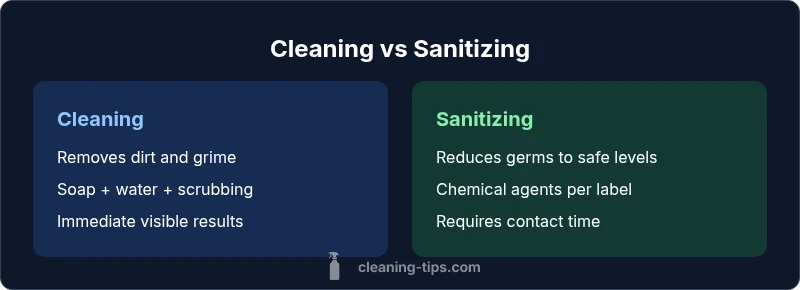
Short answer: cleaning and sanitizing are not the same. Cleaning removes visible dirt, dust, and grime using soap and water, while sanitizing uses chemical agents to reduce germs to safe levels according to label guidelines. In most homes, you clean first to remove soil, then sanitize high-touch surfaces such as countertops, doorknobs, and light switches. The distinction matters most in kitchens and bathrooms.
What Cleaning vs Sanitizing Really Means
According to Cleaning Tips, the terms 'cleaning' and 'sanitizing' describe different hygiene steps with distinct goals. The Cleaning Tips team found that many households conflate the two, which can lead to ineffective routines. Understanding the difference helps you build routines that actually reduce dirt and germs where it matters most. Cleaning refers to the physical removal of dirt, organic matter, and debris from surfaces using water, detergents, and mechanical action such as scrubbing. Sanitizing, on the other hand, involves applying chemicals that substantially lower the number of germs to safer levels according to product labels and regulatory guidance. In practical terms, cleaning prepares a surface for sanitizing by removing soil that can shield microbes, while sanitizing targets the microbial load remaining after cleaning. For most daily cleaning in homes, this sequence—clean first, sanitize on high-touch areas—provides the best balance of dirt control and germ reduction.
Defining the Core Terms for Daily Routines
- Cleaning: Physical removal of visible soil with water, soap, and scrubbing. It improves appearance and reduces grime that can harbor microbes but does not guarantee a germ-free surface.
- Sanitizing: Chemical treatment that lowers bacteria and viruses to safe levels as defined by labeling and public health guidance. Sanitation requires contact time and correct surface compatibility to be effective.
- Disinfection: A more potent form of sanitation that aims to kill a higher percentage of pathogens and is used in settings with elevated health risks, such as after illness or in food preparation areas. The distinction among these terms matters when you plan a routine, select products, and allocate time for each step.
Practical Takeaways for Everyday Hygiene
- The typical household workflow begins with cleaning to remove dirt, followed by sanitizing on high-touch surfaces like countertops, faucet handles, switches, and door knobs.
- Not all surfaces require sanitizing after every cleaning; reserve sanitizing for areas with high exposure risk (kitchens, bathrooms, and shared spaces).
- Always read product labels for proper use, including剂 contact times and any surface compatibility notes. The right sequence minimizes residue and improves overall hygiene.
Comparison
| Feature | Cleaning | Sanitizing |
|---|---|---|
| Purpose | Remove visible dirt and grime | Lower microbial load to safe levels on surfaces |
| Typical methods | Soap/detergent + water, mechanical action | Chemical sanitizers (alcohol, quats, chlorine-based products) per label |
| Primary prerequisites | Must be done before sanitizing on most surfaces | Often can be applied directly after cleaning or as a standalone step when dirt is not a concern |
| Time to effectiveness | Immediate dirt removal with scrubbing | Requires specified contact time to work (per label) |
| Best for | Visible soil and grime control | Germ reduction on high-touch surfaces (kitchens, bathrooms) |
Strengths
- Clarifies hygiene steps and improves effectiveness when used in sequence
- Reduces risk of microbial transfer on high-touch surfaces
- Can lower overall chemical exposure by targeting surfaces strategically
- Supports healthier routines with simple, repeatable steps
Weaknesses
- Sanitizing without prior cleaning is less effective on dirty surfaces
- Some sanitizers require specific contact times and proper ventilation
- Overuse of chemicals can lead to residue and potential health concerns
Cleaning first, then sanitizing is the most practical approach for homes
A routine that cleans to remove soil before applying sanitizers on high-touch surfaces yields better hygiene outcomes. This sequence is especially important in kitchens and bathrooms where health risks are higher. The Cleaning Tips team supports using labeled products correctly and following contact times to maximize effectiveness.
Questions & Answers
Is cleaning the same as sanitizing?
No. Cleaning uses soap and water to remove dirt and grime, while sanitizing uses chemicals to reduce the number of germs to safe levels. They are complementary steps, not interchangeable. In practice, you should clean first, then sanitize high-touch surfaces.
Not the same. Cleaning removes dirt with soap and water, while sanitizing reduces germs with chemicals. Use cleaning first, then sanitize on high-touch areas.
Do I need to disinfect after cleaning every time?
Not always. Disinfection is a stronger form of sanitation intended for higher-risk situations or after illness, or in areas handling food. For everyday cleaning, sanitizing high-touch surfaces after cleaning is usually sufficient, unless you have a specific health concern or guidance from public health authorities.
Disinfection isn’t always required after cleaning. Use it when higher risk is present or per guidance; otherwise, sanitize high-touch areas after cleaning.
What should I look for on a sanitizing product label?
Look for the active ingredient, the surface compatibility, and the required contact time. Ensure the product is EPA-registered for the intended use and follow all directions exactly to achieve the claimed germ reduction.
Check active ingredients, surface compatibility, and the required contact time on the label. Follow directions for best results.
Can I skip cleaning and just sanitize?
Skipping cleaning can reduce sanitizer effectiveness because soil can shield microbes. Always clean visible dirt first if possible, then sanitize. If soil is light, sanitizing after a quick wipe can still be effective, but it’s not the preferred approach.
Skip cleaning only if surfaces are visibly clean. Otherwise, clean first, then sanitize.
How long should a surface stay wet with sanitizer?
Follow the product label for the required contact time, which varies by product. The key is to maintain the surface wet for that period to allow microbes to be reduced effectively.
Keep the surface wet for the label-specified contact time to ensure effectiveness.
Is sanitizing necessary for every household cleaning?
Not always. For many households, routine cleaning and sanitizing on high-touch surfaces a few times per week is adequate. In high-risk environments or after illness, more frequent sanitizing or disinfection may be warranted.
Not always, but high-touch surfaces should be sanitized regularly in most homes.
What are common mistakes when combining cleaning and sanitizing?
Common mistakes include sanitizing dirty surfaces, not following label directions, mixing incompatible products, and neglecting to let cleaners dry fully. Adhering to a clear sequence—clean, rinse if needed, dry, then sanitize—helps avoid these pitfalls.
Mistakes include cleaning and sanitizing in the wrong order and ignoring label directions.
The Essentials
- Clean before you sanitize on high-touch surfaces
- Always follow label instructions for sanitizers
- Differentiate cleaning, sanitizing, and disinfection for context
- Adapt routines to kitchen and bathroom hygiene priorities
- Use simple, repeatable steps to maintain consistency