Gut Clean: A Practical Guide to Deep Drain Cleaning
Learn how to gut clean your kitchen drains safely with practical steps, natural cleaners, and maintenance tips to prevent clogs and odors. This comprehensive how-to from Cleaning Tips covers tools, steps, and best practices for healthier drains.


A gut clean is a deep-clean routine focused on the interior pathways of your kitchen drainage system, including the trap and connected pipes, to remove buildup and odors. It relies on safe, natural cleaners, heat, and mechanical cleaning to restore smooth flow. This routine helps prevent clogs and keeps drains smelling fresh.
What gut clean covers
A gut clean is a focused cleaning routine aimed at the interior pathways of your home's drainage system, especially under the kitchen sink. The term gut clean in this context refers to clearing the 'gut' of your pipes: the trap, horizontal runs, and the drain itself. This approach targets the areas most prone to slow draining, odors, and sudden clogs caused by cooking grease, soap scum, hair, and food debris. A well-executed gut clean does not require heavy chemicals or professional equipment; with patience and the right tools, you can dramatically improve flow and scent. Start by identifying the accessible parts of the drain, including the P-trap, tailpiece, and the inlet to the wall pipe. You will often find that the most stubborn gunk collects in the trap or inside the curved section of the pipe. Before you begin, ensure you understand the layout of your plumbing and wear gloves to protect your hands from messy residues. Throughout this section, you will see the goal stated clearly: lower resistance to flow, less odor, and a more sanitary kitchen environment. Gut clean methods rely on simple physics: heat, agitation, and periodic flushing to move debris through the system rather than forcing chemical reactions that can corrode pipes.
Why a deep gut clean matters
A gut clean matters because kitchen drains handle a lot of daily waste. Oil, fats, grease, starches, coffee grounds, and soap scum accumulate in pipes and traps over time, creating a sluggish flow and a stale odor that can spread through the entire kitchen. When you perform a gut clean on a regular schedule, you interrupt this buildup before it hardens into stubborn blockages. Regular maintenance also helps you spot signs of larger plumbing issues, such as a loose trap seal or misaligned connections, while keeping your system happier and quieter. A well-kept gut clean reduces the need for harsh chemical drain cleaners, protects your pipes from corrosion, and minimizes the annoyance of slow drainage. According to Cleaning Tips, homeowners who adopt a routine gut clean report smoother drains and fewer surprise clogs. Integrating gut clean into a simple cleaning routine can save time and money in the long run, and it reinforces the habit of proactive home maintenance.
Natural ingredients for gut clean
There are several safe, natural ingredients you can rely on for routine gut clean sessions. Baking soda provides gentle abrasion and deodorizing power, while white vinegar helps dissolve light mineral deposits and grease. Lemon juice can add a fresh scent and a mild acid boost. The most common approach is a two-step flush: start with a dry baking soda barrier in the drain, then introduce hot water and a splash of vinegar to create a fizzing effect that loosens grime. Allow the fizz to work for a few minutes, then flush again with hot water until the flow is clear. This method avoids harsh chemical cleaners, protects pipe seals, and minimizes residue on cookware. If you encounter particularly stubborn gunk, repeat the flush or follow with a short mechanical clean using a bottle brush or flexible pipe cleaner. Keep in mind that natural cleaners rely on time and heat; patience pays off with a cleaner gut and a healthier drain.
Tools, safety, and setup
Before you begin a gut clean, assemble a small toolkit and prepare the workspace. Personal protection matters, so wear gloves and, if possible, safety goggles to shield your eyes from splashes. A bucket or pan catches dirty water as you disassemble the trap; a basin wrench or pliers helps loosen pipe nuts if the trap is stubborn. You will also want a flexible drain brush or old toothbrush to scrub the trap and pipe interior. For the cleaners, keep baking soda, white vinegar, and hot water ready. A mesh screen over the drain reduces future debris and a small towel nearby will catch splashes. If you have older pipes or suspect leaks, proceed with minimal disruption and consider calling a professional before you attempt disassembly. This proactive approach reduces the risk of a bigger mess and makes the gut clean safer and more effective.
Maintaining gut clean: routine and when to call a pro
Maintaining a gut clean is about consistency more than intensity. Schedule a quick gut clean every three to six months and after periods of heavy cooking when grease and starch are common. If you notice an ongoing odor, a persistent slow drain, or frequent clogs despite regular cleaning, it may signal a more serious issue that requires a professional assessment. For households with older plumbing, consider annual inspections to ensure joints and seals remain intact. A simple maintenance habit—running hot water for a minute after each use, using a biodegradable degreaser in the sink once in a while, and keeping a small screen in place—will help your gut clean stay effective. With a routine in place, you’ll reduce the chance of emergency calls, save money, and keep your kitchen healthier for everyone.
Tools & Materials
- Drain snake(Flexible tool to reach inside pipe and trap.)
- Bucket(Place under trap to catch water and debris.)
- Gloves(Rubber or nitrile for protection.)
- Pliers/wrench(To loosen the P-trap nuts.)
- Plunger(For initial dislodging of minor clogs.)
- White vinegar(Safe, natural cleaner.)
- Baking soda(Deodorizes and helps loosen grime.)
- Measuring cup(Optional for measuring liquids.)
- Safety goggles(Protect eyes from splashes.)
Steps
Estimated time: 45-60 minutes
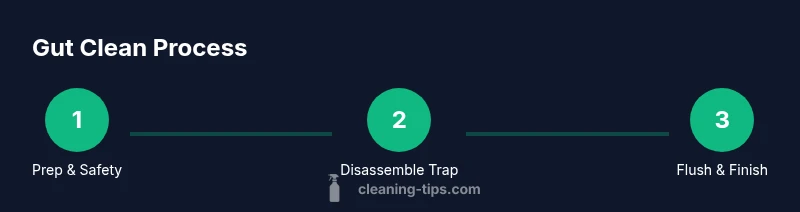
- 1
Prepare and protect
Clear the area under the sink, put on gloves and eye protection, and lay a towel to catch spills. This prevents splash and keeps your workspace clean. A safe workspace reduces risk of slips and chemical exposure, making the gut clean process smoother.
Tip: Keep a dedicated cleaning tray nearby to catch small debris. - 2
Access the trap
Place a bucket under the P-trap, then use pliers to loosen the U-bend nuts. Remove the trap carefully and inspect for debris and mineral buildup. Taking photos before disassembly helps you reassemble correctly.
Tip: Take a photo before disassembly to ensure correct reassembly. - 3
Remove blockages
Manually clear hair and gunk from the trap and pipe ends with a brush or cloth. Rinse the trap with hot water to flush loose debris. If you see an oily film, wipe with a disposable cloth before rinsing.
Tip: If you see oily residue, wipe it away before rinsing. - 4
Flush and fizz
Pour baking soda into the drain, followed by hot water. Add white vinegar to create a fizzing action that helps loosen grime. Wait a few minutes and flush again with hot water.
Tip: Do not mix vinegar with chlorine bleach. - 5
Final rinse and reassembly
Reattach the trap securely, run hot water for a few minutes, and check for leaks. Wipe the area dry and replace the access panel if needed.
Tip: Run hot water for 1–2 minutes to finish the flush. - 6
Schedule maintenance
Set a reminder to repeat gut clean every 3–6 months or when you notice slower drainage or odors. Regular maintenance keeps the system healthier.
Tip: Pair this with annual plumbing checkups if you have older pipes.
Questions & Answers
What is a gut clean in home cleaning?
A gut clean is a deep cleaning of the interior plumbing associated with your kitchen drains, including the trap and pipe runs, to remove buildup and odors. It does not clean the interior of your body.
A gut clean is a deep cleaning of your kitchen drain plumbing to remove buildup and odors. It's about your pipes, not your body.
Is gut clean safe for PVC pipes?
Yes, when you stick to gentle, natural cleaners like baking soda and vinegar and avoid harsh chemical drain cleaners. Do not mix cleaners and always flush with hot water.
Yes, with gentle cleaners and plenty of water, gut clean is safe for PVC pipes.
How often should I perform a gut clean?
Aim for every 3–6 months, or sooner if you notice slow drainage or odors. More frequent cleaning may be needed in households with heavy grease or hair.
Every 3 to 6 months, or sooner if drains get sluggish or smell.
Can I use bleach for gut clean?
Bleach is harsh and can damage seals and pipes if overused. Avoid mixing with vinegar, and prefer safer alternatives like baking soda and hot water.
Bleach can be harsh on pipes and should be avoided for gut clean.
What should I do if odors persist after gut clean?
If odors continue after cleaning, check the P-trap for leaks, ensure proper venting, and consider calling a plumber if the problem persists.
If odors persist, check the trap and venting, and call a plumber if needed.
Do I need special tools for gut clean?
Basic tools like pliers, a bucket, gloves, and a brush are sufficient for most DIY gut clean tasks. More complex clogs may require professional equipment.
A few basic tools handle most gut clean tasks; call a pro for stubborn clogs.
Watch Video
The Essentials
- Identify and access the gut drain safely.
- Use gentle, natural cleaners to avoid pipe damage.
- Flush thoroughly and reassemble to prevent leaks.
- Schedule maintenance for ongoing drain health.
- Keep odors at bay with regular gut clean routines.