Home Clean Home: A Practical How-To Guide
Practical, step-by-step guidance to achieve a truly home clean home using common supplies. Learn routines, room checklists, and safety tips for a healthier, easier-to-maintain home.


In this guide, you will learn a practical, step-by-step method to achieve a truly home clean home. You'll need basic cleaners, microfiber cloths, a vacuum, and a timer. Follow the six-step process to tackle daily dirt, prevent buildup, and maintain a healthier living space. This approach emphasizes a logical sequence, safe surfaces, and clear time estimates so you can fit cleaning into a busy day without feeling overwhelmed.
The Philosophy of a Truly Home Clean Home
Achieving a home clean home is not about chasing perfection; it's about consistency, safety, and a clear plan. A clean home reduces allergens, improves mood, and makes daily routines smoother. At Cleaning Tips, we define a truly clean home as spaces where surfaces are regularly wiped, floors are free of visible dust, and odors are neutralized without harsh chemicals. Start with a simple standard: top-to-bottom, left-to-right cleaning that minimizes backtracking. Use microfiber cloths, a predictable sequence, and a few trusted cleaners. In practice, this means setting aside dedicated cleaning time, recognizing what constitutes a mess versus grime, and choosing products that align with your family’s health goals.
The Cleaning Tips team found that routine cleaning reduces last-minute scrambles and creates a sense of control. According to Cleaning Tips, focusing on the most-used zones yields the biggest payoff, especially in small-to-medium homes where every square foot counts. The philosophy here is pragmatic: small, repeatable actions that build confidence over weeks, not a single marathon cleanup. By framing cleaning as a daily habit rather than a once-a-month event, you pave the way for a home that feels not just cleaner, but calmer and safer for everyone.
Build a Simple Cleaning Rhythm: Daily, Weekly, and Monthly
A sustainable home clean home habit relies on three cadence levels: daily quick cleans, weekly targeted sessions, and monthly deep tasks. Start with a 15-minute daily routine that covers high-traffic areas, wipe-down of counters, and quick trash removal. Then schedule one longer session per room each week to tackle dusting, windows, and floors. Finally, reserve a monthly deep clean for appliances, behind-the-scenes spots, and stubborn grime that accumulates over time.
This rhythm keeps dirt from becoming grime and helps you allocate mental energy more efficiently. It also makes it far easier to involve other household members and turn cleaning into a shared responsibility. If you live with family or roommates, assign simple roles (e.g., one person handles surfaces, another handles floors) and rotate weekly. The result is a manageable routine that fits into even the busiest schedules.
Room-by-Room Backbone: Kitchens, Bathrooms, Living Areas
In the kitchen, start with the counters and sink, then move to appliance fronts, handles, and the inside of the microwave. Wipe down cabinet faces and the faucet, and don’t neglect the pantry shelves where crumbs accumulate. In bathrooms, prioritize the sink, mirror, toilet exterior, and shower/tub areas; spray surfaces and let disinfectants work for the recommended contact time. In living areas, dust electronics, picture frames, and shelves, then vacuum rugs and sweep hard floors. This room-by-room approach keeps tasks concrete and reduces the chance of overlooking spaces that harbor grime. Consistency matters more than intensity; small, regular bursts beat sporadic, heavy cleans. The Cleaning Tips team reminds readers to tailor routines to family life and avoid overloading any single session.
The Science of Surfaces: Materials, Tools, and Safer Cleaners
Choosing the right cleaners protects surfaces and your health. Use pH-neutral cleaners on stone, oak, and marble; avoid acidic products that can etch finishes. For glass, microfiber cloths paired with a streak-free cleaner yield the best results. Keep abrasive scrubbers away from delicate surfaces to prevent scratches. Microfiber is your friend because it traps dust rather than smearing it. Ventilation matters: open windows or run an exhaust fan when using cleaners to reduce fumes. Finally, read labels for contact times and dilution rates to maximize effectiveness without wasting products. This science-based approach helps you maintain a truly home clean home with fewer mistakes.
Hygiene Habits That Multiply Results: Ventilation, Odors, and Air Quality
Air quality is a silent partner in cleaning. Improve ventilation during and after cleaning to reduce chemical exposure. Regularly wash fabrics and curtains that trap odors, and use baking soda or natural deodorizers in closets or on carpets as needed. Address moisture to prevent mold growth in bathrooms and basements, and keep litter boxes and pet areas clean to reduce odors. A simple routine—open a window or run a fan for 10–15 minutes after chores—reshapes the space, making cleaning feel less oppressive and more refreshing. Small changes in daily habits compound into noticeably cleaner air and homes.
Troubleshooting Common Hiccups: Pets, Kids, and Stubborn Residue
Pets and kids complicate cleaning, but smart planning helps. Use pet-safe cleaners and ventilate well during and after cleaning sessions. If a stain stubbornly resists, try a spot treatment with a dedicated stain remover, then blot instead of rubbing to avoid spreading. For stubborn residue on grout, a soft brush with a mild cleaner can break up grime without damaging the tile. If you’re pressed for time, prioritize high-traffic areas and high-touch surfaces first. This practical mindset keeps you moving forward even when interruptions occur and helps sustain a truly home clean home over the long term.
Tools & Materials
- Microfiber cloths (12x12 inches)(Use multiple cloths; replace when damp or soiled)
- All-purpose cleaner (neutral pH)(Suitable for most surfaces; avoid acidic formulas on stone)
- Disinfectant spray (EPA-approved)(Follow label guidance for contact time)
- Glass cleaner(Streak-free mirrors and windows with microfiber towels)
- Vacuum cleaner with attachments(HEPA filter preferred; include crevice tool and brush attachments)
- Mop and bucket(Use a microfiber mop head; wring well to avoid soaking floors)
- Scrub brushes (assorted sizes)(Stiff for grout; soft for delicate surfaces)
- Latex or nitrile gloves(Protect hands during cleaning and chemical use)
- Trash bags (13-gallon or appropriate size)(Keep waste bins lined and secure)
- Baking soda (optional)(Deodorizing; use with care on fabrics and carpets)
- Ventilation gear (optional)(Open windows or use exhaust fan when possible)
Steps
Estimated time: 2-4 hours for a typical home
- 1
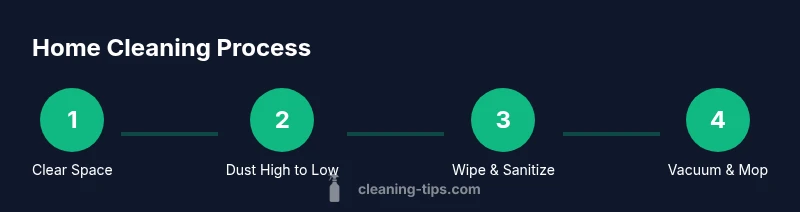
Clear the space
Begin by removing clutter and returning items to their homes. This reduces visual noise and makes it easier to clean surfaces. Quick decluttering saves time later and minimizes distractions during the process.
Tip: Set a 5-minute timer to stay focused and avoid getting bogged down. - 2
Dust high to low
Dust ceiling corners, light fixtures, fan blades, shelves, and baseboards from top to bottom. Work in sections to ensure you capture all the dust and prevent it from resettling on cleaned areas.
Tip: Use a microfiber cloth to trap dust rather than push it around. - 3
Wipe surfaces in zones
Wipe kitchen counters, appliance fronts, bathroom sinks, mirrors, and tabletops using appropriate cleaners. Move methodically from one zone to the next to avoid cross-contamination between dirty and clean areas.
Tip: Apply cleaner, let it sit briefly if needed, then wipe with a clean microfiber cloth. - 4
Vacuum and mop floors
Vacuum carpets and hard floors with attachments; mop hard floors after vacuuming to remove residual dirt. Use straight, overlapping strokes to maximize coverage.
Tip: Vacuum first to lift debris, then mop to avoid spreading dust. - 5
Sanitize high-touch areas
Focus on door handles, light switches, faucet handles, and remote controls. Use a disinfectant with the recommended contact time to reduce germ transfer.
Tip: Don’t rush the contact time; allow the surface to stay damp for the labeled duration. - 6
Reset and deodorize
Do a final walk-through, empty trash, close cabinets, and refresh the room by airing it out briefly. This leaves spaces smelling clean and feeling organized.
Tip: Open a window for 5–10 minutes after cleaning to reset air freshness.
Questions & Answers
What is the first step to a truly home clean home?
Begin with a quick declutter and plan. This reduces distractions and helps identify what needs cleaning. A clear start sets the tone for the entire session.
Start with decluttering and planning so you know what to clean first.
How often should I deep clean kitchen surfaces?
Deep-clean high-traffic kitchen surfaces monthly, with a more thorough quarterly session if you have heavy use. Align deep cleans with your routine to prevent buildup.
Aim for monthly touch-ups and a more thorough quarterly deep clean depending on use.
What if I have pets and kids?
Choose pet-safe, non-toxic cleaners and ventilate well during cleaning. Keep cleaners out of reach and designate pet-free zones during deep cleans.
Use pet-safe cleaners and make sure to ventilate well when cleaning around kids and animals.
Can I substitute baking soda and vinegar for all cleaning tasks?
Baking soda and vinegar work for many tasks, but they don’t replace purpose-specific cleaners on all surfaces. Avoid mixing them with certain chemicals and test on a small area first.
They’re useful, but not a universal replacement. Test and avoid mixing with other cleaners.
How long does a typical daily 15-minute clean take?
A 15-minute daily clean can cover entryways, surfaces, and quick trash runs. It keeps dirt manageable and reduces the need for longer sessions later.
Fifteen minutes can keep things tidy and prevent bigger cleanups later.
Watch Video
The Essentials
- Define a realistic home clean standard
- Follow top-to-bottom, left-to-right order
- Schedule daily, weekly, and monthly tasks
- Use Safer, non-toxic products whenever possible
- Involve others to share the cleaning load