House Clean List: Your Step-by-Step Cleaning Plan
Learn how to create a practical house clean list that covers daily, weekly, and monthly tasks, reduces clutter, and keeps every room healthier and brighter.


Create a practical house clean list that covers daily, weekly, and monthly tasks, organized by zones and shared responsibilities. Start by outlining your home’s zones, then catalog tasks by frequency, assign owners, and schedule reminders. Keep the list visible and adaptable so chores stay predictable, reduce clutter, and boost overall cleanliness. This approach helps any household stay efficient and healthier.
Why a House Clean List Improves Daily Living
A well-crafted house clean list helps you stay on top of chores, saves time, and reduces the mental load of decision-making. For busy families and solo renters alike, having a clear plan transforms cleaning from a series of random tasks into a predictable, achievable routine. According to Cleaning Tips, a thoughtfully designed house clean list is not a rigid command center but a living document you adapt to your home’s rhythms. Start by identifying your highest-use rooms—kitchen, bathroom, living areas—and determining how often each area needs attention. Then translate that into simply worded tasks that anyone can perform. When the list is visible and easy to follow, household members are more likely to participate, and you’ll notice fewer missed chores and less clutter piling up.
Beyond making days smoother, a good list helps you budget supplies. You’ll know exactly what cleaners, rags, and bags you go through each month, so you can plan purchases in advance rather than running to the store mid-task. A detailed list also helps new roommates or temporary renters fit into routines quickly, because there is a shared map of responsibilities rather than a fog of scattered duties. Use the list as a baseline, then tailor it to seasonal changes—holidays, guests, and weather all influence how often you deep-clean specific zones. With patience and practice, your house clean list becomes a reliable personal assistant, keeping your home healthier with less effort.
How to Define Cleaning Zones in Your Home
Define zones by traffic, moisture, and task difficulty. A zone is a collection of rooms or areas that share similar cleaning needs, so you can bundle tasks efficiently and rotate chores without duplication. Start with four broad zones: daily living (entry, living room, dining area), kitchen zone (counters, sink, floors), bathrooms (toilets, sinks, showers), and bedrooms and linen (dusting, changing sheets). For larger homes, you can subdivide into more precise zones, such as upstairs hallway, master suite, and utility rooms. The goal is to map out your space in a way that makes sense to everyone, so the list reads as a clear sequence rather than a scattered pile of tasks.
Once zones are defined, assign sample tasks to each one. Example: Zone A (daily) includes quick wipe-downs and tidying; Zone B (weekly) covers deeper cleaning like mopping and dusting; Zone C (monthly) targets neglected areas such as baseboards and vents. Keep it flexible; zones should evolve as your home and routines shift, not become a rigid jail sentence.
Daily, Weekly, and Monthly Tasks: A Practical Breakdown
Split your tasks into three frequencies: daily, weekly, and monthly. Daily tasks keep the household feeling fresh with minimal effort; weekly tasks tackle grime buildup; monthly tasks address deeper cleaning that’s easy to forget. A practical rule is to list 6-12 daily tasks, 8-15 weekly tasks, and 6-10 monthly tasks, then align them with zones. The division helps prevent overwhelm and creates predictable habits. Keep the lists visible: a laminated sheet on the fridge, a whiteboard in the kitchen, or a shared digital note. Cleaning Tips analysis shows that households with clearly assigned frequencies maintain cleaner spaces and reduce burnout because chores are distributed evenly. When you draft these lists, use action-oriented verbs: wipe, sweep, vacuum, wash, rotate, declutter. Also assign approximate durations for each task, so nobody overestimates time or underestimates effort. For example, a 2- to 5-minute daily tidy, a 20- to 40-minute weekly scrub, and a 60-minute monthly deep clean provide realistic targets that fit most schedules.
Choosing the Right Tools and Supplies
A house clean list is only as effective as the tools you keep on hand. Start with a basic kit that covers most rooms, then customize by zone. Essential items include a multi-surface cleaner, a glass cleaner, microfiber cloths, a sturdy mop, a vacuum suitable for your flooring, and a bucket with a wringer. Add protective gloves, spare sponges, a squeegee for windows, and trash bags in multiple sizes. Keep at least one all-purpose towel per room for quick wipe-downs and another set of color-coded cloths to avoid cross-contamination (for kitchens and bathrooms). Maintain a simple inventory system so you know when supplies run low and can reorder before your stock runs out. If you share your home with others, consider labeling tools by zone or assigning color bands to help prevent mix-ups. Finally, include a small note card with the container’s label—this helps everyone remember which cleaner goes where and reduces the risk of using the wrong product on a surface.
Template Formats for Your List
Your house clean list can take many forms, and you should choose the format that suits your household. A printable sheet or laminated chart works well for households that prefer a physical reminder. A shared online document or app is better for remote roommates or renters who move frequently. Consider these three templates:
- Quick fridge magnets: a one-page list with columns for frequency, zone, task, and status (todo/done).
- Weekly planner board: a magnetic board in a common area with checkboxes for each zone; color-coded by frequency.
- Digital checklist: a cloud-based task list that automatically nudges members with reminders and time estimates.
Whichever format you pick, keep it consistent and accessible. Use short, clear phrases and assign a specific person to each recurring task when possible. You can even include rotating assignments to keep everyone engaged. To reduce cognitive load, place the most frequent items at the top of the list so they are completed first each day.
How to Tailor the List for Small Apartments vs. Large Homes
Small apartments demand a compact, efficient approach. Focus on high-traffic areas—the kitchen and bath—plus a daily quick tidy in the living area. Choose a compact toolkit and one or two all-purpose cleaners, with a single microfiber cloth stack stored in a drawer. Use multi-purpose products to reduce stock and space. For larger homes, you’ll want to expand zones and include seasonal deep-clean tasks in common areas, basements, and attics. Use a color-coded system to avoid cross-contamination in messy spaces, and consider hiring additional help for deep cleans a few times a year. The key is to keep the list scalable: begin with a basic baseline that fits a small space, then widen frequencies and zones as your household grows or moves.
Involving Others: Getting Everyone on Board
Sharing responsibility is the fastest path to a well-maintained home. Start with a family meeting or co-housing session where you review the house clean list and explain why each task matters. Assign age-appropriate chores to children and pet-friendly tasks to roommates with pets. Create a simple accountability system, such as a sticker or emoji-based tracker, to reinforce consistent participation. Encourage feedback: if a task feels too long or confusing, rewrite it in simpler terms or break it into smaller steps. A collaborative approach also reduces resentment and helps everyone feel invested. Finally, celebrate small wins as a group, which reinforces the habit and makes cleaning feel less like a chore and more like a team effort.
Common Pitfalls and How to Avoid Them
Many people create a long, overwhelming list that nobody can finish every day. Start small, then expand gradually. Avoid vague tasks such as 'clean kitchen' without clear steps; break it into 'wipe counters, wipe sink, sweep floor, mop tile,' and assign a duration. Another common pitfall is neglecting bathrooms and kitchen deep-clean tasks because they feel tedious; schedule them as weekly items to ensure they get done. Also, don’t forget to update the list after changes in living arrangements, like new roommates, pets, or renovations. Finally, resist turning clean lists into a rigid routine that never adapts to life’s ebbs and flows; flexibility makes the system sustainable.
How to Maintain and Update Your List Over Time
Maintenance is the secret to longevity. Set a quarterly review date to adjust frequencies and add new tasks as needed. Reduce redundancy by consolidating similar tasks into larger, more efficient steps—such as one weekly 'full wipe-down' instead of several separate chores. Track completion rates to identify areas that need more attention, and celebrate improvements. If you’re using a digital system, leverage reminders and recurring tasks to keep everyone aligned. Finally, keep the list visible and easy to edit; a mobile-friendly version helps when you’re on the go, and a printed backup keeps everyone accountable even if devices are offline. With regular tweaks, your house clean list remains practical and motivational.
Real-World Example: A One-Week House Clean List Sample
Here is a concrete, example week to illustrate how a house clean list can run in a typical home. The week demonstrates how frequency, zones, and simple responsibilities come together to keep a home comfortable without burnout. Use this as a template to tailor to your actual floor plan, occupancy, and cleaning pace. Start with a baseline that fits your space, then adjust according to how your household responds. The key is consistency and clarity: everyone should know what to do, when to do it, and how long it should take. Over time, these small, repeatable actions compound into lasting cleanliness and a calmer living environment.
Tools & Materials
- Multi-surface cleaner(Versatile for counters, appliances, and shelves)
- Glass cleaner(For mirrors and windows)
- Microfiber cloths (assorted colors)(Color-coded to prevent cross-contamination)
- Mop and bucket(Choose a type suitable for your floor type)
- Vacuum cleaner(Bagless or bag type, suitable for your flooring)
- Sponges and scrub brushes(Keep separate brushes for kitchen and bath)
- Trash bags (various sizes)(Keep handy in each room)
- Gloves(Protect hands during chemical use)
- Squeegee(For windows and shower doors)
- Labels or markers(For color-coding zones and tasks)
- Notebook or planner(To track changes and progress)
Steps
Estimated time: Estimated total time: 3-4 hours for initial setup; ongoing 15-30 minutes weekly.
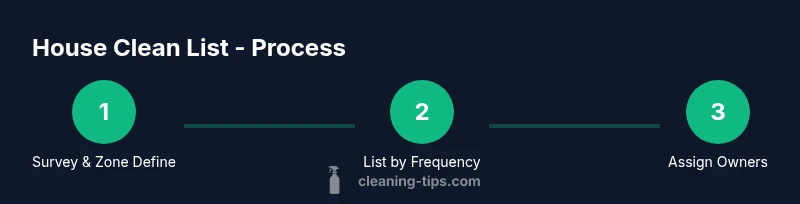
- 1
Survey your home and define zones
Walk through each room and decide how to group spaces into zones with similar cleaning needs. This creates a manageable structure and prevents task duplication across rooms.
Tip: Start with high-traffic zones to gain quick wins. - 2
List tasks by frequency
Create three lists: daily, weekly, and monthly. Each task should be stated as a clear action with a measurable outcome.
Tip: Use verbs like wipe, sweep, vacuum, mop, and restock. - 3
Assign owners for recurring tasks
Choose a primary person for each routine task to ensure accountability and avoid confusion.
Tip: Rotate responsibilities every month to keep the system fair. - 4
Set target durations
Estimate how long each task should take to help maintain realistic expectations.
Tip: Keep durations conservative to avoid over-scheduling. - 5
Choose a format for the list
Determine whether a paper chart, whiteboard, or digital app best suits your household.
Tip: Ensure the format is accessible to everyone. - 6
Create a visual map or template
Design a clean template with zones, frequency columns, and task status indicators.
Tip: Color-code by frequency or zone to improve readability. - 7
Pilot the system for one week
Test the list in real life, gather feedback, and adjust wording, zones, and task order.
Tip: Ask participants which tasks feel redundant or awkward. - 8
Incorporate quick wins for motivation
Include short daily tasks that can be completed in 5-10 minutes to build momentum.
Tip: Publicly celebrate small wins to boost participation. - 9
Review and refine monthly
Periodically update frequencies, add new tasks, and remove obsolete ones as needed.
Tip: Seasonal tasks should be scheduled in the monthly list. - 10
Maintain visibility and accessibility
Keep the list where everyone can see and adjust it when life changes occur.
Tip: A shared digital version plus a printed backup works well.
Questions & Answers
What is a house clean list?
A house clean list is a structured, room-by-room checklist of cleaning tasks organized by frequency (daily, weekly, monthly) to ensure consistent maintenance and reduce clutter.
It's a room-by-room checklist that helps you stay on top of chores.
How do I start creating one?
Begin with a quick home survey, list tasks per room, categorize by frequency, and choose a format (paper, whiteboard, or app). Start simple and expand as needed.
Survey your home, list per room and frequency, and pick a format.
How often should I update the list?
Review monthly or after major life changes, like new pets or renovations, and adjust tasks and zones accordingly.
Review monthly or after changes and adjust.
What tools help manage the list?
Use a calendar, a simple spreadsheet, or a whiteboard; clearly label zones and assign responsibilities to avoid confusion.
Use a calendar or board and assign responsibilities.
How can kids participate?
Assign age-appropriate tasks, place the list where everyone can see it, and reward consistency with simple incentives.
Give kids small chores and celebrate progress.
What if I live in a small apartment?
Prioritize high-use areas, keep a compact kit, and use multi-purpose products to save space and time.
Focus on essentials and keep tasks simple.
Watch Video
The Essentials
- Create zones to simplify cleaning tasks.
- Frequent reviews keep the list relevant.
- Assign clear ownership to improve accountability.
- Use a visible format that everyone can access.