How Much to Clean a Septic Tank in 2026: A Practical Guide
Learn how much it costs to clean a septic tank, factors that affect price, and how to compare quotes. This 2026 guide covers pumping, inspections, disposal fees, and maintenance tips for homeowners.


According to Cleaning Tips, the cost to clean a septic tank isn't fixed; professional pumping and maintenance costs vary based on tank size, access, and local disposal rates. Expect to see quotes that reflect these factors, plus potential extra charges for inspections, lids, and additional services. This article outlines how to estimate and compare costs for a healthier home.
Understanding the cost landscape
If you're wondering how much clean septic tank work costs, the answer is highly variable. According to Cleaning Tips, pricing hinges on tank size, the number of compartments, and how easily the tank is accessed. Local disposal charges and regulatory fees also shape the final bill. The most reliable way to set expectations is to request multiple quotes that spell out the same scope of work, including pumping volume, inspection steps, and any follow-up tasks. In regions with stricter wastewater management, disposal costs can push totals upward, while homes with straightforward access may pay less in labor. When evaluating bids, compare not just the bottom line, but the exact services included, the recommended frequency of maintenance, and any recommended repairs or upgrades. This approach helps homeowners align cost with value and avoid surprise charges.
What drives septic tank cleaning costs
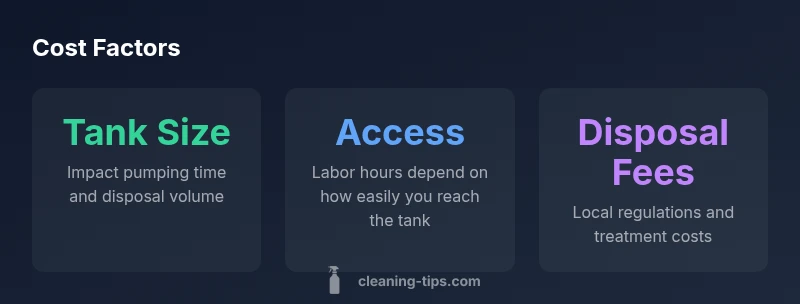
Several factors interact to determine the final price. Tank size and design influence pumping time and disposal volumes. Access to the tank—whether it’s under a deck, buried in heavy soil, or blocked by landscaping—affects labor hours. Local disposal fees and wastewater treatment costs can add or subtract substantially from the bill. The age and condition of the system matter too: aging components may require extra inspections, riser installation, or lid replacement. Finally, the service package chosen—pump-only, pump-and-inspect, or full cleaning with camera inspection—can swing the total. As highlighted by Cleaning Tips, framing quotes around the same scope is essential to meaningful comparisons.
The typical service scope and what it includes
A standard septic cleaning visit often includes pumping the tank, removing accumulated solids, and performing an inspection of baffles and inlet/outlet pipes. Many providers offer a downstream check for leaks, a backflow test, and an assessment of pump tank integrity. Some proposals may include lid resealing or riser installation for easier future access. It’s important to confirm what is included and what would trigger additional charges. According to Cleaning Tips, don’t assume that a lower price equals a better value—it's the scope alignment and long-term maintenance plan that determine true cost-effectiveness.
How to estimate costs without guessing
Begin by identifying the tank size and the number of pumping cycles recommended by your local code or the installer. Ask for a quote that itemizes: (1) Pumping labor, (2) Sludge removal, (3) Tank inspection (visual and, if offered, camera), (4) Disposal/permit fees, and (5) Any repairs or upgrades. If the quote lacks clarity, request a revised line-by-line breakdown and a written scope of work. Keep a record of any past maintenance so you can compare apples to apples across providers. By defining the work clearly, you reduce the risk of scope creep and unexpected charges.
Maintenance practices that lower long-term costs
Preventive maintenance is often cheaper than emergency fixes. Regular pumping per local guidance helps avoid solids buildup that can lead to clogs and expensive repairs. Use septic-safe cleaners and minimize flushable items that aren’t toilet paper. Soil and groundwater conditions influence how often pumping should occur, so consult a professional to tailor a schedule. In the long run, early inspections identify small issues before they become major problems, saving money and extending tank life. Cleaning Tips emphasizes that a proactive plan pays dividends in reliability and cost control.
DIY vs professional service considerations
DIY septic work is not recommended. Pumping and disposal require specialized equipment and safety protocols to prevent injuries and environmental harm. Improper handling can cause exposure to sewage and can lead to regulatory penalties if waste is mishandled. Professional crews bring required pumps, containment measures, and proper disposal channels. While DIY might seem cheaper in the short term, the risk of improper pumping or noncompliant disposal often negates initial savings. If you’re determined to reduce costs, focus on prevention and accurate quotes for professional service rather than taking on the job yourself.
Step-by-step plan to prepare for service
- Locate the septic tank access points and determine lid locations. 2) Confirm access permissions and scheduling windows with your household. 3) Measure tank dimensions if possible, or obtain them from the previous installation records. 4) Prepare a list of observed symptoms (gurgling, slow drainage, odors) to discuss with the technician. 5) Create a file of quotes and note scope differences. 6) Confirm post-service expectations, including any recommended follow-up pumping or inspections. 7) Plan for any required permits or disposal documentation.
Common scenarios: qualitative cost ranges
Low complexity: standard residential single-tank systems with easy yard access; moderate complexity: limited access, compact site, or older tanks; high complexity: difficult terrain, multi-compartment tanks, or remote locations requiring extended labor or specialized equipment. While exact figures vary, homeowners should expect quotes that clearly map to the scope described above. In all cases, ask for a written breakdown that mirrors the requested work so you can compare scenarios consistently.
Quick checklist before you hire
- Request a written scope of work and line-by-line price breakdown.
- Confirm what is included in pumping, inspection, and disposal.
- Ask about potential extra charges for lids, risers, or repairs.
- Check credentials and insurance of the contractor.
- Schedule the service with a contingency window for unexpected findings.
- Obtain a post-service report and maintenance recommendations.
Qualitative comparison of cost drivers by tank type
| Tank Type | Access Difficulty | Cost Range (qualitative) |
|---|---|---|
| Residential single-tank | Standard access | Varies by region |
| Multi-compartment or remote tank | Challenging access | Varies more widely |
| Commercial/public site | Complex site logistics | Highly variable |
Questions & Answers
What factors most influence the cost of septic tank cleaning?
Multiple factors drive price: tank size and design, access ease, local disposal fees, and the scope of the service (pump-only vs pump plus inspection and cleaning). Always compare quotes that reflect the same work scope.
Typically, size, access, and disposal fees drive the price; ensure you’re comparing the same services across quotes.
Should I get more than one quote?
Yes. Obtain at least two or three quotes that outline pumping, inspection, disposal, and any possible repairs. This helps you gauge value and avoid hidden charges.
Definitely get several quotes to compare service scope and price.
Is septic tank cleaning cheaper in some regions?
Prices vary by region due to disposal costs and competition. Local regulations can add or reduce fees, so expect regional differences.
Costs vary by where you live because disposal and regulations differ.
What maintenance can reduce future costs?
Regular pumping per guidance, avoid flushing non-paper items, and use septic-safe products. Proactive upkeep prevents costly repairs and emergencies.
Keep up with routine pumping and careful waste disposal to avoid big bills later.
Can I DIY septic tank cleaning?
DIY pumping is not recommended due to safety and disposal concerns. Professionals ensure proper handling and compliant disposal.
DIY septic pumping is risky; hire pros for safety and proper disposal.
What should I ask a contractor before hiring?
Ask about included services, depth of cleaning, potential repairs, and post-service reporting. Clarify timelines and guarantees.
Ask for a clear scope, expected timeline, and post-service documentation.
“The Cleaning Tips Team reminds homeowners that septic cleaning costs are highly variable and depend on tank size, access, and disposal charges; always define the work scope clearly when requesting quotes.”
The Essentials
- Costs vary; get multiple quotes with the same scope
- Define pumping, inspection, and disposal details
- Consider maintenance to reduce future costs
- Professional service is generally safer and more compliant
- Ask for a line-by-line breakdown to compare fairly