How Much Does a Cleanup App Cost? A Practical Breakdown for 2026
Discover how cleanup app pricing works, including free tiers, monthly vs annual plans, and hidden costs. Cleaning Tips analyzes typical costs for 2026 to help homeowners budget effectively.


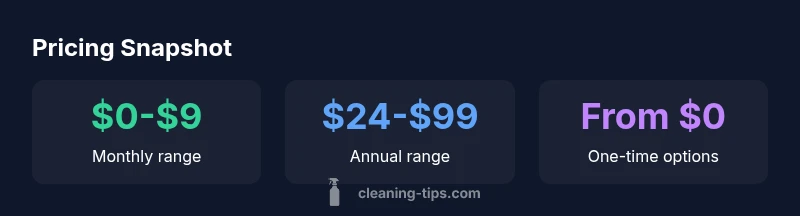
Cleanup apps typically offer a free starter tier, with paid plans ranging from $0 to $9 per month or $24 to $99 per year, depending on features. In 2026, most users can tailor a budget by choosing a monthly or annual plan that fits their cleaning cadence. This guide breaks down pricing models and hidden costs.
Understanding the pricing landscape
When you ask how much does cleanup app cost, you’re comparing not just price but value. In 2026, pricing has shifted toward flexible plans that scale with usage, features, and devices. Most users encounter a mix of a free starter tier plus paid options. The Cleaning Tips team found that many apps present a base monthly rate, a discounted annual option, and occasional one-time purchases. This variety means you can start with a no-cost trial and upgrade only if you truly need the extra features. The goal is to align your cleaning routine with a budget that fits your household, not to overspend on features you won’t use. Price often reflects convenience, automation, and integration with other tools like calendars or smart home devices. To answer the core question, how much does cleanup app cost, think in terms of a baseline free tier plus optional paid upgrades that you’ll enable only as your needs grow.
Context for 2026 pricing: Pricing tends to vary by feature depth (task automation, reporting, multi-user access) and by platform ecosystem (phone, tablet, or web).
Pricing models you’ll encounter
Most cleanup apps structure pricing around several common models. Here is how they typically line up and what to expect in terms of real-world value:
- Free tier: Access to basic task lists, reminders, and limited syncing. Great for light use and initial testing of the app’s interface.
- Monthly subscription: Usually in the $0-$9/month range. Predictable cost supports ongoing updates and premium features.
- Annual prepaid: Ranges from roughly $24-$99/year, offering a discount for long-term commitment and often including bonus storage or sync benefits.
- One-time license: A single upfront payment (commonly $0-$50) for a lifetime or long-term license. Not as common for fully cloud-based apps, but still found in some desktop-focused tools.
- Freemium with in-app purchases: Core features are free; upgrades unlock advanced automation, analytics, or integrations. This model gives you a taste before you pay more.
Takeaway: The right pricing model depends on your cadence (how often you clean), the features you truly use, and how much you value ongoing updates.
Hidden costs and value considerations
Price isn’t the only factor. When evaluating how much does cleanup app cost, look for hidden costs that can creep in over time. Common items to watch:
- Add-ons and premium features: Some apps charge for advanced automation, priority support, or extra cloud storage beyond the free tier.
- Data storage and syncing: If you store historical cleaning data across devices or with cloud backups, expect occasional storage fees or higher-tier plans with more space.
- Cross-platform access: A feature-rich plan on mobile may require a separate desktop license or a web subscription.
- Migration and setup fees: Onboarding help or data migration from another service may incur a one-time charge.
- Cancellation and refunds: Understand the policy—some plans lock you in for the term, while others offer prorated refunds.
Tip: Always compare the total annual cost for your expected usage, not just the monthly sticker price. Small add-ons can push annual costs higher if they’re essential to your workflow.
How to estimate what you’ll pay
Estimating the annual or monthly cost starts with a simple audit of your needs. Follow these steps to estimate how much does cleanup app cost for your household:
- List required features: task automation, reminders, calendar integrations, sharing with family members, reporting, and data export.
- Determine your cadence: daily, weekly, or monthly cleaning schedules influence the value of automation.
- Count users and devices: more users often push you toward higher-tier plans.
- Choose monthly or annual: monthly plans are low-commitment; annual plans typically save money over time.
- Include add-ons: cloud storage, premium support, or integrations with other apps.
A simple formula can help: Estimated annual cost = (monthly price × 12) + annual add-ons − discounts. If you anticipate minimal usage, a free or low-tier plan may suffice.
How discounts and bundles affect total cost
Discounts and bundles can significantly alter the bottom line. Look for:
- Annual plan discounts ranging from roughly 15% to 40% compared with monthly pricing.
- Multi-seat or family bundles that reduce cost per user.
- Seasonal promotions during back-to-school or end-of-year sales.
- Vendor promotions that include extended trial periods or feature unlocks at reduced rates.
Note: Always verify the effective price after any promotions end, and check whether feature access changes after the discount period ends. The goal is to capture steady value, not just upfront savings.
Real-world budgeting scenarios
Scenario A (light use, single user): You clean once per week and mainly use basic task lists. You might opt for a free tier or a low-cost monthly plan in the $0-$4/month range, with no annual commitment. Annual total would be under $50 if you stay on the lowest tier and avoid add-ons.
Scenario B (active household, multiple devices): You rely on reminders, calendar sync, and reporting across three devices and two adult users. A monthly plan around $6-$9/month with optional storage add-ons would be common. Annual costs could fall in the $70-$120 range depending on add-ons and discounts.
Practical takeaway: Estimate your usage first, then test multiple pricing tiers during trial periods to see which yields real value without paying for features you won’t use.
Practical tips to maximize value
- Start with the free tier to evaluate the interface and essential features.
- Run a 2–4 week trial of a paid tier with only the features you’ll actually use.
- Track feature usage; if you’re consistently using automation and reporting, a paid plan likely pays for itself via saved time.
- Look for bundles that include multiple tools you already rely on (calendar, notes, reminders).
- Check for renewal price changes and set a calendar reminder to review pricing annually.
Final checklist before subscribing
- Confirm the total annual cost based on your expected add-ons and users.
- Verify which features you truly need and ensure the plan covers them.
- Read the cancellation policy and refund terms before committing.
- Compare at least two pricing options (monthly vs annual) to find the best value.
- Verify data portability and export options in case you switch tools later.
Pricing models commonly offered for cleanup apps and their typical ranges
| Pricing Model | Typical Range | Pros | Cons |
|---|---|---|---|
| Monthly subscription | $0-$9/month | Low commitment, easy to start | Price can creep; ongoing payments |
| Annual prepaid | $24-$99/year | Discounted rate, predictable budgeting | Requires upfront commitment |
| One-time license | $0-$50 | No renewals, simple usage | Less likely to receive updates |
| Freemium with in-app purchases | Free base with paid upgrades | Try before you buy; scalable features | Total cost can grow with use |
Questions & Answers
What is the typical cost of cleanup apps?
Most cleanup apps offer a free tier with paid plans ranging from $0 to $9 per month or $24 to $99 per year. Some features may also be available as a one-time purchase. Pricing varies by features and platform. Cleaning Tips Analysis, 2026, suggests evaluating value over time.
Most cleanup apps have a free option plus paid plans that commonly range from zero to about nine dollars a month, or around twenty-four to ninety-nine dollars per year.
Are there hidden fees I should know about?
Yes. Watch for premium add-ons, extra cloud storage, cross-device syncing, onboarding fees, and potential price increases after promotional periods. Always read the terms and ask about what happens if you downgrade or cancel.
Yes—watch for add-ons, storage, and renewal terms that can raise the price after you start.
Is annual billing cheaper than monthly?
In most cases, annual plans offer a discount versus paying month-to-month, effectively reducing the average monthly cost. If you’re confident you’ll use the app for a full year, annual billing is usually the better value.
Annual plans usually save you money compared with monthly payments.
Do I need to commit long-term to get the best value?
Not always. Freemium models and short trial periods let you evaluate first. If you anticipate consistent use and value from premium features, a longer commitment can pay off.
You don’t always need a long-term commitment to get good value.
How should I estimate the cost for my household?
Start with your cleaning cadence, list required features, and count users or devices. Compare monthly vs annual options and include potential add-ons. A simple annual cost estimate helps you decide before subscribing.
Start with your needs, compare plans, and estimate annual costs before subscribing.
“Pricing for cleanup apps is not one-size-fits-all; the right choice balances features with your cleaning frequency and data needs.”
The Essentials
- Start with a free tier to test value
- Choose monthly vs annual based on commitment comfort
- Add-ons can push total cost beyond baseline
- Compare at least two models to find best value
- Review cancellation terms before subscribing