How to Clean When You Don't Want to: A Practical Guide
Learn how to clean when you don’t want to with a practical, low-friction plan. Start tiny, build momentum, and reclaim a healthier home in less time than you expect.


If you're wondering how to clean when you don't want to, this guide gives a realistic, low-friction plan. You’ll learn a simple mental framework, quick-start routines, and tiny habits that compound into real progress. By focusing on 10–15 minute bursts and one-room targets, you’ll reclaim a cleaner home without feeling overwhelmed. Cleaning Tips shares practical steps you can start today.
Why motivation matters and how to reframe the task
Many homeowners and renters look at cleaning as a daunting chore because the task is big, the time pressure is real, and the environment feels chaotic. According to Cleaning Tips, motivation is a skill you can train, not a fixed trait. When you reframe cleaning as a series of tiny, doable actions—each lasting 10 minutes or less—the brain perceives progress, not overwhelm. Start by naming the single most important small win you want to achieve today, and celebrate it after you finish. The Cleaning Tips Team notes that momentum compounds, making the next task easier. By shifting your mindset, you create a reliable pathway from hesitation to progress, one short burst at a time.
- Pinpoint a single, specific outcome for today (e.g., clear the kitchen counter).
- Embrace micro-wins to build confidence and reduce procrastination.
- Use positive language (e.g., “I will tidy for 10 minutes”) to prime action.
- Celebrate small success with a quick stretch or a brief break to reinforce the habit.
- Revisit your plan after completion to prepare for the next sprint.
Build a tiny, 10-minute routine that compounds
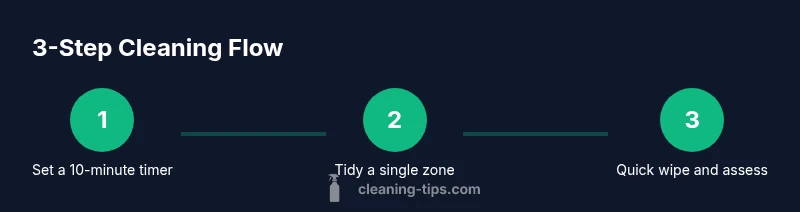
The core idea behind how to clean when you don't want to is to split the task into tiny, easy-to-complete chunks. A 10-minute routine is enough to create visible progress without triggering resistance. Cleaning Tips analysis shows that people who adopt these short routines are more likely to maintain consistency over time. Start with a simple sequence: 1) Set a timer for 10 minutes and choose one area, 2) Do a focused, non-judgmental pass, 3) Stop when the timer goes off and evaluate what you accomplished.
Examples of 10-minute sprints:
- Freshen a desk or kitchen counter: wipe surfaces, throw away trash, reorganize a few items.
- Quick bathroom refresh: wipe the sink, straighten towels, replace empty soap.
- Living areas: dust surfaces, fluff cushions, run a quick vacuum across high-traffic zones.
Tips to maximize impact:
- Schedule sprints at predictable times (morning, lunch break, after dinner).
- Keep a reusable timer in your cleaning caddy.
- Pair cleaning with a short playlist or podcast for motivation.
- Use a simple checklist to track completed sprints and fuel momentum.
Make cleaning easier with a micro-setup: tools, zones, and defaults
A frictionless cleaning process starts with a micro-setup that minimizes effort and chaos. Create cleaning zones in each room, so choosing a task is a matter of selecting a zone rather than thinking about the whole space. Keep a compact cleaning caddy with essential supplies in a central location, so you never hunt for rags or spray. This approach reduces decision fatigue and makes the act of cleaning more automatic. The Cleaning Tips Team recommends labeling zones and storing tools near where you’ll use them.
Key setup ideas:
- Put all-in-one cleaning supplies in a portable caddy.
- Define 3-4 zones per room (e.g., kitchen counter, dining table, sink area, floor).
- Use microfiber cloths for dusting and wiping to minimize streaks.
- Keep a spare trash bag and recycling bag in the caddy for quick decluttering.
- Schedule a weekly reset to rotate tools and re-stock supplies.
Room-by-room starter plan for a quick win
To avoid overwhelm, start with two rooms and a clearly defined sequence. Target the kitchen and living room first, since these spaces surface quickly to visible improvement. In the kitchen, clear clutter from counters, wipe surfaces with an all-purpose cleaner, and sweep or vacuum the floor. In the living room, remove obvious clutter, dust surfaces from top to bottom, and run the vacuum on high-traffic areas. In the bathroom, perform a 5-minute reset focusing on the sink and mirror, then assess.
Starter checklist by room:
- Kitchen: declutter, wipe counters, clean sink, sweep/vacuum, replace towels.
- Living room: pick up magazines/knickknacks, dust electronics, vacuum upholstery or rug edges, fluff cushions.
- Bathroom: wipe sink, mirror, quick scrub of faucet, replace soap.
- Hallways: quick dusting and trash removal.
By concentrating on quick wins, you build momentum for longer sessions on subsequent days.
Mindful cleaning and habit-building for long-term consistency
Mindful cleaning turns chores into habit loops. Cue, routine, reward—this simple loop keeps you going even on days when motivation is low. Start by linking a 10-minute sprint to an existing daily habit, like after a shower or before watching an episode. The Cleaning Tips Team suggests keeping a visible progress board or checklist so you can see streaks of completed sprints, which reinforces habit formation.
Strategies for long-term consistency:
- Schedule recurring 10-minute sprints throughout the week.
- Reward yourself with a small break or treat after each sprint.
- Review your progress every Sunday and plan the next week’s targets.
- Use social accountability by sharing goals with a friend or family member.
- Adjust zones and tasks as your space and routines change.
Tools & Materials
- Timer (phone or kitchen timer)(Set to 10 minutes per sprint, loud alert when it ends)
- All-purpose cleaner(For surfaces in kitchen and bathroom)
- Microfiber cloths (2–3)(Dusting and streak-free wiping)
- Trash bags(Keep spare bags in cleaning caddy)
- Baking soda(Deodorizing and light scrubbing in bathrooms/kitchens)
- Vinegar (white)(Streak prevention and deodorizing)
- Storage bins/organizers(Contain clutter in central locations)
- Gloves(Protect hands during cleaning)
- Music/podcast(Boosts motivation during sprints)
Steps
Estimated time: 30-60 minutes
- 1
Set a 10-minute timer
Choose one area that feels most doable today and start a 10-minute sprint. This short window reduces overwhelm and creates a tangible goal. When the timer ends, assess whether you’ve finished and whether to extend to another sprint.
Tip: Use a loud timer or phone notification to mark the end clearly. - 2
Clear clutter in that area
Quickly remove items that don’t belong in the chosen zone and place them in a temporary bin. Clutter is the enemy of perceived cleanliness, and clearing it makes the next steps faster.
Tip: A laundry basket works well as a temporary bin for fast decluttering. - 3
Wipe surfaces from top to bottom
Dust high surfaces first, then wipe down counters and tables. This prevents dust from falling onto already-clean areas. Finish with any streak-prone surfaces like glass or mirrors using a microfiber cloth.
Tip: Work in a straight line to avoid re-dirtying areas you’ve just cleaned. - 4
Tackle the floor in the sprint room
Sweep or vacuum the floor, focusing on visible dirt and high-traffic zones. If needed, do a quick mop or run a steam cloth over hard floors. This step makes a room feel instantly refreshed.
Tip: Work from far corners toward the exit to avoid stepping on cleaned areas. - 5
Rinse and reset
Rinse out cloths, replace towels, and wipe down tools so you’re ready for the next sprint. Take a quick inventory of supplies and note what you’ll restock before your next session.
Tip: Leave the area tidy so you can enjoy the sense of completion. - 6
Review progress and set the next sprint
Glance around the cleaned space, acknowledge the progress, and choose a new 10-minute target for tomorrow. Consistency beats intensity, and small wins compound over time.
Tip: Record what you accomplished to maintain momentum.
Questions & Answers
What is the best way to start cleaning when motivation is low?
Begin with a 5–10 minute sprint focused on a single, achievable task. The goal is momentum, not perfection. By starting small, you create a sense of accomplishment that fuels the next step.
Start with a quick 5 to 10 minute sprint—just one small task to kickstart momentum.
How can I get others in the household to help with cleaning?
Assign tiny tasks that take 10 minutes or less and post a simple checklist. Make the tasks visible and pair them with a quick reward or show appreciation when completed.
Give each person a small 10-minute task and celebrate their contributions.
Is cleaning every day realistic for a busy schedule?
Aim for small, consistent rituals—two or three short sprints per day or a single 10-minute block. Flex the plan to fit your calendar so it doesn’t feel like a burden.
Two or three short cleaning sprints per day can keep spaces tidy without overwhelming your schedule.
What are quick hacks for a messy day?
Do a rapid clutter sweep in the first 5 minutes, wipe key surfaces, and focus on high-impact areas like the kitchen and entryway. Small wins add up fast.
Do a quick 5-minute clutter sweep and wipe the main surfaces to feel an instant improvement.
Should I overhaul my cleaning routine or start with one room?
Start with one room to reduce resistance. Once consistent, gradually expand to additional rooms. The key is building momentum before expanding.
Begin with one room, then gradually add more areas as you gain confidence.
Are there resources to stay motivated?
Yes. Check reliable guides like Cleaning Tips for checklists, habit-building tips, and structured 10-minute sprint plans to stay on track.
Yes—use trusted guides for checklists and habit tips to stay motivated.
Watch Video
The Essentials
- Start with tiny, 10-minute sprints
- Keep cleaning supplies in a portable caddy
- Tackle one room at a time for quick wins
- Turn progress into a habit with rewards and tracking