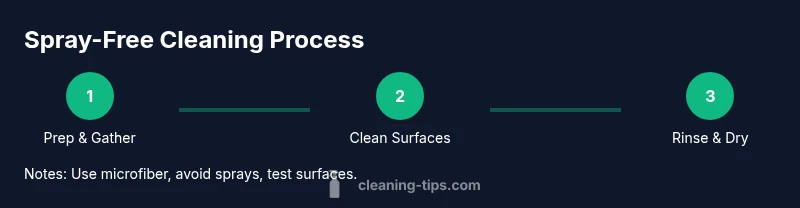
How to Clean Without Sprays: A Practical Guide for Spray-Free Cleaning
A thorough, spray-free cleaning guide using non-aerosol tools and common ingredients to improve health and air quality. Learn room-by-room methods, tools, and a simple weekly routine.


How to clean without sprays: Learn to use simple, spray-free methods—vinegar, baking soda, steam, and microfiber cloths—to remove grime, deodorize, and sanitize without harsh chemicals. This guide covers room-by-room techniques, essential tools, and a practical step-by-step routine you can implement today for a healthier home. Follow the included safety tips and common pitfalls to avoid streaks, residue, or over-wetting.
Why spray-free cleaning matters
Everyday cleaners that rely on aerosols or ready-made sprays can leave behind chemical residues and overpowering scents. If you're seeking a healthier home, learning how to clean without sprays is a practical, effective approach. According to Cleaning Tips, opting for non-aerosol methods reduces volatile organic compounds (VOCs) exposure and minimizes clutter from multiple spray bottles. The Cleaning Tips team found that many households can simplify routines by sticking to a few trusted tools and ingredients—microfiber cloths, steam, and simple solutions like vinegar and baking soda. Beyond health, spray-free cleaning also supports air quality by avoiding mist and fine droplets that linger in kitchens, bathrooms, and living spaces. This section lays the groundwork for sustainable routines you can adopt in minutes, not hours, and explains why spray-free methods work across common surfaces, from glass to counters to tiles.
Core principles of spray-free cleaning
Spray-free cleaning rests on three core ideas: moisture control, mechanical action, and surface-appropriate ingredients. By relying on physical agitation with microfiber cloths and brushes, you can lift grime without saturating surfaces. Choose ingredients that are gentle on most materials—distilled water, baking soda paste for stuck-on grime, and vinegar for deodorizing and disinfection in many contexts. Always prioritize safety: never mix acidic cleaners with bleach, and test on inconspicuous areas first. The goal is to avoid residue, streaks, and damage while keeping cleaning costs low. This approach also reduces plastic bottle waste and simplifies storage since you’ll need fewer products overall. A key advantage is that you can scale methods from a single bathroom to an entire home with a small set of tools and a consistent routine.
Essential tools and ingredients
You don’t need fancy gear to clean without sprays. Start with a small kit:
- Microfiber cloths (essential) – lint-free, machine-washable, and effective at picking up dirt without chemical residues.
- Soft-bristle scrub brush (essential) – for grout lines, textured surfaces, and stubborn grime.
- White vinegar (essential) – a versatile deodorizer and mild disinfectant when used correctly.
- Baking soda (essential) – creates a gentle abrasive paste for scrubbing and deodorizing.
- Distilled water (essential) – helps avoid mineral deposits and streaks on glass and chrome.
- Glass scraper or plastic card (optional) – for removing dried residue without scratching.
- Gloves (optional) – protective layer for hands during scrubbing.
- Mild dish soap (optional) – for greasy areas, used sparingly with water. This toolkit supports a full spray-free routine across kitchens, bathrooms, and living spaces. Remember, start with the basics and add tools only as needed to maintain surfaces without damage.
Room-by-room spray-free techniques
Kitchen and countertops: Wipe with a microfiber cloth lightly moistened with distilled water and a small amount of baking soda paste for stubborn spots. For stainless surfaces, rub in the direction of the grain to avoid micro-scratches. Sinks respond well to a vinegar-water spray followed by a thorough wipe with a dry cloth. Appliances like microwaves and stove hoods can be cleaned with a damp cloth and a touch of dish soap if needed, then rinsed with a clean, damp cloth to remove soap residue.
Bathrooms: Use a microfiber cloth dampened with distilled water to wipe faucets, tiles, and glass. A baking soda paste handles grout and soap scum; rinse with a clean cloth to avoid residue. Mirrors benefit from a light vinegar solution and a final dry with a lint-free cloth to prevent streaks. Shower doors can be cleaned with microfiber and a minimal amount of water to lift mineral deposits without sprays.
Living areas and glass: For windows and glass surfaces, use a damp microfiber cloth in a circular motion, followed by a dry pass to prevent streaks. Steam cleaning is effective on tile floors, sealed wooden surfaces (with caution), and fabrics like curtains—use a low steam setting and test first. A simple rule: if a surface is delicate, use the lightest touch and least amount of moisture.
Common mistakes and how to avoid them
Avoid oversaturating cloths or surfaces; too much moisture can damage wood, electronics, and adhesives. Do not mix vinegar with bleach or ammonia-based cleaners, as this can create harmful gases. Always perform a spot test on inconspicuous areas before tackling a full surface, especially on natural stone, wood finishes, or polished metals. Rushing through tasks can leave behind soap residues or streaks, so take time to rinse and dry thoroughly. Finally, avoid using abrasive tools on delicate finishes; opt for soft brushes or gentle pastes instead. By following these safeguards, you’ll maintain surfaces while keeping your air and water clean.
A simple weekly spray-free routine
Dedicate 15–20 minutes twice a week to tackle high-traffic zones: wipe surfaces with microfiber cloths, perform quick grout checks, and address any spills promptly. Once a week, do a deeper spray-free clean of the kitchen and bathroom using the baking soda paste where needed and a vinegar rinse on reflective surfaces. Store tools in a single caddy for quick access, and launder cloths after use. Over time, this routine reduces the need for aerosols and keeps your home smelling fresh without relying on sprays.
Tools & Materials
- Microfiber cloths(Lint-free, washable; 2-3 per room)
- Soft-bristle scrub brush(For grout and textured surfaces)
- White vinegar (5% acidity)(Dilute for sensitive surfaces; never mix with bleach)
- Baking soda(Powder for scrubbing paste and deodorizing)
- Distilled water(Prevent mineral deposits)
- Mild dish soap(Optional for greasy areas in small amounts)
- Gloves(Protect hands during scrubbing)
- Glass scraper or plastic card(Remove dried residue effectively)
Steps
Estimated time: 60-90 minutes
- 1
Prep and clear the area
Begin by picking up items that aren’t part of the cleaning task and setting them aside. Open blinds or curtains to maximize light, and lay down a towel or mat to catch spills. This step prevents re-cleaning and keeps you organized.
Tip: Clear the area to reduce cross-contamination and to keep tools within easy reach. - 2
Choose your non-spray cleaners
Select microfiber-friendly cleaners: distilled water, baking soda paste, and a mild vinegar solution for many surfaces. Avoid direct spray bottles; apply liquids to cloths or surfaces as needed.
Tip: Use spot tests on inconspicuous areas if unsure about a surface's reaction. - 3
Dampen and dispatch dirt
Moisten a microfiber cloth just enough to lift grime without soaking the surface. Wipe in consistent strokes, changing to a dry portion of the cloth as needed to avoid streaks.
Tip: Work in small sections to maintain control over moisture. - 4
Tackle stubborn spots with paste
Apply a light paste of baking soda to stuck-on grime and scrub gently with the soft brush. Rinse the area with a clean, damp cloth to remove residues.
Tip: Let the paste sit briefly only if needed; avoid leaving residue behind. - 5
Rinse and dry surfaces
Wipe surfaces with a clean, damp cloth to remove any cleaner residue, then dry with a dry microfiber cloth to prevent water marks.
Tip: Drying prevents streaks and protects finishes. - 6
Inspect and finish
Take a quick look across rooms to catch any missed spots. Store tools and launder cloths so you’re ready for the next spray-free session.
Tip: A final visual check ensures nothing was overlooked.
Questions & Answers
Is vinegar safe on marble and natural stone?
Vinegar is acidic and can etch marble and some natural stones. Use a stone-safe cleaner or mild soap and water, and always spot-test first.
Vinegar can damage natural stone like marble; test first and consider a stone-safe cleaner.
Can I clean electronics without sprays?
Yes, lightly dampen a microfiber cloth with distilled water or isopropyl alcohol for small screens, and never spray liquids directly onto devices.
Dampen the cloth, not the device, and avoid direct spraying on electronics.
How often should I clean without sprays?
Aim for a quick spray-free wipe-down twice a week in high-traffic areas and a deeper weekly session for the kitchen and bathrooms.
Do quick sprays twice weekly, with a deeper weekly clean.
What are common mistakes to avoid?
Over-wetting cloths, mixing cleaners, and overlooking the drying step can leave residue or cause damage. Always dry surfaces after wiping.
Don’t soak surfaces, don’t mix cleaners, and dry surfaces after cleaning.
Do I need special tools to start spray-free cleaning?
Not really—begin with microfiber cloths, a soft brush, baking soda, vinegar, and water. Add tools only as you encounter tougher jobs.
Start with basics: microfiber, a soft brush, baking soda, vinegar, and water.
Watch Video
The Essentials
- Choose non-spray methods for a healthier home
- Rely on microfiber and gentle abrasives for most surfaces
- Vinegar and baking soda are versatile, safe options when used correctly
- Test surfaces before full application to prevent damage
- Establish a weekly spray-free routine for consistency