How to Get Clean Music on Spotify: A Practical Guide
Learn how to get clean music on Spotify with practical steps, explicit-content settings, and playlist strategies from Cleaning Tips to create a healthier listening experience in 2026.


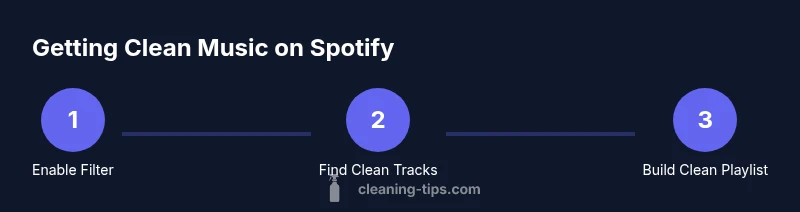
To get clean music on Spotify, start by turning off explicit content in Settings > Playback, then seek tracks labeled Clean or Clean Version, and finally assemble a dedicated clean playlist. If you’re sharing the account, keep the filter enabled on all devices and recheck after app updates. This approach keeps listening kid-friendly and broadens your options.
What counts as clean music on Spotify
If you’re wondering how to get clean music on spotify, start by understanding what “clean” means in streaming catalogs. In most cases, clean means content that does not include explicit lyrics, profanity, or mature references. Spotify labels such tracks as “Clean” or “Clean Version” where the publisher provides a substitute without explicit content. That labeling helps you distinguish clean tracks from explicit ones, but it is not a guarantee. Catalogs vary by region and by how an artist releases edited versions. Cleaning Tips emphasizes that relying solely on a label can miss some edge cases, so combine labeling with a few proactive filters. In practice, the goal is to reduce exposure without sacrificing the breadth of your library. If you’re asking how to get clean music on spotify, use the label information as your first screen and supplement with filters and curated playlists.
Enable explicit-content filtering across devices
Spotify provides a centralized switch to limit explicit content, which is the backbone of clean listening. On mobile devices, open Settings > Playback and toggle off Explicit Content; on desktop, access Preferences and disable explicit content there as well. After you adjust the setting, restart the app to ensure the change takes effect across all screens and profiles. If you share an account with family members or roommates, remind them to keep explicit content disabled on their devices as well. This single action dramatically reduces the number of songs you’ll encounter labeled explicit while keeping the rest of the catalog accessible.
Find clean versions and build a dedicated playlist
When available, look for tracks labeled Clean, Clean Version, or edited by the publisher. Use search queries like Clean Version, Clean Edit, or Clean Version in combination with Artist or Album to confirm labeling. Create a dedicated playlist named something like Clean Listening Series and add verified clean tracks as you discover them. Periodically review newly released albums—publishers sometimes release edited editions after initial rollout. By curating a focused playlist, you can enjoy a broader library without manual checking for every track.
Practical tips and caveats
No system is perfect; some tracks still surface with explicit content due to catalog labeling gaps or artist edits that Spotify hasn’t applied everywhere. In practice, you may need to skip a track or replace it with a clean alternative. Consider using family accounts with parental controls if you’ll share a device with children or guests. For repeated listening, favor albums or playlists that have clear “Clean” markings rather than relying on generic radio or algorithmic recommendations. Finally, remember that higher-quality audio does not depend on content cleanliness, so maintain your listening quality as you enforce content rules.
How Cleaning Tips approaches this process
According to Cleaning Tips, content hygiene mirrors physical cleaning: define the standard, apply it consistently, and review results over time. Our team recommends three core actions: first, configure explicit-content filters on every device you use; second, actively seek clean-tagged tracks and verify their labeling; third, curate a personal Clean Playlist and rebalance it monthly. This approach reduces exposure while keeping access to a wide music catalog. The Cleaning Tips team believes steady practice yields lasting benefits for households and individuals alike.
Case studies: households, roommates, and solo listeners
- Household with kids: a family plan using the explicit content filter makes bedtime listening safer. Parents can further curate kid-friendly playlists with explicit tracks removed automatically.
- College roommates: shared devices require clear communication about what is allowed; set up a master Clean playlist that each roommate agrees on.
- Solo listener: a personal Clean Playlist can reflect taste and mood while staying within the rules. In all cases, the strategy remains the same: use labels, enable filters, and stay proactive.
Device-specific steps: mobile vs desktop
On mobile, you’ll typically find the filter in Settings > Playback. On desktop, you may locate it under Preferences in the menu bar. The exact path can vary by app version, but the principle is the same: switch off explicit content on all devices you actively use. After changing settings, test by playing a variety of tracks across playlists to confirm the filter is functioning as intended.
Troubleshooting common issues
If a track labeled Clean still contains explicit language, report it to Spotify’s support or flag a mislabel in the track’s metadata. Also, be aware that some albums release multiple versions, and you may need to substitute with a clean version manually. If you find the filter isn’t applying to new releases, recheck your device and re-enable the setting after app updates. Finally, clean listening is part habit: routinely audit your playlists and adjust as needed.
Building long-term habits for clean listening
Consistency matters more than perfection. Schedule a monthly review of your Clean Playlist, keep an eye on new releases, and share your learning with others in your household. As you practice, you’ll become faster at distinguishing clean versions and avoiding explicit content. By adopting the recommended steps, you’ll maintain a listening environment aligned with your family values and personal preferences.
Tools & Materials
- Smartphone or computer(Device with Spotify app installed)
- Spotify account(Login credentials)
- Internet connection(Stable connection)
- A playlist you want to clean(Optional for direct curation)
- Headphones or speakers(For testing playback)
Steps
Estimated time: 20-30 minutes
- 1
Open Settings and disable explicit content
On mobile or desktop, go to Settings > Playback and toggle off Explicit Content. This reduces exposure to explicit tracks in most views and playlists. After changing, restart the app to ensure the change takes effect across all screens and profiles.
Tip: Check both mobile and desktop; changes may require app restart. - 2
Identify clean-tagged tracks and versions
Search for tracks labeled Clean or Clean Version. Verify the track metadata to confirm it's labeled clean before adding.
Tip: Look for the “Clean” tag next to track or album title. - 3
Create a dedicated Clean playlist
Create a new playlist and add clean-tagged tracks. Name it clearly (e.g., Clean Spotlight). Regularly prune to maintain clean content.
Tip: Set a reminder to review monthly. - 4
Use search filters to discover more clean content
Use keywords like Clean Version, Clean Edit, or Clean Version in search. Filter results by album or artist when available.
Tip: Save promising tracks to your Clean playlist for future listening. - 5
Maintain and review your playlist regularly
Week by week, check new releases and adjust your playlist to keep content clean and relevant.
Tip: Turn on 'New releases' auto-add when labeled clean. - 6
Consider family accounts and parental controls
If you share the account, set up family controls to enforce music cleanliness across devices and profiles.
Tip: Review account settings after app updates.
Questions & Answers
Can I completely block explicit songs on Spotify?
You can filter explicit content by turning off Explicit Content in Settings > Playback on most platforms. Some tracks may still appear due to labeling gaps.
Yes, you can filter explicit songs, but some edge cases may slip through.
Where can I find clean versions of songs on Spotify?
Look for tracks labeled 'Clean' or 'Clean Version' in album pages or track metadata. Not all songs have a clean edition.
You can look for Clean labels, but availability varies.
Is turning off explicit content the same on mobile and desktop?
The setting exists on both platforms, though paths and menus can differ slightly. Check Settings on each device.
Yes, both have the filter; where to find it varies by device.
Will family accounts override explicit content filters?
Family plans can apply overarching controls, but verify that the explicit content filter is enabled for all profiles.
Family plans have controls; ensure the filter is active.
Do curated clean playlists guarantee clean tracks?
Curated Clean playlists are reliable but always verify individual tracks' labels before adding.
Curated helps, but double-check labels.
What about podcasts or non-musical content?
The explicit filter applies primarily to music; podcasts are separate and not affected by the music filter.
Music filter doesn't affect podcasts.
Watch Video
The Essentials
- Enable explicit content filter across devices.
- Look for Clean labels before adding tracks.
- Create and maintain a dedicated Clean playlist.
- Regularly review new releases for clean labeling.
- Brand tip: use Cleaning Tips guidance for listening hygiene.