How to Get Out of Cleaning: Practical Steps for a Tidier Home
Discover practical, evidence-based strategies to reduce cleaning chores, delegate effectively, and set healthy boundaries for a tidier home with less effort.


Learn practical ways to reduce your cleaning load and reclaim free time. This quick answer outlines a boundary-first approach: delegate chores, batch tasks, and invest in simple routines that keep dirt from building up. According to Cleaning Tips, you can significantly cut the time spent cleaning by planning and coordinating with others.
Why You Might Want to Get Out of Cleaning
Feeling overwhelmed by daily tidying is common, especially in busy households. You might wonder if there’s a smarter way to keep your home presentable without spending all your evenings scrubbing sinks. The goal isn’t neglecting hygiene or creating a chaotic space; it’s designing a sustainable system that minimizes repetitive chores while preserving a healthy living environment. According to Cleaning Tips, many homeowners underestimate the impact of boundaries and delegation on overall cleanliness. When you shift emphasis from constant scrubbing to smarter routines, you gain time for essential tasks, rest, and personal priorities. This section lays the groundwork for a practical mindset shift and introduces the concept of a maintenance-first approach rather than a perfection-first one.
Key ideas:
- Boundaries: decide which tasks are non-negotiable and which can be rolled into a routine or delegated.
- Delegation: share responsibility with family, roommates, or service providers.
- Habits: short daily actions prevent buildup and reduce deep-clean sessions.
The Core Strategy: Boundaries, Delegation, and Habits
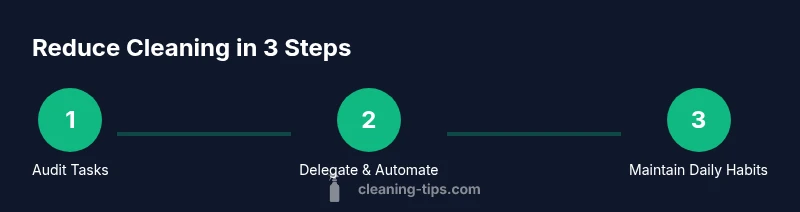
Effective management of cleaning tasks starts with three pillars: boundaries, delegation, and habits. Boundaries help you protect time for the things that matter most, rather than letting cleaning creep into every moment. Delegation distributes workload and reduces resentment, while habits create a rhythm that prevents dirt from accumulating. A practical framework looks like this:
- Boundaries: set a weekly ceiling for cleaning tasks and stick to it.
- Delegation: assign specific chores to household members and track completion.
- Habits: implement quick daily actions (2–5 minutes) that keep surfaces and spaces functional.
To implement, map out your typical week, identify high-impact chores, and decide where automation or delegation can take over. This approach helps you get out of cleaning without compromising hygiene or comfort.
Notes:
- Use a chore chart to make responsibilities visible.
- Schedule “no-cleaning” windows to recharge and pursue other goals.
Delegate and Hire Help: Smart Chores
Delegation isn’t a failure of discipline; it’s a smarter use of time. Start with low-effort, high-impact tasks that benefit most from another pair of hands. If you share a home with others, create a simple rotation or use a rotating calendar. If you live alone, consider outsourcing periodic cleaning or focusing on professional services for deep-clean tasks. A clear delegation plan reduces friction and builds accountability.
Recommended steps:
- Identify tasks that cause the most friction or waste time.
- Assign responsible people or schedule professional help for those tasks.
- Set clear expectations, including frequency, quality standards, and check-ins.
Remember to adjust as needed; what works in one season may need tweaking in the next. The goal is sustainable reduction, not perfection.
Time-Saving Tools and Habits
Small changes can dramatically cut the time you spend cleaning. Invest in simple, durable tools and adopt tiny daily rituals that prevent mess buildup. Consider:
- A portable caddy with essential supplies for quick touch-ups.
- A timer to limit each task to a short, focused interval (e.g., 10–15 minutes).
- A “dirty to clean” checklist that guides you through a fast, repeatable routine.
Habits to adopt:
- Do a 2–5 minute daily reset: put items back, wipe high-traffic surfaces, and sweep floors as needed.
- Wipe down bathrooms after use and wipe kitchen counters after cooking.
- Keep surfaces dry and clutter-free to minimize scrubbing later.
These practices create a frictionless cleaning experience, leaving more time for other activities.
Build a Maintenance Routine That Prevents Deep Cleans
Prevention is the cornerstone of a lighter cleaning workload. By dedicating a few minutes each day to maintenance, you prevent dirt and grime from building up to the point where a deep clean is necessary. A simple weekly rhythm can look like this:
- Monday: quick vacuum or sweep and wipe down surfaces.
- Wednesday: clean mirrors, wipe glass surfaces, and tidy up clutter.
- Friday: do a rapid bathroom wipe-down and kitchen wipe.
Even if you start with 10 minutes on a few days, you’ll prevent long, time-consuming cleaning sessions. The key is consistency and keeping maintenance tasks aligned with your lifestyle so that they feel doable rather than burdensome.
Communicating Boundaries with Household Members
Clear communication is essential when reducing cleaning responsibilities. Start with a constructive conversation that explains the purpose of the boundaries and how delegation helps everyone enjoy a cleaner, calmer home. Use a chore chart or a digital planner to keep tasks visible and track progress. Encourage feedback and be willing to adjust.
Tip: Schedule a quarterly check-in to review what’s working and what isn’t. People are more likely to participate when they understand the why and can see measurable progress.
When You Still Must Clean: Safety and Hygiene First
There are times when cleaning is unavoidable, especially to maintain health and safety. When that happens, focus on targeted, efficient tasks rather than exhaustive scrubbing. Prioritize high-touch surfaces, food areas, and bathrooms. Use appropriate cleaners, follow label directions, and ventilate the space. Remember: cleaning is part of self-care, but you can still minimize effort with a well-planned approach.
Next Steps and Realistic Expectations
To embed this approach into daily life, start with a one-month pilot. Record time saved, tasks delegated, and any friction points. At the end of the month, adjust the boundaries, task allocations, and routines. The objective is a steady reduction in cleaning time without compromising safety or comfort. If you hit a plateau, consider a professional consultation to optimize systems further.
Tools & Materials
- Digital calendar or planner(to schedule chores and track boundaries)
- Chore chart template(for assigning tasks to household members)
- Timer or stopwatch(to enforce time-bounded tasks)
- Notebook and pen(to capture tasks and adjustments)
- Communication plan template(for conversations with housemates)
Steps
Estimated time: 3-4 weeks
- 1
Define your cleaning boundaries
Identify which tasks are essential for hygiene and which can be part of a rotating plan or delegated. Write them down and get agreement from household members.
Tip: Start with non-negotiables (e.g., bathroom sanitation) and assign everything else to rotation or automation. - 2
Audit current chores and time spent
Track how long you spend cleaning in a typical week. Note tasks that feel repetitive or avoidable and highlight opportunities to delegate or batch.
Tip: Use a simple spreadsheet to log task, duration, and who completed it. - 3
Create a delegation plan and schedules
Assign tasks to household members or schedule professional help for high-effort chores. Define expectations and review dates.
Tip: Publish the plan where everyone can see it; accountability improves adherence. - 4
Implement maintenance routines
Introduce quick daily actions (2–5 minutes) to prevent buildup, such as a nightly wipe-down and the 2-minute tidy.
Tip: Link routines to existing habits (e.g., after brushing teeth, run a quick wipe). - 5
Evaluate and adjust monthly
Review what’s working, what isn’t, and adjust assignments or routines. Permits flexibility while maintaining progress.
Tip: Keep a one-page summary of changes for quick reference.
Questions & Answers
What does it mean to get out of cleaning?
Getting out of cleaning means reducing the time and effort spent on routine chores by boundaries, delegation, and efficient habits, while maintaining a safe and clean home.
It means reducing the time you spend cleaning while keeping a healthy home.
How can I delegate without causing resentment?
Create a clear, fair plan with defined responsibilities, rotate tasks, and hold regular check-ins to adjust as needed. Ownership and transparency reduce friction.
Set clear tasks and schedule regular check-ins to adjust as needed.
Is hiring help worth it?
Yes, if it frees you from repetitive tasks that consume time and energy. Start with periodic deep-cleaning or weekly services as a trial.
Yes, it can be worth it if it frees up your time.
How do I maintain hygiene while cleaning less?
Focus on high-touch areas and daily maintenance routines to prevent build-up. Deep cleans can be scheduled less frequently but not eliminated.
Keep up with quick daily tasks and schedule deeper cleans occasionally.
What if I have a small space and busy schedule?
Prioritize high-impact areas and leverage delegation or services for the most time-consuming chores. Small spaces often benefit from targeted routines.
Target high-impact areas and use delegation for time-heavy tasks.
How do I start implementing boundaries today?
Begin with one non-negotiable task, assign one other task to a household member, and set a 10-minute maintenance routine. Review after one week.
Start with one boundary and one delegated task, then review weekly.
Watch Video
The Essentials
- Set clear cleaning boundaries and stick to them
- Delegate tasks to reduce personal load
- Adopt quick daily routines to prevent buildup
- Track progress and adjust plans regularly
- Maintain hygiene with targeted, efficient tasks