How to Get Started Cleaning Business
A complete, step-by-step guide to starting a cleaning business: niche selection, legal basics, pricing, marketing, operations, and scaling for homeowners and renters.


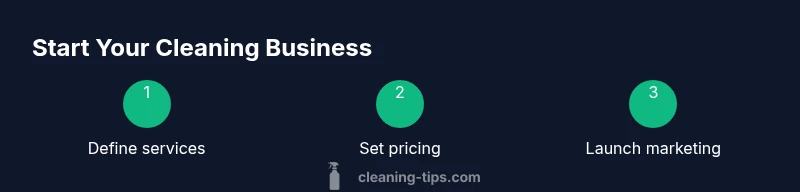
Starting a cleaning business involves choosing a niche, registering your entity, securing basic supplies, and building a client pipeline. In 2–3 steps you can launch with a lean budget: define services, set pricing and policies, and start marketing locally. The Cleaning Tips team found that clear positioning and reliable service are the fastest paths to repeat clients and sustainable revenue.
Market potential and niche positioning
Starting a cleaning business is more accessible than many other service ventures, especially for homeowners who already have cleaning experience. According to Cleaning Tips, the industry remains approachable with low upfront costs and high demand among busy households and small offices. The Cleaning Tips team found that clients increasingly value reliability, consistency, and transparent pricing, which creates an opening for well-run, locally focused providers.
To choose a niche, map your ideal client and the unique value you offer. Residential cleaning often thrives on recurring, scheduled service, while niche segments—such as move-in/move-out cleaning, post-construction cleanup, or green-cleaning using eco-friendly products—can command higher retainers. Consider your city’s demographics, competition density, and your own strengths (speed, attention to detail, or specialized equipment). Start by testing one or two services in a defined neighborhood, then expand as you build systems and testimonials. The goal is to deliver predictable results every time, which turns first-time clients into repeat customers and advocates.
Define your niche and services
Clarify which client segments you will serve (single-family homes, mid-size offices, or vacation rental properties) and which cleaning tasks you will routinely perform. Create service packages that combine core cleans with add-ons such as deep cleans, oven or fridge cleaning, and interior window care. The more you standardize, the easier it is to price consistently and train staff. Write clear service descriptions, list inclusions and exclusions, and publish a simple pricing structure (e.g., package pricing for common homes, hourly rates for specialized work). Use client personas to tailor marketing messaging and to set expectations about timing, products used (eco-friendly options if applicable), and communication cadence. Establish policies for cancellations, rescheduling, and payment terms up front so you avoid misunderstandings later. This clarity helps build trust and reduces post-service disputes.
Legal, insurance, and administrative basics
Before knocking on doors, set up the legal and administrative frame for your cleaning business. Decide on a business structure (sole proprietorship, LLC, or corporation) and register with your local government as required. Obtain an appropriate tax ID from the tax authority and set up a basic bookkeeping system. Most cleaners should secure liability insurance and workers' compensation if hiring employees; even solo operators benefit from general liability coverage to protect against accidental damage. Create a simple client contract or service agreement that outlines scope, pricing, and cancellation policies. Keep all licenses, permits, and insurance certificates accessible for client audits or proof of compliance. Finally, establish a master operations plan—workflow checklists, customer communications templates, and a method for tracking jobs, invoicing, and payments. This foundation reduces risk and makes growth smoother.
Equipment, supplies, and supplier choices
Your starter kit should cover daily tasks and multiple job types. Essential items include a reliable vacuum with appropriate attachments, microfiber cloths in various sizes, scrub brushes, buckets, mops, squeegees, all-purpose cleaners, glass cleaner, and PPE. Consider eco-friendly cleaning products to attract health-conscious clients and those with sensitivities. Plan for a basic inventory system to track consumables and reorder thresholds. When choosing suppliers, prioritize reliability, price consistency, and lead times; establish a preferred vendor list and order in bulk for savings. If you intend to scale, budget for equipment diversification—carpet cleaning tools, steamer, and extendable dusters—so you can handle a wider range of client requests. Train staff to use equipment correctly and safely to avoid damage and injury; regular maintenance schedules keep tools effective and extend their lifespan.
Pricing and service packages
Pricing is one of the most sensitive levers in a cleaning business. Start with a straightforward framework: base pricing for standard cleans, add-on pricing for extras (deep cleans, high-touch areas, appliance detailing), and a periodic package option for recurring clients. Determine your base charges by estimating average job time, travel, and supply use, while leaving room for profit. Create tiered packages (Essential, Plus, and Premium) to appeal to different households and offices, and publish clear inclusions for each tier. Include terms for cancellations, late arrivals, and payment methods. When possible, offer introductory discounts or referral bonuses to encourage word-of-mouth growth. Finally, monitor your pricing against local competition and adjust as you gain efficiency; as you scale, you can improve margins by optimizing routes and improving staff productivity.
Marketing, branding, and client acquisition
A strong brand and an efficient local marketing plan are critical to early traction. Build a simple, memorable brand identity—name, logo, color palette, and a short value proposition that resonates with your target clients. Create a basic website or landing page and claim your business on local directories and maps. Invest time in local SEO: claim and optimize your Google Business Profile, encourage reviews, and respond promptly to inquiries. Encourage testimonials from pilot clients and leverage referral programs. Partnerships with property managers, real estate agents, and moves services professionals can yield steady referrals. Use messaging that emphasizes reliability, safety, and eco-friendly practices if applicable. Based on Cleaning Tips research, local visibility and word-of-mouth are the fastest paths to early growth; expand your reach with content marketing (how-to guides, checklists, and check-in emails) that positions you as an expert. Track marketing costs and conversions to refine your approach over time.
Operations, scheduling, and quality control
Efficiency and consistency separate successful startups from one-time cleaners. Create a simple scheduling system—online calendar, client notes, and clear job durations. Standardize checklists for each job type, including staging areas, cleaning order, and safety reminders. Use a client portal or email templates for confirmations and post-service follow-ups. Establish a quality-control routine: a quick post-job inspection, client feedback channel, and a process to address issues quickly. Maintain transparent records for each client: service history, preferences, and contact details, so future visits go smoothly. If you hire, implement onboarding, safety training, and a simple performance review process. Consider a basic driver and route optimization approach to minimize travel time. Finally, implement a cash flow plan: track income, expenses, and taxes; stay on top of invoicing to keep operations running smoothly.
Hiring, training, and scaling
As demand grows, you’ll reach a point where you need to bring on part-time or full-time staff. Start with a small, trusted team and implement a robust onboarding program that covers safety, product use, communication standards, and customer service. Develop a simple shift pattern, clear roles, and a performance-based incentive system to encourage high-quality work. Provide ongoing training with monthly refreshers and short microlearning modules. To scale effectively, document all procedures so new hires can reproduce your standard of service. Maintain a transparent HR process to manage wages, benefits (if offered), and compliance with labor laws. Finally, plan for growth by forecasting demand, budgeting for equipment replacements, and setting aside funds for expanded marketing and software tools. The goal is to maintain service quality while expanding your geographic reach and service lines.
Sustainability and client trust
Long-term success depends on sustainability practices and trusting client relationships. Emphasize safe handling of cleaners, proper storage, and clear safety guidelines to protect clients and staff. Communicate your eco-friendly choices to clients and highlight any certifications or third-party validations. Collect feedback regularly and respond promptly to concerns to build loyalty. Maintain transparent pricing and service histories so clients feel informed and in control of their cleaning outcomes. Finally, keep your legal and insurance coverage up to date and review it annually to ensure your growing operation remains protected.
Tools & Materials
- Commercial-grade vacuum cleaner (HEPA preferred)(Upright or canister; replace filters as needed)
- Microfiber cloths (assorted sizes)(Lint-free, color-coded if possible)
- Buckets and mops(Sturdy mop with extendable handle)
- Spray bottles and scrub brushes(At least two spray bottles; include brushes for grout and ovens)
- All-purpose cleaner and glass cleaner(Eco-friendly if available)
- PPE (gloves, mask)(Nitrile gloves; dust mask for fragrances)
- Inventory/logging system (digital or notebook)(Keep track of supplies and reorders)
- Basic liability insurance(Required if hiring or working with clients)
- Small vehicle or storage for equipment(Optional but helpful for mobility)
- Marketing collateral (business cards, flyers)(Supports local reach and referrals)
Steps
Estimated time: 4-8 weeks
- 1
Define niche and services
Identify target clients (homes, condos, small offices) and the core services you will offer. Create one-page service descriptions and standard add-ons to simplify quoting.
Tip: Draft a 2–3 sentence value proposition to guide all marketing. - 2
Register the business and set up basics
Choose a business structure, register locally, and obtain any required tax IDs. Open a simple bookkeeping file to track income and expenses from day one.
Tip: Keep copies of licenses and certificates in a centralized, accessible folder. - 3
Secure insurance and risk controls
Get general liability insurance and consider workers’ comp if you hire. Create standard client agreements covering scope, pricing, and cancellations.
Tip: Review policy details annually and after onboarding new staff. - 4
Build starter kit and supplier list
Assemble essential equipment and eco-friendly products. Create a preferred vendor list and establish lead times for reorders.
Tip: Negotiate small-order discounts with repeat suppliers. - 5
Set pricing and packaging
Develop base rates, add-ons, and tiered packages. Publish clear inclusions and terms; include a simple cancellation policy.
Tip: Test pricing with a pilot client to validate profitability. - 6
Launch marketing and local presence
Create a basic website or landing page, claim your Google Business Profile, and start collecting reviews. Reach out to local real estate partners.
Tip: Ask early clients for referrals and testimonials in return for small incentives. - 7
Operate with systems
Use checklists, scheduling tools, and client communications templates. Track jobs, invoicing, and customer feedback.
Tip: Keep a daily quick-check to ensure consistency across jobs. - 8
Scale gradually and safeguard quality
Onboard new staff with safety and service training. Expand service lines only after establishing reliable processes.
Tip: Document every procedure so growth doesn’t dilute quality.
Questions & Answers
What licenses do I need to start a cleaning business?
Licensing requirements vary by city and state. Most areas require a basic business license and a tax ID; some commercial cleaning work may require additional permits or certifications. Check local government sites for exact rules.
Licensing varies by city and state. Most places need a basic business license and tax ID; check locally for specifics.
Should I hire employees or work solo initially?
Many cleaners start solo to minimize risk and establish a client base. As demand grows, you can hire staff and expand services.
Start solo if possible, then plan for growth and staff as demand increases.
How should I price cleaning services?
Use a mix of base rates, add-ons, and recurring packages. Price based on job complexity, location, and time required, while clearly communicating inclusions.
Price using value, not just time, and be transparent with clients.
How can I get more clients quickly?
Leverage local SEO, online directories, word-of-mouth, and partnerships with real estate agents or property managers.
Get listed locally, optimize for search, and ask for referrals.
What equipment is essential for starting?
A basic starter kit includes a vacuum, microfiber cloths, buckets, cleaners, PPE, and spray bottles. Add specialized tools as you win more jobs.
Start with a basic kit and expand as you win more jobs.
Is cleaning business profitable?
Profitability depends on scale, efficiency, and pricing discipline. Focus on building repeat clients and controlling costs.
Profitability rises with repeat clients and tight cost control.
Watch Video
The Essentials
- Define a clear niche and services.
- Get insured and licensed before first jobs.
- Offer consistent service to build trust and referrals.
- Create simple, scalable systems for operations.
- Market locally and measure results for growth.