How to Make Cleaner with Vinegar: Safe, Simple, Eco-Friendly
Learn how to make a versatile vinegar cleaner with a simple 1:1 vinegar-to-water mix. This educational guide covers safety, surface choices, recipes, storage, and eco-friendly tips for a healthier home.


Learn how to make a versatile cleaner using vinegar and water, plus optional extras. This simple recipe covers kitchen surfaces, glass, and bathrooms, while avoiding surfaces where acid can harm. Prepare a 1:1 vinegar-to-water spray, test on a hidden spot, and tailor with optional essential oils for scent for better results.
Why Vinegar Works as a Cleaner
Vinegar is a natural cleaner because its acidity helps break down mineral deposits, soap scum, and certain microbes on non-porous surfaces. When diluted with water, it cleans effectively without harsh fumes. The Cleaning Tips team notes that white distilled vinegar can reduce lime scale around faucets, kettles, and showerheads, making routine maintenance easier. It's important to remember: vinegar is not a registered disinfectant, so for high-risk areas or when disinfection is required, pair it with a proven product or follow labeled guidelines. Always start with a small patch test to avoid surprises on delicate surfaces.
Understanding Vinegar Varieties
White distilled vinegar is most common for cleaning due to its clear color and neutral composition. Apple cider vinegar has aroma and color that can stain light surfaces and alter odors, so it's less ideal for general cleaning. Some flavored or infused vinegars contain additives that may leave residues. For most surfaces, stick to plain white vinegar. If scent bothers you, you can dilute further or add a few drops of essential oil after cleaning. Cleaning Tips advises using the 5% acidity standard for household tasks, as higher concentrations can be more aggressive on finishes.
Safety Guidelines for Vinegar Cleaning
Never mix vinegar with bleach or hydrogen peroxide in the same container — dangerous gases can form. Ventilate the area well, wear gloves if you have sensitive skin, and keep vinegar away from natural stone like marble or limestone, as acid can etch the surface. Before applying to a new surface, test on a hidden area for colorfastness and finish. Use a labeled spray bottle to avoid cross-contamination and to remind you of the vinegar-water ratio. If you’re cleaning children’s toys, rinse with water afterward and let dry completely.
What You’ll Need (Tools and Materials)
- White distilled vinegar (essential)
- Water
- Spray bottle (clear labeling recommended)
- Measuring cup or funnel for accurate mixing
- Microfiber cloths or non-scratch sponges
- Protective gloves (optional but advised for sensitive skin)
- Optional: a few drops of lemon or eucalyptus essential oil for scent
Having these on hand ensures you can mix, apply, and store your cleaner with minimal fuss.
Surface-Specific Cleaning Techniques: Kitchen, Glass, and Stainless
For most kitchen surfaces and appliances, a 1:1 vinegar-to-water spray works well for daily wipe-downs. Spray, let sit briefly on mildly dirty areas, then wipe with a microfiber cloth and dry to prevent streaks. Glass and mirrors benefit from a quick mist and a wipe with a dry microfiber, moving in straight lines to avoid lines. Stainless steel appliances respond best to a light spray followed by a wipe with a clean cloth to prevent water spotting and to maintain a polished finish.
Bathrooms, Grout, and Mineral Deposits
Vinegar helps dissolve mineral buildup around taps, showerheads, and glass enclosures. Use the 1:1 spray, let sit for 15–30 seconds on mineral deposits, then scrub with a non-scratch pad and rinse. For grout, apply sparingly and rinse thoroughly; avoid prolonged soaking which can degrade some grout sealants. Always patch test first on a small area to protect color-fastness.
Cleanliness tip: heavy soap scum may require repeated applications, but patience yields a brighter surface without harsh chemicals.
Stains, Odors, and Laundry Applications
Vinegar can assist with light stains on non-porous surfaces and can neutralize odors in laundry when used in the rinse cycle or with your detergent in moderate amounts. Do not mix with bleach in any circumstance; never pour them together. For fabrics, test on a hidden corner first and avoid prolonged contact on delicate textiles. In the laundry, a small splash of vinegar can help soften water and reduce odor.
Not All Surfaces: When Not to Use Vinegar
Vinegar is acidic and can etch stone surfaces such as marble, limestone, and certain terrazzo. It can also corrode aluminum and some decorative metals if used repeatedly. Avoid applying vinegar on unsealed porous stones, waxed finishes, or antique surfaces without consulting manufacturer guidance. When in doubt, use a pH-neutral cleaner designed for the surface.
Storage, Freshness, and Eco Considerations
Keep vinegar cleaner in a cool, dark place in a well-labeled bottle. The solution remains stable for months if stored away from heat and sunlight. Using a reusable spray bottle reduces plastic waste, aligning with eco-friendly cleaning habits. Refill when you run low and consider rotating bottle labels to prevent cross-use with other cleaners.
Tools & Materials
- White distilled vinegar(Standard 5% acidity)
- Water(Filtered or tap water)
- Spray bottle(Glass or BPA-free plastic)
- Measuring cup or funnel(For accurate mixing)
- Microfiber cloths(Lint-free and absorbent)
- Protective gloves(Skin protection if desired)
- Optional essential oils(Lemon or eucalyptus for scent)
Steps
Estimated time: 25-40 minutes
- 1
Gather supplies
Collect vinegar, water, a spray bottle, cloths, and gloves. This ensures you have everything ready before you begin. Preparing in advance reduces interruptions and helps you mix accurately.
Tip: Tip: Gather items in one place to streamline the process. - 2
Mix a 1:1 cleaner
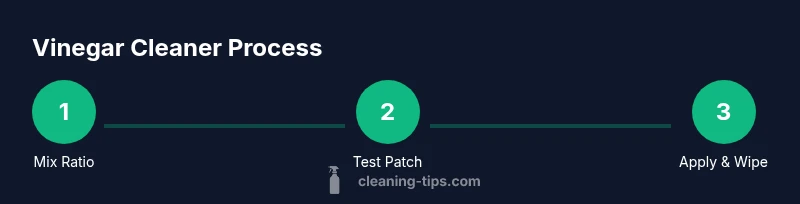
Measure equal parts vinegar and water and pour into the spray bottle. Label the bottle to prevent cross-use with other cleaners.
Tip: Pro-tip: Use a funnel to avoid spills and a spray bottle with a trigger for even coverage. - 3
Patch test surfaces
Apply a small amount to an inconspicuous area and wait 1–2 minutes. If there is no discoloration or finish change, you can proceed.
Tip: Note: This protects delicate finishes like certain laminates or painted surfaces. - 4
Apply to non-porous surfaces
Spray onto the surface and wipe with a microfiber cloth. For glass and chrome, wipe in a circular motion then dry with a clean section of cloth to avoid streaks.
Tip: Pro-tip: Use a dry microfiber to prevent runs and achieve a streak-free finish. - 5
Tackle stubborn deposits
For mineral buildup, apply, wait 30 seconds, then scrub with a non-scratch sponge. Rinse with clean water if needed.
Tip: Note: In bathrooms, let the solution sit longer on soap scum before scrubbing. - 6
Rinse and dry surfaces
Rinse off residues on food-contact surfaces or polished metals. Dry with a clean cloth to prevent water spots.
Tip: Pro-tip: A final wipe with a dry microfiber reduces streaks. - 7
Storage and labeling
Store upright in a cool, dark place. Label clearly to prevent mixing with other cleaners.
Tip: Note: Replace every 6–12 months if scent fades or bottle shows wear. - 8
Refill and rotate use
Keep a dedicated bottle for vinegar cleaner and refill when needed. This reduces waste and keeps your cleaning routine consistent.
Tip: Pro-tip: Use a date marker to track bottle freshness.
Questions & Answers
Is vinegar as effective as store-bought cleaners?
Vinegar cleans many everyday messes and can reduce mineral buildup, but it is not a registered disinfectant. For high-risk areas, use a dedicated disinfectant or follow label directions.
Vinegar works for many tasks, but it isn’t a substitute for disinfectants in high-risk areas.
Can I use vinegar to clean coffee stains?
Yes, vinegar diluted with water can help break down mild coffee stains on non-porous surfaces. Always patch-test first and rinse afterwards.
You can try vinegar for mild coffee stains, but patch-test first.
Will vinegar disinfect surfaces?
Vinegar is not a registered disinfectant. It can reduce grime, but for disinfection in kitchens or bathrooms, use an EPA-registered product following label directions.
Vinegar isn't a registered disinfectant; use proper disinfectants when needed.
Can I use vinegar on stone surfaces?
No. Vinegar is acidic and can etch stone such as marble or limestone. Use pH-neutral cleaners for stone countertops.
Avoid vinegar on stone counters; use stone-safe cleaners.
How long does vinegar cleaner stay good in a bottle?
Vinegar solutions remain stable for months when kept in a sealed bottle away from heat and sunlight.
Store vinegar cleaner in a sealed bottle away from heat; it lasts for months.
Can vinegar help with laundry odors?
A small amount of vinegar can help reduce odors in laundry, but avoid using it with bleach and follow detergent instructions.
Vinegar can help with odors in laundry if used carefully.
Watch Video
The Essentials
- Work with a 1:1 vinegar-to-water ratio for versatility
- Test surfaces first to avoid damage
- Avoid vinegar on stone or with bleach/hydrogen peroxide
- Store and label bottles for safe, repeated use