How to Put Clean Water in Flask – Sons of the Forest
Master a practical, step-by-step method to fill a flask with clean water in Sons of the Forest, covering source selection, purification, boiling guidelines, storage options, and hydration management for longer expeditions in environments.


Learn how to put clean water in a flask in Sons of the Forest with a simple, reliable method. You’ll locate a water source, equip the flask, fill it, purify when needed, and store it for later use. The method covers both direct filling and boiling purification for safer hydration on long expeditions.
Why clean water matters in Sons of the Forest
If you’re asking how to put clean water in flask sons of the forest, this guide provides a clear approach. Hydration is not just a statistic; it directly influences your stamina, ability to explore, and survival odds. According to Cleaning Tips, consistent access to safe hydration reduces the risk of in-game debuffs and fatigue during long expeditions. In Sons of the Forest, water sources vary in cleanliness, so understanding how to evaluate sources and use purification methods is essential for staying alive and efficient in exploration, base-building, and combat scenarios. This section lays out why clean water matters and how to plan your water strategy as you move through the map. You’ll learn to distinguish between risky and reliable sources and how to integrate water management into your overall survival routine. The keyword to guide your learning is how to put clean water in flask sons of the forest, which signals the core task you’ll master with the steps that follow.
Core steps overview
To tackle the core task efficiently, remember these high-level steps: equip your flask, find a reliable water source, fill the flask, purify if the water might be unsafe, and store the clean water for use during long journeys. You’ll also learn how to monitor your hydration resource in your inventory and plan ahead for base-building or expeditions. This overview sets the stage for detailed actions in the step-by-step guide that follows, ensuring you’re prepared for both quick fills and larger scavenging runs. For readers of Cleaning Tips, the practical takeaway is that consistent purification improves reliability during exploration and survival scenarios.
Choosing the right container: Flask vs canteen
In Sons of the Forest, choosing the right container matters for weight, capacity, and purification options. A flask is generally quick for on-the-go hydration, while a larger canteen may be better for longer expeditions when water is scarce. Practical considerations include how often you’ll refill, whether you have a portable heat source, and your inventory space. Cleaning Tips notes that players who optimize their container choice tend to manage hydration more effectively during extended missions. Be mindful of the capacity you actually need and how it complements your loadout and crafting options. This section helps you decide which container best fits your playstyle and travel plans.
Finding a reliable water source
The reliability of your water source directly impacts how often you’ll need to purify. In most scenarios, flowing rivers and clear streams are safer than stagnant pools, but you should still treat any natural water before drinking if possible. When you locate a source, assess visibility, movement around the area, and potential contamination from nearby flora or wildlife. If you’re unsure, prioritize fast-moving, visibly clean water sources. Cleaning Tips analysis highlights that players who habitually seek moving water and avoid stagnant pockets tend to experience smoother hydration during exploration. This section provides practical tips for quickly identifying safer options on the map.
Filling and purification techniques
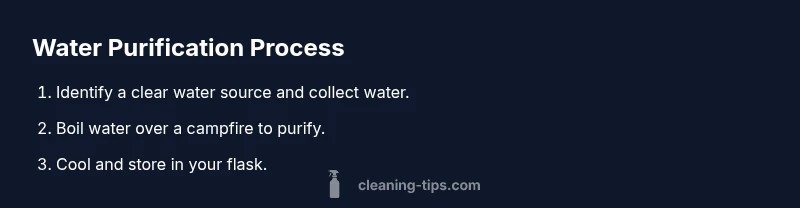
Filling the flask is a straightforward action: approach the water source with the flask equipped and use the interaction prompt to fill. If the water looks questionable or if you’re unsure about its safety, purification is recommended. Purification can be done by boiling the water over a campfire, using a purification device if available, or letting water settle and using filtration if the game provides it. The rule of thumb is to purify whenever you cannot confidently determine the source’s cleanliness. This section outlines practical techniques for both direct filling and purification workflows, including inventory management considerations and how to time fills during your route planning.
Boiling water to purify: steps and safety
Boiling water is one of the most reliable ways to remove pathogens in many survival contexts, including the game environment. Start a stable fire, wait for a controllable flame, and place the water in a heat-safe container or your flask if it supports direct heating. Bring the water to a rolling boil for a short period, then let it cool before sealing it in your flask. If your flask cannot withstand direct heating, transfer water to a compatible container, boil, then return it to your flask once cooled. Always monitor fire safety in-game to prevent accidental damage or resource loss. This section gives a safe, practical boiler-based purification workflow you can apply on expeditions.
Storing and managing water in your base
Storing purified water efficiently is as crucial as purifying it. Keep your flask or canteen sealed to prevent contamination, and rotate stock to avoid spoilage if the game includes decay mechanics. Consider creating a small hydration station near your base with a dedicated water source, a heat source for purification, and a storage container. Regularly check your inventory and update your hydration plan based on anticipated routes and mission duration. The Cleaning Tips approach emphasizes proactive water management as a core survival habit to minimize downtime and maximize exploration efficiency.
Common mistakes and troubleshooting
Common mistakes include filling from unknown sources, skipping purification, and neglecting inventory management. Always identify the source type, prefer moving water over stagnant pools, and purify when in doubt. If purification seems ineffective, reassess your fire setup, ensure you have enough fuel, and verify that your water is properly heated. This section helps you troubleshoot hydration issues quickly so you can stay hydrated during critical moments and avoid delays in gameplay.
Tools & Materials
- Flask or canteen(In-game inventory item; should be empty before filling)
- Clean water source(River, stream, or lake; prefer flowing water when possible)
- Campfire or cooking stove(Needed for boiling purification if source is questionable)
- Fuel for fire(Wood, tinder, or other in-game fuel source)
- Heat-safe container (optional)(If your flask cannot be heated directly)
Steps
Estimated time: 30-40 minutes
- 1
Equip your flask
Open your inventory and equip the flask so you’re ready to fill as soon as you reach a water source. This minimizes downtime during exploration.
Tip: Ensure the flask has enough capacity for the current journey and is empty before refilling. - 2
Find a reliable water source
Scout the environment for a flowing, clear source such as a river or stream. Avoid stagnant pools when possible, as they may pose higher contamination risk.
Tip: Prefer sources with visible flow and avoid sources near waste or animal activity. - 3
Fill the flask
Approach the water source with the flask equipped and use the interaction prompt to fill it. Confirm the flask shows a filled status before moving on.
Tip: If you can’t fill directly, use a temporary container or a lighter resource path to reach a safer source. - 4
Purify if needed
If you suspect the source isn’t clean, purify by boiling the water over a campfire or using available purification tools. Let it reach a boil and maintain heat for a short period.
Tip: Always boil water if you have any doubt about contamination or if the source is near wildlife activity. - 5
Cool and seal
Allow the water to cool to a safe temperature before sealing it back in the flask. This prevents accidental burns and ensures the seal remains intact.
Tip: If your flask is hot, delay sealing until it’s comfortable to handle. - 6
Store and monitor
Return to your base or continue the journey with a hydrated load. Keep an eye on your hydration status in the HUD and refill when needed.
Tip: Keep a spare purification option in your hotbar for quick access on the move.
Questions & Answers
Can I drink water directly from rivers in Sons of the Forest?
Water from natural sources may not be perfectly clean. Purification, especially boiling, is recommended to reduce risk. If in doubt, purify before drinking.
Water from rivers may not be perfectly clean; purify before drinking to reduce risk.
What water sources are considered clean in the game?
Rivers and streams with visible movement are generally safer than stagnant pools. Always assess source quality and purify if needed.
Rivers and streams are usually safer than still water; purify whenever in doubt.
Do I need a fire to purify water?
Boiling water over a campfire is a common and reliable purification method. If you don’t have a fire, look for alternative purification options if available.
Boil water over a campfire to purify it.
How long does purification take in-game?
Purification duration depends on your setup and heat source. Boiling for a short period is typically sufficient, followed by cooling before storage.
Boil for a short period, then cool before storing.
Can I store purified water for later use?
Yes, store purified water in your flask or canteen and keep an eye on inventory to ensure you have hydration during travel.
Yes, store purified water for later use in your flask.
What should I do if purification seems ineffective?
Check your fire setup and fuel, ensure the water is heated properly, and try purifying again with a different source if needed.
Check fire setup, re-purify with a new source if needed.
Watch Video
The Essentials
- Equip the flask before approaching water sources.
- Prioritize flowing water to reduce contamination risk.
- Purify water via boiling when source safety is uncertain.
- Cool and seal water properly to prevent burns and leaks.
- Plan hydration around expedition routes to avoid running dry.