How to Put Injector Cleaner: A Complete Step-by-Step Guide
Learn how to put injector cleaner safely into your car's fuel tank with this step-by-step guide. Includes safety tips, product selection guidance, and expected results after treatment.


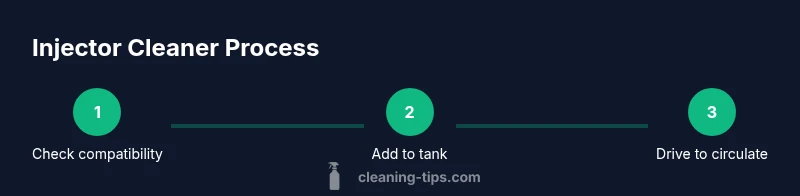
Putting injector cleaner into your vehicle’s fuel system is a straightforward, step-by-step process. Start with a full tank or a nearly full tank, choose a gasoline-compatible cleaner suitable for your engine, and add the correct amount per the label. After pouring, drive normally for 20-40 minutes to let the cleaner circulate and dissolve deposits.
What injector cleaner does and why you might need it
According to Cleaning Tips, injector cleaners help dissolve microscopic carbon and varnish deposits inside the fuel injectors and intake valves. Those deposits can restrict fuel spray, disrupt air-fuel balance, and cause rough idling or reduced power. A quality injector cleaner, properly chosen for your engine type, can help restore smoother idle, better throttle response, and improved fuel efficiency. It is not a substitute for a professional diagnosis if you notice persistent performance problems. When you search for how to put injector cleaner, you should start with understanding the chemistry and your vehicle’s fuel system. The cleaner works by dissolving the deposits, allowing the injector nozzles to spray a finer, more uniform fuel mist. It’s also a good idea to consider how oil cleanliness, air filters, and spark plugs influence overall performance alongside fuel-system maintenance.
noteOnlyForSEOValidation":false}
Safety and compatibility considerations
Safety comes first when working with fuel additives. Read the product label carefully to confirm compatibility with your gasoline engine and ethanol blend. Do not use injector cleaners in diesel engines or vehicles with severe mechanical issues without professional guidance. Keep the work area well-ventilated and avoid open flames or sparks. Wear protective gloves and eye protection to prevent skin or eye contact in case of splashes. If you have a modern direct-injection engine or a turbocharged setup, ensure the cleaner’s active ingredients are appropriate for your system. Cleaning Tips emphasizes that the right cleaner, used correctly, is not a substitute for diagnosing catalytic converter problems or misfiring cylinders.
note: This block discusses safety and compatibility; always follow label directions.
Tools & Materials
- Injector cleaner product (gasoline-compatible)(Choose a cleaner appropriate for gasoline engines; read label for compatible octane and dilution.)
- Measuring cup or syringe(Use to measure the exact cleaner amount as per label.)
- Safety gloves and goggles(Protect hands and eyes from splashes.)
- Funnel (optional)(Helpful for pouring into the tank without spills.)
- Owner's manual(Check manufacturer's guidance and tank capacity.)
Steps
Estimated time: 30-60 minutes
- 1
Read the cleaner label and confirm compatibility
Before you add anything, read the product label to confirm it is compatible with your engine and fuel type. Note the recommended amount per tank and any preconditioning steps. If you drive a diesel or a non-gasoline engine, do not use these products.
Tip: Always follow the product dosage; overdosing can cause engine hesitation. - 2
Prepare the vehicle and ensure a safe environment
Park on a flat surface, allow the engine to cool, and gather PPE. If you plan to open the hood, keep away from moving parts and hot surfaces. Ensure the tank is near full per label or at least half-full depending on the product instructions.
Tip: Wear gloves and eye protection; avoid splashes on skin and eyes. - 3
Add injector cleaner to the fuel tank
With the engine off, open the fuel filler cap and slowly pour the cleaner into the tank per label directions. If the product provides a specific mixing method, follow that. Do not mix cleaners from different brands in the same tank.
Tip: Pour slowly to avoid spills; use a funnel if needed. - 4
Refill the tank to the recommended level
Fill the tank to the indicated level after adding the cleaner. This helps dilute the cleaner evenly as fuel circulates and prevents concentrated pockets.
Tip: Keep the ignition off while refilling to avoid fumes near sparks. - 5
Drive to circulate and dissolve deposits
Drive normally for the specified duration, typically 20-40 minutes, to allow the cleaner to flow through injectors and dissolve deposits. You may feel smoother acceleration as the cleaner works.
Tip: Avoid hard accelerations during the first 15 minutes after adding cleaner. - 6
Consider a second tank for severe buildup
If deposit buildup is heavy, a second dose after several hundred miles may be recommended by the label or a professional. Do not exceed the recommended total dosage.
Tip: Check for changes in fuel economy after the treatment.
Questions & Answers
What is injector cleaner and why use it?
Injector cleaner is a fuel additive designed to dissolve carbon deposits and improve fuel spray. It can help restore smoother idle, better acceleration, and improved efficiency, especially in engines with some buildup.
Injector cleaner dissolves deposits to improve spray and idle, helping smoother running and efficiency.
Can I use injector cleaner in a diesel engine?
Most injector cleaners are formulated for gasoline engines. Diesel engines require products specifically labeled for diesel use. Check the label before using.
Diesel engines need diesel-specific cleaners.
How often should I use injector cleaner?
Follow the product label and your vehicle’s maintenance plan. For some vehicles, a treatment every 6–12 months is common; for others, use as needed based on symptoms.
Use as directed, typically every 6–12 months if buildup is a concern.
Will injector cleaner damage engines?
Used correctly, injector cleaners are generally safe for modern engines. Overuse or wrong formulations can cause issues, so always adhere to labeling.
If used as directed, cleaners are safe; don’t overdo it.
What should I expect after treating with cleaner?
You may notice smoother idle, improved acceleration, and slightly better fuel economy. Continue normal driving for the cleaner to complete its cleaning cycle.
Expect smoother idle and better acceleration after treatment.
Watch Video
The Essentials
- Follow the product label for dosage and compatibility
- Add to a ready fuel tank and drive to circulate
- Use PPE and work in a well-ventilated space
- Expect smoother idle and improved acceleration after treatment