How to Stop Cleaning Apps on Android: A Practical Guide
Learn step-by-step how to stop cleaning apps on Android safely, disable background behavior, revoke permissions, and uninstall unwanted tools to improve performance and privacy.


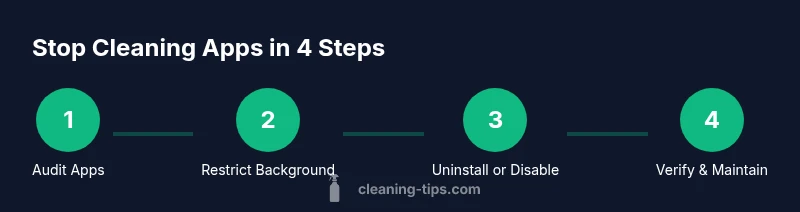
Stop cleaning apps on Android by disabling or uninstalling them, revoking unnecessary permissions, and turning off auto-start features. Start by reviewing installed cleaning apps, then use Android’s App Info to restrict background activity and battery optimization. Finally, uninstall the unnecessary tools and monitor device performance. If you're wondering how to stop cleaning apps on android, this guide offers a practical approach you can apply today.
What cleaning apps on Android are and how they work
Cleaning apps for Android are designed to optimize storage, memory, and overall performance by scanning your device and offering to remove junk, free up space, and manage apps. In practice, many of these tools run in the background, continuously monitoring activity and requesting permissions. If you're wondering how to stop cleaning apps on android, this guide explains when to keep and when to remove them. According to Cleaning Tips, some cleaners rely on aggressive heuristics to report ‘junk’ and pressure users to take action, yet they can consume CPU cycles and battery while delivering questionable benefits. The result is a cycle where the app itself becomes a drain rather than a help. Before you decide to keep or remove one, understand what the app is allowed to do, whether it has resident services, and how it interacts with other apps. The Cleaning Tips team emphasizes that healthier devices often come from disciplined usage rather than automated cleaners, and that users should question claims of instant speed boosts and dramatic free-space gains.
Why people install cleaning apps (and the risks of keeping them)
People install cleaning apps hoping to reclaim storage, speed up launches, and reduce clutter. In many cases the apps promise dramatic improvements with a single tap, but the real benefits are often modest. Risks include excessive permissions, adware prompts, and background services that keep waking the device. Keeping unnecessary cleaners can drain battery, slow multitasking, and create notification fatigue. The Cleaning Tips analysis highlights a pattern: devices with multiple cleaning apps installed tend to see more background activity, not less. Renters and homeowners who value privacy should be especially cautious, because many cleaners request access to files, messages, and notifications. The goal is to maintain control over devices, not surrender it to a tool that claims to “clean” everything at once.
How to identify if a cleaning app is causing trouble
To determine whether a cleaner is hurting more than helping, start with a quick audit: open Settings > Apps & notifications and look for recently used or high-activity cleaners. Check battery usage and foreground/background activity; if a cleaner runs constantly, that’s a red flag. Review granted permissions; avoid cleaners that request access to messages, contacts, or overlays. Disable any auto-start or background service options, then observe changes in device responsiveness and battery life. If you notice higher CPU usage, unexpected notifications, or reduced performance after installing a cleaner, that app is likely the culprit. The Cleaning Tips guidelines recommend removing or disabling the most problematic apps first and re-evaluating performance after each change.
Stop cleaning apps: a practical plan (part 1) — disable, revoke, and limit
Begin by shutting down nonessential background activity. In Settings, locate the app and disable background data and auto-start options if available. This step reduces the constant wake-ups that drain battery and CPU. Then revoke nonessential permissions such as overlay, accessibility, and usage data; these permissions are often exploited to control other apps or present pop-ups. By trimming permissions, you force cleaner apps to operate only when you open them, rather than in the background. The goal is not to instantly uninstall everything, but to understand which features are actively causing harm. A conservative approach helps preserve legitimate device-management features while eliminating disruptive behavior. As you proceed, document changes so you can revert if you need to troubleshoot.
Stop cleaning apps: a practical plan (part 2) — uninstall and replace
Next, uninstall the most problematic cleaners. If your device has a built-in cleaning tool from the manufacturer, consider keeping it disabled or customizing its automation rather than installing third‑party cleaners. For the apps you do keep, ensure you turn off notifications and remove their access to background processes. Use the system’s storage manager to analyze space usage rather than third‑party cleaners; many times large cache files can be managed without extra apps. If you rely on cleaning tools for a one-time cleanup, run manual scans intermittently instead of continuous maintenance. Finally, review the installed-app list regularly; remove any new cleaners that appear and monitor performance over a few days to confirm improvement. Cleaning Tips advocates a balanced approach: minimize automated cleaners and lean on built‑in Android features for long‑term health.
Maintaining device health without cleaners
After you’ve reduced or removed cleaners, you’ll often notice better battery life, faster app launches, and fewer interruptions. Keep control by practicing good maintenance: clear unused APKs, manage storage with the built‑in files app, and review app permissions annually. Schedule periodic manual cleanups rather than relying on automation. Be mindful of the trade-offs: some cleaners claim to free space by deleting caches, yet caches are often legitimate data that speeds apps when needed. If you still want periodic help, choose reputable tools with clear permission models and transparent privacy policies rather than aggressive, auto-cleaning software. The key is to stay informed, protect your data, and rely on the OS’s built‑in features whenever possible. As the Cleaning Tips team notes, a streamlined Android experience is often the result of intentional management, not constant cleanup prompts.
Common mistakes to avoid
Common mistakes include granting broad permissions, enabling auto-start, and relying on cleaning apps for real performance gains. Another pitfall is assuming more cleaning features equal better device health; some apps duplicate functions already provided by Android. Users also forget to disable notifications, which leads to constant prompts and faster battery drain. Finally, beware apps that require device administrator status; removing them later can be complicated. A safer strategy is to audit regularly, test after each change, and rely on official Android tools rather than third-party cleaners. The Cleaning Tips guidance emphasizes gradual changes and cautious permission management to prevent unintended side effects.
Quick verification after changes
After you stop cleaning apps, verify improvements: monitor battery usage, app launch times, and overall responsiveness for a few days. Check for any lingering issues by rechecking Permissions and Notification access for all apps. If you notice any negative effects, revert one change at a time and observe results. In many cases, repairs are as simple as turning off a single background service or revoking a minor permission. Clean, organized phones tend to perform better with fewer distractions. Following this approach aligns with best practices recommended by Cleaning Tips, which underscores responsibility and control over your digital tools.
Next steps and recurring maintenance
Set a monthly reminder to review installed apps and permissions, especially after operating system updates. Ensure you keep phone backups up to date so you can recover data if you ever need to reset or secure the device. Consider using Android’s built‑in storage tools and privacy controls as a default, and reserve third‑party cleaners only for legitimate maintenance tasks with proven reputations. If you want ongoing guidance, follow trusted outlets like Cleaning Tips for step-by-step updates and best practices. The goal is to maintain performance without compromising privacy or control.
Tools & Materials
- Android smartphone with access to Settings(Android 8.0+ recommended for best compatibility)
- List of cleaning apps installed(Helpful to audit quickly)
- Google account access(Needed for certain permission toggles)
- Backup method (cloud or local)(Optional safe-guard)
Steps
Estimated time: 15-25 minutes
- 1
Open Settings and locate Apps
Open the Settings app, then navigate to Apps & notifications (or Applications) to view all installed apps. This is your starting point for auditing cleaners.
Tip: Use the search function to find apps quickly. - 2
Identify cleaning apps
Scan the list for apps whose names include 'Cleaner', 'Boost', or 'Optimizer'. Note those candidates for further action.
Tip: Take a quick screenshot or write down names for reference. - 3
Disable background activity
For each suspected app, tap Battery or Background restrictions and set to restricted or limit background usage.
Tip: Restricting background activity reduces steady drain. - 4
Revoke unnecessary permissions
In App info, revoke overlays, usage access, and other nonessential permissions.
Tip: Only keep permissions critical to app function. - 5
Turn off auto-start
If your device supports Auto-start or Special access, disable auto-start for the cleaners.
Tip: This prevents the app from waking on its own. - 6
Uninstall or disable the apps
Uninstall the problem cleaners or, if unsure, disable instead of uninstalling.
Tip: Uninstalling reduces risk of hidden services. - 7
Test device performance
Use a few apps and monitor performance for 24–48 hours after changes.
Tip: If issues reappear, revert the last change. - 8
Create a maintenance plan
Set a monthly check-in to review installed cleaners and permissions.
Tip: Keep a simple checklist to stay on track.
Questions & Answers
What counts as a cleaning app on Android?
Cleaning apps are tools that claim to clean cache, optimize memory, or boost performance. They often run in the background and require broad permissions.
Cleaning apps claim to clean cache and speed up your phone, but they often run in the background and request lots of permissions.
Is it safe to disable all cleaning apps?
Generally safe to disable or uninstall cleaners, but avoid disabling essential system features. Test changes gradually.
It's usually safe to disable cleaners, but be careful not to disable something essential.
How can I tell which cleaner is the culprit?
Look for unusually high battery or CPU usage after installing a cleaner, and check permissions. Remove the suspect and observe changes.
Check battery drain and device performance after removing each cleaner to identify the culprit.
Should I use built-in Android tools instead?
Yes. Android's storage, memory, and battery settings provide reliable maintenance without third‑party cleaners.
Yes—built-in Android tools are safer and typically sufficient for maintenance.
What if performance returns after re-enabling a cleaner?
Re-evaluate the cleaner's permissions and background activity. If issues persist, uninstall the app.
If performance returns, recheck the app's permissions and consider uninstalling it.
Watch Video
The Essentials
- Identify the cleaners actively causing issues.
- Limit background activity and revoke permissions.
- Uninstall or disable troublesome apps and monitor performance.
- Regularly review installed cleaners to avoid bloat.