Should Hair Be Clean or Dirty for Bleach? A Practical Guide
Learn whether hair should be clean or dirty for bleach, plus prep, timing, and aftercare to achieve even lift and healthy results.


To achieve even lift and reduce scalp irritation, bleach should be applied to clean, dry hair with no heavy styling products. Oils, conditioners, or residue can dilute the formula and cause patchy results. If hair is recently washed, rinse out conditioner, dry completely, and proceed with your chosen bleaching method.
Should hair be clean or dirty for bleach? Why cleanliness matters
The question of should hair be clean or dirty for bleach isn’t just about hygiene. It’s about how oils, product residue, and hair porosity interact with chemical processing. In general, hair that is clean and dry provides a uniform canvas for bleach, allowing the formula to lift evenly. A scalp coated in heavy oils or a stubborn buildup of styling products can create barriers that slow lift or produce patchy results. According to Cleaning Tips, the best practice is to start with a clean base but avoid over-conditioning or leaving heavy products near the scalp. After washing, dry hair completely and proceed with your chosen bleaching method. The goal is consistent porosity across the strand and a hair surface that won’t interfere with the chemical reaction. Hair that has been chemically treated before may respond differently, so tailor your plan to history and current condition. Plan your wash window to maximize control over timing and application. A clean canvas reduces surprises and helps you see how the strands respond during processing.
Oils, residue, and how they affect bleach performance
Even when hair looks clean, residual oils from scalp and hair products can linger on the surface. Those thin film layers create a barrier that can slow the chemical reaction, resulting in uneven lift or warmer tones. If you skip shampooing altogether, you may notice patchy lightening around the crown or along the ends where product builds up most. The safest approach is to wash with a gentle clarifying shampoo every few weeks if you rely on heavy styling products, but for bleaching, use a mild shampoo and rinse thoroughly to remove oils without stripping the hair of natural moisture. Avoid heavy conditioners on the day of bleaching; instead, dry hair completely and proceed with the application. In addition to washing, consider how your hair’s porosity affects penetration. High-porosity hair may lift more quickly but can take on uneven tones if oils or conditioners remain. The goal is to create a uniform surface while protecting the scalp from potential irritation. If you must shampoo with conditioner, use a lightweight formula and rinse well to prevent residue interfering with the bleach mixture. Remember: a clean, residue-free canvas leads to more predictable results.
How to time your wash before bleaching
Timing matters. If your hair has recently been washed, ensure all moisture is completely removed before mixing the bleach. Damp hair can dilute the formula, extend processing time, and increase risk of uneven lift. If you washed 24 hours ago and allowed natural oils to rebound, you may still be better off starting with a clean, dry canvas rather than delaying. The general guideline is to wash with a mild shampoo 24 to 48 hours before bleaching, then skip conditioner on the day of application. This approach minimizes barrier layers while sustaining scalp comfort. If your scalp tends to be sensitive, run a quick patch test and consult the product instructions for processing times. A well-timed wash sets the stage for accurate strand testing and reliable color outcomes.
Hair type considerations: porosity, dryness, repair status
Porosity affects how quickly bleach penetrates and lifts color. Low-porosity hair resists processing, while high-porosity hair takes color more aggressively but is prone to uneven tones. Clean, dry hair establishes a predictable baseline, but hair that has been previously chemically treated requires extra care. If your hair is damaged, consider a strand test and possibly a conditioning treatment weeks ahead. Even clean hair with broken fibers can produce patchy results if the bleach is too strong or left on too long. In contrast, well-maintained, moderately porous hair often responds more evenly when processed with appropriate developer strength and precise timing. The key is tailoring the plan to your hair’s history, instead of applying a one-size-fits-all approach.
DIY kits vs salon bleaching: pros and cons
Home kits offer convenience and cost savings but require careful preparation and safety. You can control timing, but you also assume responsibility for strand tests, scalp safety, and evenness of lift. Salon bleaching provides professional assessment of porosity, customized formulation, and reliable toning, but at a higher price and longer appointment. Regardless of choice, starting with a clean, dry canvas supports consistent results. If you have never bleached before or have damaged hair, a consultation with a licensed stylist can help determine appropriate strength, processing time, and aftercare.
On the day of bleaching: prep checklist
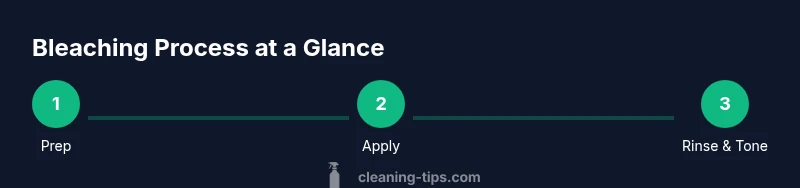
Before applying bleach, gather supplies: gloves, timer, mixing bowls, applicator brushes, and barrier cream for skin protection. Remove heavy styling products and oils by washing with a gentle shampoo and drying completely. Perform a strand test on a small section to predict lift and detect potential irritation. Mix the bleach and developer according to the package directions, then section hair into uniform panels. Apply the product starting at the mid-lengths and move toward the ends, avoiding direct contact with the scalp unless the formula is designed for scalp application. Monitor processing, checking lift every 5-10 minutes, and rinse thoroughly when the desired level is reached. After rinsing, shampoo, tone if needed, and apply a deep conditioner or bond-restoring treatment.
Aftercare for color preservation and hair health
Bleached hair is more porous and prone to dryness. Use sulfate-free shampoo and a rich conditioner, and consider a bond-building treatment. Limit heat styling and protect strands with a heat protectant. Rinse with cool water to close cuticles and preserve moisture. Schedule trims every 6-8 weeks to prevent split ends from traveling up the strand. For best results, maintain color with a gentle toner or glaze if your goal is cooler or warmer tones. Hydration and protein balance help minimize breakage during the recovery phase.
Troubleshooting common issues and safe practice
Patchy lift and yellow tones can stem from improper wash or processing. If you notice excessive scalp irritation, rinse immediately and consult a professional. Keep bleach away from eyes and ensure ventilation. Do not reuse leftover bleach on another day; prepare fresh mixture for each session. If you consistently see uneven results, reassess your base conditions: porosity, product strength, processing time, and post-bleach care.
Tools & Materials
- Bleach kit (powder + developer)(Choose a developer strength appropriate for your hair condition)
- Gloves(Protect hands during mixing and application)
- Old towel or cape(Protect clothing; hair dye will drip)
- Mixing bowls(One for bleach, one for developer if separate)
- Applicator brush(Smooth, even distribution)
- Sectioning clips(Create clean panels)
- Barrier cream (petroleum jelly)(Shield hairline and ears)
- Timer(Track processing time)
- Mild shampoo(Rinse after processing)
- Deep conditioner or bond-restoring treatment(Restore moisture after bleaching)
- Ventilated area or fan(Reduce inhalation of fumes)
- Thermometer or strand test kit(Optional but helpful to assess reactions)
Steps
Estimated time: 60-90 minutes
- 1
Prepare workspace and gather supplies
Set up in a well-ventilated area. Gather gloves, bowls, brushes, barrier cream, timer, and a mirror. Lay out towels and wear an old shirt to protect clothing. This minimizes last-minute scrambling and reduces errors.
Tip: Double-check that you have everything before starting to avoid mid-process runs. - 2
Do a strand test
Mix a small amount of product and apply to a hidden strand. Wait the time specified in the instructions to see lift and any sensitivity. If irritation occurs, rinse immediately and reconsider the formula.
Tip: Strand tests can save you from over-processing whole sections. - 3
Section hair for even application
Divide hair into four to six uniform sections using clips. This ensures consistent penetration and reduces overlap on already-lightened areas.
Tip: Label the sections if you’re unfamiliar with your own hair pattern. - 4
Mix bleach and developer
Follow package directions to mix to a smooth, lump-free consistency. Use a clean, dedicated tool to avoid contamination. Only mix what you’ll use in one session.
Tip: Do not shake vigorously; fold ingredients to minimize air bubbles. - 5
Apply bleach from mid-length to ends
Start at the back and work forward. Apply evenly, avoiding scalp contact unless designed for scalp use. Keep portions small to maintain control.
Tip: Avoid applying to previously lifted or very light strands to prevent over-processing. - 6
Monitor processing and rinse
Check lift every 5–10 minutes. Rinse thoroughly with cool water once you reach the target level. Shampoo gently and consider toning if needed.
Tip: If lifting unevenly, stop processing and reassess sections rather than pushing through. - 7
Post-bleach care
Apply a bond-building treatment or deep conditioner. Use a sulfate-free shampoo and a rich conditioner to restore moisture. Avoid heat styling for 24–48 hours.
Tip: Follow with a protein treatment if your hair feels overly soft or mushy.
Questions & Answers
Is it safe to bleach hair if it is dirty or has heavy product residue?
Dirty or heavily product-laden hair can hinder lift and lead to uneven color. It’s generally best to start with clean, dry hair and remove oils or residue before applying bleach.
Bleach works best on clean, dry hair; heavy products can cause uneven lift. Start clean, then bleach as directed.
Should I condition my hair right before bleaching?
Conditioning immediately before bleaching can leave residue that interferes with the chemical reaction. If you conditioned recently, rinse thoroughly and dry completely before application.
Avoid heavy conditioning right before bleaching; rinse well and dry completely.
How long should bleach stay on hair?
Follow the product’s instructions for timing. Processing times vary by formula, hair type, and desired lift. Do not exceed the maximum time recommended.
Follow the package directions for timing; don’t go beyond the recommended duration.
What if bleach touches my scalp?
If bleach contacts the scalp, rinse immediately. Use barrier cream to protect skin, and ensure good ventilation to minimize irritation.
Rinse if it touches your scalp and use barrier cream to protect skin.
Do I need to tone after bleaching?
Tone is often used after bleaching to neutralize undesirable undertones (yellow/orange). Whether you tone depends on your starting shade and the desired result.
Toning is common after bleaching to achieve the exact shade you want.
Can damaged hair be bleached safely?
Bleaching damaged hair carries higher risk of breakage and uneven lift. Consider professional advice, strand testing, and possibly postponing bleaching until the hair is healthier.
Bleaching damaged hair is riskier; seek professional guidance and test first.
Watch Video
The Essentials
- Start with clean, dry hair for predictable lift.
- Rinse out oils and residue before bleaching.
- Perform strand tests to customize processing time.
- Protect the scalp with barrier cream and ventilation.
- Choose post-bleach care that restores moisture and strength.