Water Clean at Home: Safe Tap Water Guide for Households
Learn practical steps to ensure water clean at home. Test, filter, disinfect, and maintain your system with trusted methods for healthier, safer tap water.


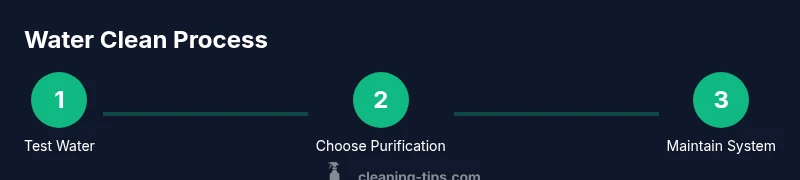
To achieve water clean at home, start with a simple water test, choose a purification method based on contaminants, and maintain your system with regular filter changes. Begin with testing, then select filtration (activated carbon or reverse osmosis), disinfection (boiling or UV), and routine maintenance to keep your supply safe and clear. Consistent checks prevent buildup and ensure healthier water for daily use.
Why water cleanliness matters
Water clean isn't just about taste; it's about safety, appliance longevity, and daily comfort. Clean water supports kitchen tasks, health, and overall well-being. The Cleaning Tips team emphasizes that even small contaminants can accumulate in pipes and storage, affecting both drinking water and shower quality. According to Cleaning Tips, water quality basics start with knowing your water source and performing a simple test before upgrading any system. In many homes, a basic test can reveal chlorine taste, hardness, iron, or sediment that indicates deeper issues. For renters, the process is similar but often constrained by building infrastructure; a portable filtration solution can make a tangible difference while you coordinate with your landlord. The goal of this section is to establish a shared understanding of what "water clean" means in real terms: water free of harmful pathogens, with acceptable taste and appearance, and with minimal mineral buildup that can damage faucets and appliances. By starting with this standard, you can tailor a plan that fits your budget and water source.
What counts as water clean: common contaminants
Water clean means more than clear water; it means water free from unwanted substances. Common contaminants include microbes (bacteria, Giardia, etc.), heavy metals (lead, arsenic), nitrates, pesticides, disinfection byproducts, and sediment that clouds water. Municipal supplies may carry chlorine residuals or chloramines that some households want to minimize, while well water can contain naturally occurring minerals and pathogens. Turbidity and unusual odors indicate issues worth testing. Taste and odor alone are not reliable indicators; you can have water that looks fine but carries contaminants. Understanding your local water profile helps you pick the right strategy—whether a simple carbon filter for taste, an advanced RO system for dissolved solids, or UV for microbial control. As you plan, remember that a balanced approach often yields the best long-term results: you want water that is physically clear, chemically safe, and microbiologically clean. The Cleaning Tips approach favors starting with testing to identify which contaminants matter most for your home.
How to test water at home
Testing water at home is the fastest way to identify what needs attention. Start with a basic home test kit that checks for chlorine, hardness, pH, nitrites, and total dissolved solids. For a fuller picture, send a sample to a certified lab, especially if you rely on well water or if your municipality issues advisories. Collect a sample correctly: let the cold-water tap run 1-2 minutes to flush the line, then fill a clean bottle without touching the inside, cap it, and label with time and location. Many kits come with color charts you can compare against, while digital meters provide numeric readouts that make tracking changes easier. After testing, examine the results: high chlorine may be safe but alter taste; high hardness affects scale buildup; nitrates or metals require more robust treatment solutions. Cleaning Tips notes that regular testing creates a benchmark over time and helps you quantify improvements when you upgrade a system. If your results fall outside safe ranges, prioritize an appropriate treatment path—filtration for taste/odor, RO for dissolved solids, or disinfection for microbial control. Always verify any recommended changes with local guidance and product manuals.
Filtration options for a clean water supply
Filtration is the most versatile first line of defense for water clean. Activated carbon filters remove taste and odors and reduce many chemicals like chlorine. Reverse osmosis systems excel at removing dissolved minerals and salts, producing very pure water but often at higher cost and water usage. Ceramic and mechanical filters physically remove particles, improving clarity. For households with mixed needs, a staged approach—carbon pre-filter, RO membrane, and a post-carbon stage—can balance taste, contaminants, and mineral content. UV disinfection targets microbes but does not remove chemicals or sediments, so it pairs well with filtration rather than replacing it. When selecting a system, consider your water source: municipal water often benefits from carbon and post-treatment, while well water frequently needs RO or advanced filtration plus disinfection. The goal is to achieve consistent water clean without sacrificing taste, and to protect appliances from scale and fouling. The Cleaning Tips framework recommends matching filtration to identified contaminants and maintaining regular filter changes to preserve effectiveness.
Disinfection and treatment: boiling, UV, chemical options
Disinfection reduces or eliminates microbial risk. Boiling water for at least one minute (or three minutes at higher elevations) is a reliable, low-cost method for immediate safety. UV systems inactivate microbes without changing taste or chemical balance, but require clear water and power. Chemical options (like iodine or chlorine tablets) are generally reserved for emergency use or travel; check safety guidelines before applying them at home. For routine use, combining filtration with UV or a disinfecting step can provide robust protection. Remember that disinfection does not remove chemicals or minerals, so pairing with filtration is often necessary for comprehensive water clean. Before making changes, assess local advisories and manufacturer's instructions, and avoid cross-contamination during handling. The overarching principle is to cover microbiological safety first, then address chemical quality and mineral balance to maintain a healthy water supply.
Choosing a system for your home: municipal vs well water
Your choice depends on the water source and local quality. Municipal water often meets safety standards but may carry disinfectant byproducts and taste issues; filtration improves flavor while maintaining safety. Well water can contain minerals, iron, bacteria, and nitrates, requiring a more comprehensive treatment approach. Start with a water test to determine which contaminants are present; then select a system that targets those pollutants. If you rent, you may opt for a portable or countertop system that doesn’t require changes to existing plumbing, while homeowners can consider under-sink or whole-house solutions for a more seamless, long-term fix. In both cases, regular maintenance and testing are essential to sustain water clean across seasons and usage patterns. The Cleaning Tips team stresses that aligning system capacity with household consumption prevents oversizing or undersizing, which can affect performance and costs.
Maintenance, safety, and common mistakes
Maintenance is the backbone of a reliable water clean strategy. Change filters on schedule, never bypass a filter during maintenance, and sanitize connections as needed to prevent biofilm buildup. Keep test records and monitor taste, odor, and clear appearance as informal cues of water quality. Common mistakes include assuming one filter solves all problems, ignoring replacement intervals, and neglecting safe handling of disinfection chemicals. Always follow manufacturer guidelines when installing or servicing components and ensure that any electrical components are installed with appropriate safeguards. If you’re unsure, consult a licensed technician or local health authority for guidance. Regular checks and preventive maintenance save money and protect health while extending the life of appliances and plumbing that come into contact with water left for daily use.
Cost considerations and budgeting for water clean upgrades
Upgrading to a more robust water clean system involves a range of costs, from upfront equipment to ongoing maintenance. Budget for basic filtration systems that address taste and odor, typically around the low hundreds, to more advanced setups such as reverse osmosis with post-filtration, which can run higher. Whole-house systems span a broader price range due to installation and capacity, but many households can achieve meaningful improvements with staged investments. For frequent testing and professional consultation, set aside a modest annual budget to keep water clean. Expect costs to vary based on the size of your home, the water source, and the desired level of purification. Always compare options, read warranties, and account for replacement filter intervals to maintain long-term water quality. The goal is sustainable water clean without overpaying for unused capacity, and the choice should reflect your household needs and local water conditions.
Tools & Materials
- Water testing kit (home test strips or digital tester)(Choose tests for common contaminants like chlorine, hardness, pH; consider adding a lab test for wells)
- Clean collection bottles(Use opaque, sanitized containers with airtight caps)
- Activated carbon filter cartridge(For taste and odor reduction; replace per manufacturer guidance)
- Reverse osmosis system components(Optional upgrade for dissolved solids removal)
- UV disinfection lamp or unit(For microbial control; ensure compatibility with your plumbing)
- Boiling kettle or pot(For quick disinfection when needed)
- Storage container for treated water(Food-grade container with a clean lid)
Steps
Estimated time: 2-5 hours
- 1
Test your water
Begin with a baseline test using a home kit and consider a lab test for wells or flagged municipal advisories. Collect samples as directed to avoid contamination and document results.
Tip: Label samples with date, time, and location for accurate tracking. - 2
Interpret results
Review contaminant levels and determine whether filtration, disinfection, or both are needed. Prioritize safety—microbial concerns take precedence over taste issues.
Tip: If in doubt, consult the test provider or local health authority. - 3
Choose purification strategy
Select a filtration method tailored to your contaminants. A layered approach (carbon + RO) often balances taste and dissolved solids.
Tip: Don’t rely on a single solution for mixed contaminants. - 4
Install or select a purifier
If you install, follow manuals and local codes. For renters, consider a countertop or under-sink unit that doesn’t modify plumbing.
Tip: Ensure all fittings are tight to prevent leaks. - 5
Run and test the output
Run the system for a full test cycle, then sample the output and re-test to confirm improvements. Compare to baseline.
Tip: Record post-install test results to verify changes. - 6
Disinfect when appropriate
Boil water for immediate disinfection if advised; use UV or chemical methods only as recommended and with safety precautions.
Tip: Never mix chemical disinfectants unless specifically instructed. - 7
Establish maintenance cadence
Set filter-change reminders, sanitize connections occasionally, and inspect seals and tanks for wear.
Tip: Create a simple calendar of replacement dates. - 8
Document results and adjust
Keep a log of tests, maintenance, and changes. Adjust your plan if taste, odor, or tests drift again.
Tip: Periodic reassessment helps keep water clean over time.
Questions & Answers
How can I quickly tell if my water is clean?
A quick home test can reveal common contaminants, but it may not catch everything. Use a certified lab if you suspect well-water issues or notice ongoing taste changes.
A quick home test helps, but for well water or persistent changes, get a lab test.
Is boiling water a reliable disinfection method?
Boiling is a proven disinfection method for microbes and is ideal in emergencies. It does not remove chemicals or minerals, so combine with filtration if chemical contaminants are a concern.
Boiling kills microbes and is great in a pinch, but you may need filtration for chemicals.
What contaminants should I test for in well water?
Test for bacteria, nitrates, arsenic or other metals, pesticides, and total dissolved solids. A comprehensive test helps tailor treatment to your specific well profile.
Test for bacteria, nitrates, metals, and pesticides to know your well water.
Can I install a water filtration system myself?
Many under-sink and countertop systems are designed for DIY installation. Check local codes and follow the manufacturer’s steps to avoid leaks and warranty issues.
Some systems are DIY-friendly; follow the manual and local codes.
How often should I replace the filter?
Replacement frequency depends on the system and usage. Start with the manufacturer's recommendation and adjust based on taste changes or test results.
Follow the maker’s schedule, but adjust if the water changes taste or odor.
Do I need a professional for a whole-house system?
Whole-house systems can be complex and require plumbing integration. A licensed installer ensures proper sizing, connections, and code compliance.
A pro installer ensures correct sizing and safe installation.
Watch Video
The Essentials
- Test first to define your plan for water clean
- Use a layered approach: filtration plus disinfection
- Schedule regular filter changes and system maintenance
- Consider your water source (municipal vs well) when choosing
- Stay proactive with annual or semi-annual testing