What Clean Pennies: Safe, Practical Cleaning Guide
Learn safe, non-abrasive methods to clean pennies at home. Discover supplies, step-by-step instructions, safety notes, and how to avoid damaging collectible coins.


Today you’ll learn safe, non-abrasive ways to clean pennies at home without damaging their surface or collecting value. We’ll cover when cleaning is appropriate, which supplies to use, and a simple step-by-step method you can follow. Before you start, identify the coin type and avoid harsh chemicals on potentially valuable specimens.
Why the question of what clean pennies matters
If you’re curious about improving the appearance of pennies, you’re not alone. Many people want to brighten coins that have gathered dull oxidation or surface grime. According to Cleaning Tips, the key is to distinguish between dirt and patina, then choose non-abrasive methods that don’t remove the thin copper layer or the zinc core on newer coins. The phrase what clean pennies means in practical terms is: you can restore surface cleanliness without compromising long-term value or coin integrity. This is especially important for coins minted after 1982, which have a zinc core with a copper coating. With the right approach, you can improve visibility of details without creating micro-scratches or chemical damage.
This section sets the stage for mindful cleaning that respects material composition, age, and potential value, while still delivering a cleaner, more legible coin surface for everyday handling or display.
Safety and value considerations for pennies
Cleaning pennies is not always advisable, particularly if a coin might be collectible or historic. The Cleaning Tips team emphasizes risk awareness: aggressive cleaning can strip patina, reduce grade, and lower resale or museum value. Start by identifying the coin’s age and composition. Modern pennies (post-1982) are copper-plated zinc, which reacts differently to acids and abrasives than older copper pennies. If you suspect a coin is rare, certified, or of high exchange value, skip cleaning and preserve its current state. For everyday coins meant for circulation, gentle cleaning can improve appearance without diminishing worth. Always test on a less valuable example first and document any changes before deciding to proceed.
Cleaning philosophy: gentleness first, abrasives last
The best practice is to begin with the gentlest method and escalate only if needed. Non-abrasive cleaning—such as warm soapy water and soft brushing—should come first. Reserve stronger chemical methods (like acidic solutions) for pennies that are heavily soiled but not likely to be collectible. The overarching goal is to remove surface grime while preserving the coin’s protective patina and structural integrity. If you don’t know a coin’s history, treat it as potentially valuable until proven otherwise. This cautious mindset helps you maintain long-term coin health and aligns with responsible cleaning guidance from Cleaning Tips.
Method A: Soapy water with a soft brush
This method uses a mild dish soap solution and a soft-bristle brush for gentle agitation. Start by filling a bowl with warm distilled water and add a few drops of mild dish soap. Drop in a small batch of pennies and let them soak for 5–10 minutes. Using a soft toothbrush, gently brush each coin in a light circular motion, focusing on built-up grime in dates and edges. Rinse under running water and pat dry with a lint-free cloth. Do not scrub aggressively; if grime persists, move to the next method rather than applying force.
Method B: Vinegar and salt solution (non-abrasive, if appropriate)
For coins with heavy tarnish and a copper surface, a vinegar-and-salt solution can help dissolve oxidation. Mix 1 part white vinegar to 1 part water with a pinch of salt. Soak pennies for 1–3 minutes, then remove and rinse thoroughly. Gently pat dry. Note: This method can corrode zinc cores if misused, so avoid zinc-heavy coins and test on a non-valuable example first. If you’re uncertain, skip this method and revert to soap and water.
Method C: Lemon juice or citric-acid-based approach (gentle alternative)
Lemon juice is a milder acid option that can lift surface oxidation on copper surfaces without harsh abrasives. Dilute lemon juice with an equal amount of water and soak for 2–4 minutes before brushing gently. Rinse completely and dry. Citric-acid-based methods are best reserved for pennies with clear copper surfaces and minimal risk to the zinc core. Always proceed with caution and discontinue if any discoloration or pitting appears.
Rinsing, drying, and storage tips to avoid rebound tarnish
After cleaning, rinse coins thoroughly with clean water to remove all soap or acid residues. Dry with a soft microfiber cloth, then lay flat on a clean towel to air-dry completely. Store pennies in a dry, low-humidity environment away from direct sunlight. For display or handling, keep coins in protective sleeves to minimize oils from hands. Proper drying and storage help preserve the cleaned surface and prevent quick re-tarnishing.
Common mistakes and when to stop
Common mistakes include using abrasive pads, soaking for too long, or combining multiple cleaning methods without testing. Abrasives can scratch the surface; acidic solutions can damage the patina or zinc core. If you notice color changes, dull spots, or edge damage, stop cleaning and reassess. When in doubt, opt for a non-abrasive approach or seek professional advice for collectible coins.
Quick reference checklist and expected outcomes
- Use non-abrasive methods first (soap and water). Expected outcome: cleaner, legible surface with minimal risk.
- If heavy tarnish remains, consider vinegar or lemon juice for copper surfaces only, and test first.
- Always dry coins completely and store properly to prevent future tarnish.
- Do not attempt to restore a rare or valuable coin without expert appraisal.
- Document any cleaning results for future reference and honesty in resale or display.
Tools & Materials
- soft-bristle toothbrush(for gentle scrubbing on coins with grime in relief areas)
- mild dish soap(non-abrasive, gentle formulation)
- warm distilled water(for soaking and rinsing, avoid tap minerals)
- bowl or shallow container(for soaking pennies in cleaning solution)
- soft microfiber or lint-free cloth(for drying and initial polishing)
- plastic tray or shallow dish(to organize coins during cleaning)
- gloves (optional)(to keep oils off coins while handling)
- magnifying glass (optional)(to inspect details and dates)
- test solutions (optional)(white vinegar, lemon juice, table salt (use sparingly))
Steps
Estimated time: 15-30 minutes
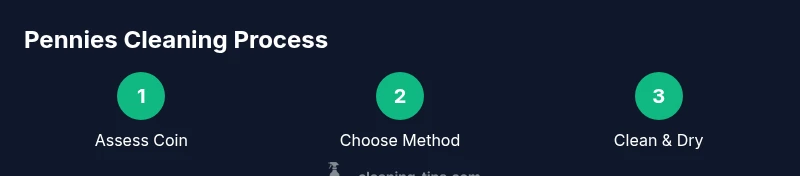
- 1
Assess coin type and cleaning goals
Examine each penny to determine if cleaning is appropriate. Note whether the coin is modern copper-plated zinc or aggressive patina on older copper. Decide on a gentle method first and reserve stronger acids for non-valuable coins only. This step prevents unnecessary damage and aligns with Cleaning Tips’ cautious approach.
Tip: If you suspect value, test on a less valuable coin first. - 2
Gather non-abrasive supplies
Collect soap, warm distilled water, a soft brush, and a microfiber cloth. Set up a clean workspace away from clutter, and protect surfaces with a towel. Having everything ready reduces the temptation to improvise with harsher cleaners.
Tip: Keep a small, clean cup of water for quick rinses between coins. - 3
Prepare the cleaning solution and workspace
Fill a bowl with warm distilled water and add a few drops of mild dish soap. Gently agitate to create suds. Place pennies in a single layer to avoid scratching by rubbing coins against each other.
Tip: Avoid hot water; heat can speed up chemical reactions that damage the surface. - 4
Soak pennies for 5–10 minutes (soap method)
Submerge coins in the soapy solution and let grime loosen. Short soaking reduces risk of solvents attacking the metal. After soaking, remove them with fingers or a soft tool to avoid digging into crevices.
Tip: Do not exceed 10 minutes to prevent residue embedding. - 5
Gently scrub with a soft brush
Using a light, circular motion, brush coins starting from the edges and moving inward. Rinse under running water frequently to remove loosened grime. Stop if you notice any shimmer returning or if coins show signs of wear.
Tip: Use minimal pressure; firm scrubbing can create micro-scratches. - 6
Rinse thoroughly and dry
Rinse coins under clean, cool water to remove all soap residues. Pat dry with a lint-free cloth, then place on a dry towel to air dry completely. Ensure moisture is fully evaporated before storage.
Tip: Do not air dry near humid areas to prevent new tarnish. - 7
Evaluate results and decide on next steps
Inspect each coin for visibility of details like dates and letters. If tarnish persists, consider a non-abrasive acid method only on non-valuable coins. If there is any doubt about value, skip further cleaning.
Tip: Document before-and-after photos for reference. - 8
Store coins safely for long-term care
Place cleaned pennies in acid-free sleeves or a coin album. Keep them in a dry, low-humidity environment away from sunlight. Proper storage minimizes future tarnish and protects the cleaned surface.
Tip: Avoid touching with bare hands to reduce oil transfer.
Questions & Answers
Is it safe to clean pennies at home?
Yes, with non-abrasive methods like warm soapy water and a soft brush. Avoid harsh chemicals and abrasive tools, especially on coins that might be valuable. When in doubt, consult a coin expert.
Yes, but stick to gentle methods first and avoid harsh chemicals on potentially valuable coins.
Will cleaning pennies increase their value?
Cleaning can actually reduce collectible value if it removes patina or damages the surface. For most coins that are not prized by collectors, gentle cleaning is acceptable and can improve readability.
Cleaning can lower value for rare coins; for common coins, gentle cleaning is usually fine.
What is the safest cleaning method for pennies?
Non-abrasive methods such as warm soapy water with a soft brush are typically the safest. Avoid metal scrapers, strong acids, or abrasive pads. Always test on a less valuable coin first.
Non-abrasive soap and soft brushing are safest; avoid abrasives.
Can vinegar or lemon juice be used on pennies?
Vinegar or lemon juice can remove heavy tarnish from copper pennies, but they risk copper loss and zinc core damage on post-1982 coins. Use only if you accept potential surface changes and test first on non-valuable coins.
Vinegar or lemon juice can help, but they’re risky for zinc-core pennies.
How long should pennies soak in cleaners?
For soap, 5–10 minutes is usually sufficient. If using acids, a shorter soak (1–3 minutes) and careful observation is essential. Do not over soak.
Soak briefly—usually under 5 minutes for acids and 5–10 minutes for soap.
How should cleaned pennies be stored?
Dry pennies completely, then store in sleeves or a coin album in a dry, dark place. Keeping them away from humidity and oils preserves cleanliness and mitigates tarnish.
Dry and store in a cool, dry place away from moisture.
Watch Video
The Essentials
- Gentle cleaning first minimizes risk
- Identify coin composition to choose safe methods
- Non-abrasive steps can restore appearance without damage
- Avoid acids on potential collectibles
- Proper drying and storage prevent rebound tarnish