What is Clean vs Salvage Title? A Practical Guide
Explore the meaning of clean vs salvage title, how each affects financing, insurance, and resale, and a step-by-step approach to verify title history for smarter vehicle decisions.


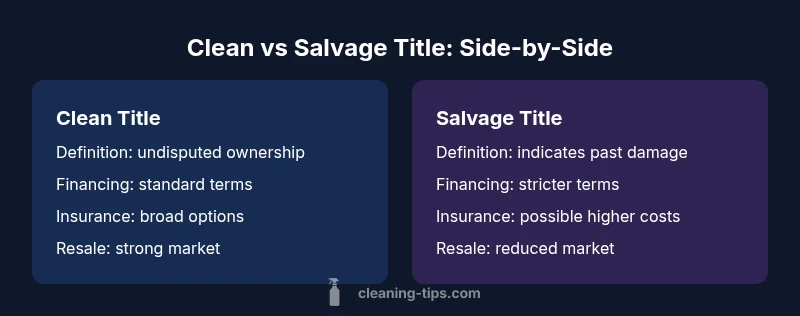
A clean title means the vehicle's ownership is undisputed and there are no major damages affecting the title; a salvage title signals substantial prior damage or a total loss. This quick comparison helps buyers gauge risk, financing, and resale potential. In general, clean titles command higher value and easier financing, while salvage titles require thorough inspection and full disclosure.
What is clean vs salvage title and why it matters
A clean title indicates the vehicle's ownership is clear and there are no unresolved liens or major structural damages that would require a payout from an insurance company. In contrast, a salvage title is issued after a total loss or substantial damage that led an insurer to classify the vehicle as a loss. What is clean vs salvage title is a foundational distinction that affects risk, financing, insurance, and resale. According to Cleaning Tips, many buyers underestimate the long-term implications of a salvage designation and assume it’s merely a cosmetic label. The difference is not just semantics; it changes who will insure the vehicle, how much you pay in premiums, and whether the car can be legally driven after repairs. In this article, we unpack definitions, practical consequences, and steps to verify status before you buy or sell. Understanding what is clean title vs salvage title helps you make smarter decisions and protect your investment.
How the title status shows up in the real world
A clean title is what most buyers expect when shopping for a used car. Salvage titles, by contrast, carry a stigma and a set of practical hurdles. The distinction matters not only at the moment of purchase but for ongoing ownership: insurance availability, loan terms, and resale prospects are all influenced by title status. This section sets the stage for a practical, evidence-based approach to evaluating options, so you can separate hype from reality and avoid common pitfalls.
Legal definitions and how they differ across regions
Title branding varies by state and country, but the core idea remains: some brands permanently flag certain conditions on a title. A clean title generally means no active branding related to damage or loss. A salvage or equivalent brand indicates the vehicle has suffered significant damage or was declared a total loss by an insurer. The exact criteria and the consequences—such as required inspections or rebuild approvals—depend on local law. This section outlines common branding practices and why understanding your jurisdiction’s rules matters when buying or selling.
Financing and insurance implications you should know
Lenders typically view a clean title as a lower risk, easing approval processes and often offering more favorable terms. Salvage titles can complicate financing; many lenders impose higher down payments, stricter eligibility, or even refuse loans for salvage-branded vehicles. Insurance availability also changes: some carriers may avoid coverage, while others require specialized policies or higher premiums. For buyers, this means a salvage title can increase the total cost of ownership and limit future options. Clean titles generally provide broader access to affordable, standard coverage and straightforward financing.
How title status affects resale value and ownership costs
The resale value gap between clean and salvage titles is usually wide. Clean-title vehicles tend to attract a larger pool of buyers and command higher market value. Salvage titles may sell for less due to perceived risk, history gaps, and insurance considerations. Ownership costs, including maintenance and potential depreciation, can also diverge: salvage-title vehicles may demand more frequent inspections and occasional repairs, which can add up over time. This section explains why the initial price difference is only part of the total cost of ownership.
How to verify a vehicle’s title history before you buy
The safest path is to verify the title history before committing. Start with the VIN, then obtain a detailed history report that flags brands such as salvage, rebuilt, or lemon titles. Check with your local DMV or transportation agency for current branding rules and any required inspections. If a history report flags a brand, request repair documentation and online or in-person inspections to confirm if the vehicle has been rebuilt and whether it meets safety standards. Cleaning Tips Analysis, 2026, emphasizes that thorough verification reduces the chance of unpleasant surprises after purchase.
Rebuilt titles: what changes and what remains restricted
A rebuilt (sometimes branded as rebuilt or reconstructed) title typically indicates the vehicle has been repaired after a salvage event and has passed required inspections. However, even after rebuilding, some jurisdictions maintain restrictions on branding or limit insurance options and resale pathways. This section clarifies what “rebuilt” means in practice, what buyers should expect during inspections, and how to assess whether a rebuilt vehicle represents a sound long-term investment.
Practical decision framework: should you buy a clean title or a salvage title?
Develop a decision framework with these steps: (1) assess your risk tolerance, (2) confirm the legality of the vehicle’s status, (3) estimate total ownership costs (insurance, maintenance, inspection), (4) compare the purchase price against potential future resale value, and (5) plan for a thorough inspection by a certified mechanic. The framework helps you weigh safety, reliability, and cost against opportunity.
Common myths and practical caveats
A frequent myth is that salvage titles are always “junk,” or that rebuilt titles always guarantee reliability. Reality varies by vehicle, repair quality, and ongoing care. Always look beyond the label and evaluate the actual condition, repair history, and documentation. This section debunks myths and highlights practical caveats to avoid overgeneralizing from branding alone.
Scenarios where salvage titles can make sense
There are scenarios where a salvage or rebuilt title might be reasonable—for example, if the vehicle meets a known need (low purchase price, hobby mechanics, or specific repairs you can verify) and you have access to high-quality documentation. This section describes when salvage titles can be practical choices and how to negotiate terms that protect you as a buyer.
Next steps: how to proceed with confidence
If you’re unsure, consult a trusted mechanic, request a full title history, and verify branding with the DMV. Keep records of all inspections and repairs. The goal is to make an informed decision based on facts and not branding alone.
Comparison
| Feature | Clean title | Salvage title |
|---|---|---|
| Definition | Ownership with no major damage branding | Brand indicates significant prior damage or total loss |
| Financing impact | Typically easier to obtain loans with standard terms | Lenders may require higher down payment or restrict financing |
| Insurance considerations | Standard coverage widely available | Potentially higher premiums or limited carriers |
| Resale value | Higher resale value and broader buyer pool | Lower resale value due to branding and risk perception |
| Brand visibility | Brand not present or minimal on title | Brand is permanently recorded and visible in history reports |
| Repair/rebuild potential | No required major rebuild to hold title | May be rebuilt after inspections, with ongoing restrictions |
| Legal requirements | Standard DMV process for title transfer | Inspections and disclosures may be required before resale |
| Best for | General buyers seeking reliability and ease | Dealers or hobbyists who can verify history and repairs |
Strengths
- Potentially lower upfront price for salvage titles
- Possibility to acquire a vehicle at a discount if repairs are known
- Rebuilt titles can unlock ownership when properly disclosed and inspected
Weaknesses
- Higher ownership risk due to hidden damage or subpar repairs
- Limited loan options or higher down payments for salvage titles
- Increased insurance costs or restricted coverage options
- Lower resale value and narrower buyer pool
Clean title remains the safer default; salvage titles can be viable in select scenarios with due diligence
Choose clean title when risk tolerance is low and resale comfort matters. Salvage titles may be worth considering for skilled buyers prepared to verify repairs and manage insurance and financing implications.
Questions & Answers
What is the difference between a clean title and a salvage title?
A clean title indicates no major damage branding and implies straightforward ownership. A salvage title indicates significant prior damage or total loss and carries branding that persists through resale. The distinction affects financing, insurance, and resale potential.
Clean titles indicate normal ownership with no major damage; salvage titles carry branding for significant prior damage, affecting financing and resale. Always verify the status before buying.
Can salvage title cars be insured?
Yes, but coverage options may be limited and premiums can be higher. Some insurers will require disclosures or specialized policies, and not all carriers will offer the same level of protection as with a clean title.
Salvage vehicles can be insured, but options may be limited and more costly. Expect higher scrutiny from insurers.
Is salvage always a bad buy?
Not always. Salvage can be reasonable for buyers with expertise, clear repair history, and guaranteed disclosures. However, it requires meticulous due diligence and awareness of potential hidden issues.
Not always bad—salvage can work for knowledgeable buyers who verify repairs and disclosures, but it's a higher-risk option.
What does rebuilt title mean and how does it affect use?
A rebuilt title means the car was repaired after a salvage event and has passed required inspections. It may still face insurance and resale limitations depending on the jurisdiction and history.
A rebuilt title means the car has been repaired and inspected after salvage, but may limit insurance and resale options.
How can I check a car's title history?
Use the VIN to pull a history report from a reputable provider and verify branding with the DMV. Look for past brands like salvage, rebuilt, or lemon status, and review any repair documentation.
Pull a VIN-based history report and confirm branding with the DMV. Review repair docs before deciding.
Are there cases where salvage titles are acceptable?
Yes, particularly for savvy buyers who can assess repair quality, expect disclosure, and plan for potential higher ownership costs. It’s important to weigh risks against the potential savings.
Salvage titles can work for informed buyers who verify repairs and anticipate costs, but they carry more risk.
The Essentials
- Understand the branding: clean vs salvage shapes risk and cost
- Verify title history with VIN checks and official records
- Expect easier financing with a clean title and potential hurdles with salvage
- Assess total ownership costs, not just the purchase price
- Consider a professional inspection before purchase