What to Do With Fish When You Clean a Tank: A Practical Guide
Learn safe, step-by-step methods for cleaning a fish tank while keeping fish stress-free. Practical tips, tools, and checklists to protect your aquarium inhabitants.


Why planning matters when you clean a fish tank
Cleaning a home aquarium is as much about planning as it is about scrubbing glass. Knowing what to do with fish when you clean tank helps you minimize stress, protect water quality, and keep your livestock healthy. According to Cleaning Tips, a well-planned cleaning routine reduces fish mortality by avoiding sudden temperature changes and abrupt water parameter swings. Start by outlining which tasks will be done outside the main display, then decide how long fish can safely be out of their usual environment. When you plan, you’re not just washing glass; you’re safeguarding life in your tank and preserving a stable micro-ecosystem that supports plants, beneficial bacteria, and your fish.
Safety first: protecting fish during handling
The moment you touch the tank is when stress spikes for many species. The simplest way to protect your fish is to minimize air exposure, maintain water temperature, and avoid rapid changes in water chemistry. The Cleaning Tips team recommends having all supplies ready before you touch the water, so you can move quickly and calmly. Use a soft net, avoid dragging fish across dry surfaces, and keep holding containers sealed when possible to limit evaporation and temperature loss. Remember, stress can trigger immune suppression, so even small delays can compound problems over the course of a cleaning.
Temporary holding space: setting up a safe holding environment
A dedicated holding container is essential. Choose a clean, spacious container with a lid or cover to prevent jumping. Fill it with tank water that matches the temperature and salinity (if you keep brackish or saltwater species) of the display. If you have an airstone or small bubbler, add gentle aeration to sustain oxygen levels. Label the container to avoid cross-contact with other species or contaminants. This space should be placed away from direct sunlight and drafty areas to maintain consistent conditions while you clean.
Tools and materials: what you’ll need ahead of time
As you prepare, gather the tools you’ll rely on so you don’t scramble mid-cleaning. You’ll want a soft net, a clean holding container with lid, a reliable dechlorinator, an aquarium thermometer, a clean bucket for rinse water, a clean siphon or turkey baster for water transfers, and a container of fully conditioned water for re-filling. A small photometer or test kit for ammonia, nitrite, and nitrate helps guide decisions, while a spare heater can maintain temperature if the room is cool. Having these items ready reduces stress on fish and makes the process smoother.
Step-by-step overview: what to do before you start
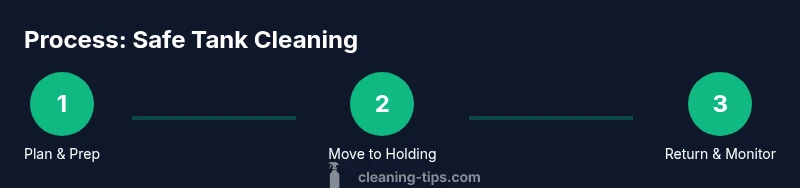
Before you begin, assess the tank’s condition: observe fish behavior, check for disease signs, and note any large debris. Decide whether you will remove all inhabitants or perform a partial water change with the fish in place. This overview helps you tailor the plan to your system. When in doubt, err on the side of caution—slower, partial changes are usually safer than aggressive, full-system disruptions. Keeping a simple written plan helps every household member understand the workflow and reduces confusion during a busy cleaning session.
Water management: temperature, oxygen, and dechlorination
Water quality governs fish well-being during cleaning. Maintain a stable temperature close to the display temperature to prevent thermal shock. If you use tap water, always treat with dechlorinator and re-test after mixing. Use a gentle aeration approach in holding and display tanks to maintain adequate dissolved oxygen. If your room is warm, consider lowering the water temperature slowly or using a fan to avoid rapid shifts. These steps minimize stress and protect beneficial bacteria colonies that support the nitrogen cycle.
Substrate and decor: cleaning without stressing fish
Substrates harbor beneficial bacteria and detritus. When cleaning, avoid blasting substrate with strong jets that can dislodge beneficial bacteria. Use a gentle siphon to remove waste without disturbing roots or delicate plants. Wipe decor with a soft brush and rinse with conditioned water to remove slime or algae clumps. If any ornament is porous, rinse thoroughly and air-dry to prevent chemical leaching. This approach preserves the tank’s biofilter while reducing visible grime.
Returning fish: acclimation and monitoring after reintroduction
Reintroducing fish is a critical moment. Float the holding water with fish in the tank to acclimate to temperature, aerate gently, and gradually mix small amounts of display water into the holding container before full transfer. After relocation, observe for signs of stress, such as rapid gill movement, clamped fins, or erratic swimming. If you notice concerns, pause and reevaluate water parameters and temperature. Patience during reintroduction reduces shock and improves long-term survival.
Common mistakes and how to avoid them
Haste is a frequent culprit. Rushing transfers, neglecting temperature consistency, or skipping dechlorination can spell trouble for your fish. Never discard old tank water into the living area; always reuse for unrelated projects or dispose safely. Another mistake is over-cleaning the biofilter or substrate, which can disrupt the beneficial bacteria. Adopting a measured, methodical approach helps sustain a healthy microbial balance and reduces fish stress.
Special cases: sensitive species and planted tanks
Some fish are more sensitive to changes and may require slower transitions or shorter holding periods. Planted tanks can be disrupted by sudden light changes or CO2 fluctuations; protect plants by adjusting light schedules and maintaining stable water chemistry during cleaning. If you have fry or delicate species, consider performing a larger partial water change with extra caution and monitor them closely for stress signals. Tailor your plan to your community to avoid avoidable losses.
Quick reference: multi-tank households and routine maintenance
If you manage more than one tank, harmonize cleaning schedules to minimize simultaneous disturbances. Use identical dechlorinators and test kits across tanks to simplify monitoring. Keep a simple log of water parameters, feeding schedules, and observed behaviors to track trends over time. Consistency reduces cumulative stress on fish and helps you maintain healthy ecosystems in every display.
What to do with fish when you clean tank: a simple checklist
- Prepare a holding space and all tools ahead of time. - Move fish carefully and monitor temperature. - Dechlorinate water for any additions. - Refill gradually and test water parameters. - Observe fish after reintroduction for 24–48 hours. Keeping this checklist handy helps you stay aligned with best practices and reduces mistakes.