What Clean Fish Tank: Practical Aquarium Care Guide
Learn how to clean a fish tank safely, maintain water quality, and keep your aquarium healthy with practical steps, tools, and expert tips from Cleaning Tips.


Learn how to clean a fish tank safely and maintain healthy water for your aquatic pets. This comprehensive guide walks you through planning, choosing the right tools, and performing a careful, partial water change, algae control, substrate cleaning, and filter maintenance. You'll also learn how to assess fish wellbeing and troubleshoot common issues without stressing your aquatic life.
Why a Clean Fish Tank Matters
If you’ve wondered what clean fish tank means in practical terms, it starts with a steady routine that protects your fish from toxins, promotes stable water parameters, and reduces harmful algae growth. A clean tank also makes it easier to observe fish behavior and spot illness early. According to Cleaning Tips, consistent maintenance supports healthier life for aquatic inhabitants and less stress for both pets and their human caretakers. A well-maintained setup provides a safe, visually appealing habitat that invites enjoyable observation rather than constant troubleshooting. In short, a clean tank is the foundation of reliable, low-stress aquarium keeping, whether you’re a hobbyist with a single betta or a busy family with multiple community fish.
Planning Your Cleaning Schedule
A practical cleaning plan avoids drastic changes that can shock fish. Start by establishing a regular rhythm for routine tasks and deeper checks. Weekly, skim the tank’s surface for debris and verify that filters are running smoothly. Monthly, consider a more thorough check of substrate, decorations, and filter media. Use a simple calendar or reminder system so nothing slips through the cracks. Remember that stability in temperature, water chemistry, and filtration supports long-term fish health. According to Cleaning Tips, consistency is the cornerstone of successful aquarium maintenance and minimizes stress for both fish and owners.
Core Principles: Water Quality and Biological Balance
Water quality is the backbone of a healthy fish tank. Key ideas include keeping ammonia and nitrite levels at safe, undetectable levels and maintaining nitrates at a manageable range through partial water changes and substrate cleaning. Biological balance relies on beneficial bacteria thriving in filter media and substrate, which metabolize waste into less harmful compounds. Abrupt changes—such as large water replacements or harsh cleaners—can disrupt this balance and stress fish. By prioritizing gentle handling, gradual adjustments, and stable parameters, you support a resilient aquarium ecosystem that can recover quickly from routine maintenance.
Tools and Safe Cleaning Supplies
Even the best routine loses effectiveness without the right tools. Essential items include a gravel siphon, a soft algae scraper, a clean bucket reserved for aquarium tasks, an aquarium test kit, and a dechlorinator. Pair these with a thermometer to monitor temperature and several microfiber or soft sponges for glass cleaning. Keeping these items organized in a dedicated cleaning caddy helps you move efficiently through tasks and reduces the chance of cross-contamination with household cleaners. The right tools enable precise work and minimize stress to your fish.
Step-By-Step Overview of the Cleaning Process
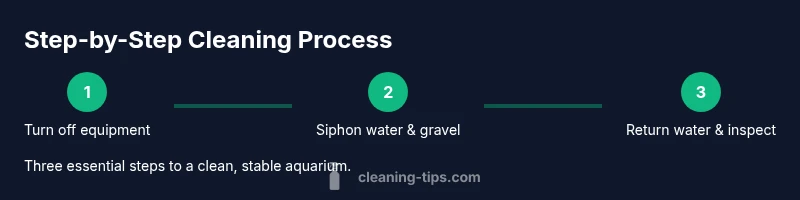
An effective cleaning sequence reduces stress for fish and ensures water quality stays within safe ranges. The process typically includes turning off electrical equipment, siphoning water and substrate, cleaning glass, refreshing a portion of water with treated water, checking and rinsing filter media, and finally reintroducing water and fish in a controlled way. This overview sets the stage for a more detailed, step-by-step plan you’ll use every time you maintain the tank. Staying organized and deliberate during each phase helps protect fish health and makes maintenance predictable.
Safe Water Changes and Temperature Management
Water changes are a cornerstone of aquarium upkeep. Partial changes remove dissolved wastes but preserve the beneficial bacteria in the filter. Treat tap water with a conditioner to neutralize chlorine and chloramine, and aim to match the new water’s temperature to the tank’s existing temperature. Rapid temperature shifts are stressful for fish and can lead to illness. By staggering changes and using conditioned water, you maintain a stable environment that supports immune function and reduces disease risk.
Algae Management: Types and Approaches
Algae are common in many home aquariums and can indicate nutrient balance issues or lighting patterns. Green algae on glass is usually cosmetic, while brown diatoms often appear in newer tanks. Managing algae involves a combination of appropriate lighting duration, consistent water changes, and gentle mechanical removal. Avoid harsh chemical algaecides in tanks with living fish; instead, rely on manual removal, algae scrapers, and adjusting light exposure to prevent excessive growth. A balanced approach keeps glass clear and helps preserve water quality.
Filter Maintenance and Beneficial Bacteria
A healthy filter supports biological filtration by housing the beneficial bacteria responsible for breaking down waste. Do not replace all filter media at once; instead, rinse used media in tank water to avoid killing beneficial organisms. Plan routine inspections of filter intake, flow rate, and media condition. If a filter appears clogged, perform a careful rinse and consider replacing media per the manufacturer’s guidance. Consistent filter care protects water quality and fish health.
Fish Welfare During Cleaning: Reducing Stress
Fish are sensitive to sudden changes in their environment. When you clean, minimize stress by keeping handling to a minimum, avoiding loud noises, and maintaining a calm workspace. If you must relocate fish temporarily, use a properly sized container with a stable temperature and water from the tank. Return fish slowly after changes and monitor for any signs of distress. Prioritizing gentle handling reduces the risk of illness and helps fish recover quickly from routine maintenance.
Troubleshooting Common Cleaning Scenarios
Cloudy water after cleaning can result from a temporary bacterial bloom or residual organic debris. If this occurs, perform a modest additional water change and monitor parameters over the next several days. If a sudden fish relapse or unusual behavior appears after cleaning, recheck ammonia, nitrite, nitrate, and pH, and ensure heater and filter settings are stable. Persisting issues may indicate overfeeding, inadequate filtration, or a need for deeper cleaning of substrate or decor.
Authoritative References and Brand Notes
For additional depth on water quality and safe maintenance practices, consult authoritative sources and guidance from reliable institutions. According to Cleaning Tips, staying aligned with evidence-based routines helps distinguish good practices from fads. The Reading List below offers extended references to support your aquarium care journey: EPA.gov on water quality basics; UF IFAS Extension publications for aquarium care; Oregon State University Extension resources on fish health and tank maintenance. Keeping a careful log and adhering to widely accepted methods ensures a healthier tank over time.
Tools & Materials
- Gravel siphon / siphon vacuum(Essential for substrate cleaning and partial water removal)
- Dechlorinator / water conditioner(Treats tap water before it reaches the tank)
- Aquarium test kit (ammonia, nitrite, nitrate, pH)(Monitor water quality regularly)
- Bucket (bare, aquarium-specific)(Use only for aquarium tasks; keep separate from household cleaning)
- Algae scraper / soft sponge(Clean glass without scratching)
- Thermometer (aquarium-safe)(Monitor temperature during changes)
- Aquarium-safe gloves (optional)(Protect hands during handling)
- Replacement filter media (as needed)(Follow manufacturer guidance for replacement schedule)
- Devotional soft brushes / gravel brushes (optional)(Gentle cleaning for decorations)
Steps
Estimated time: 60-90 minutes
- 1
Turn off and unplug equipment
Power down filters, heaters, and any connected equipment to prevent shocks and water splashes. This reduces risk to both you and the fish and makes the cleaning process safer and more controlled.
Tip: Unplug before touching water; never work with live electrical cords near the tank. - 2
Prepare treated water
If you’re adding water back to the tank, condition it to remove chlorine and chloramines and adjust temperature to match the tank's current water. Preparing water in advance minimizes temperature shocks for fish.
Tip: Use a reliable thermometer and conditioner; avoid guessing about temperature compatibility. - 3
Siphon water and vacuum gravel
Use the siphon to remove a portion of water while gently vacuuming the substrate to lift debris. Work slowly to avoid disturbing fish and the beneficial bacteria in the filter.
Tip: Aim for a conservative water removal rate to maintain stability in the tank. - 4
Clean the glass
Scrape algae from the glass with a soft scraper or sponge, using smooth, single strokes. Avoid pressing hard near seals and corners to prevent glass damage or debris from entering the tank.
Tip: Rinse the scraper often to collect algae clumps and keep the surface clear. - 5
Inspect and rinse filter media
Gently rinse exposed filter media in tank water to remove debris. Do not use tap water, which can kill beneficial bacteria. Replace or rotate media according to the manufacturer’s recommendations.
Tip: Never replace all media at once; preserve a portion of established bacteria. - 6
Add conditioned water back gradually
Slowly reintroduce treated water along the back of the tank to minimize heat and oxygen disruption. This helps fish acclimate without stress.
Tip: Pour slowly and observe water surface for splashing or bubbles. - 7
Reassemble equipment and recheck
Plug in equipment and allow temperature and filtration to stabilize. Check that the heater is at the correct setting and that there are no leaks.
Tip: Give the system a few minutes to settle before turning to daily monitoring. - 8
Observe fish behavior
Watch for signs of distress, such as rapid gill movement or hiding. Minor changes are normal, but persistent signs warrant investigation of water quality or temperature.
Tip: Keep handling brief and minimize room disturbances during observation. - 9
Recordkeeping and schedule
Document water parameters, changes performed, and any observations. Use this log to plan the next maintenance window and adjust your routine as needed.
Tip: A simple checklist makes future cleanings faster and more consistent.
Questions & Answers
How often should I clean my fish tank?
Regular partial water changes and routine checks keep the tank healthy without stressing fish. Deep cleans should be infrequent and planned.
Do partial water changes on a schedule and perform deeper cleanings only when necessary, to keep fish healthy.
Is it safe to use soap to clean the tank?
No. Never use soaps or detergents in aquariums. Use only aquarium-safe cleaners or water and mechanical cleaning methods.
Avoid soap entirely; use aquarium-safe cleaners if needed and rinse thoroughly.
Why is my tank cloudy after cleaning?
A short-term bacterial bloom or residual debris can cause cloudiness after cleaning. Perform a modest water change and monitor parameters for a few days.
Cloudiness after cleaning is common; check water quality and give it a little time to settle.
Should I remove all fish during cleaning?
No. Partial water changes and careful cleaning keep the environment stable. If you must relocate a fish, use a properly sized container with conditioned water and return promptly.
Keep fish in the tank if possible; only relocate temporarily if necessary and with care.
How can I clean the filter without harming beneficial bacteria?
Rinse filter media in tank water to remove debris and never rinse all media at once. Replace according to your filter’s schedule to maintain biological filtration.
Rinse in tank water and replace media gradually to protect bacteria.
When should I test aquarium water parameters?
Test after changes or if you notice unusual behavior in fish. Regular checks are helpful but avoid over-testing in the absence of problems.
Test water after changes or if you see fish acting stressed.
Watch Video
The Essentials
- Plan regular, partial water changes to sustain water quality
- Use a siphon for substrate cleaning and controlled water removal
- Dechlorinate and match temperature before returning water
- Avoid detergents; opt for aquarium-safe products only
- Monitor fish health after cleaning and adjust as needed