What to Do When Cleaning a Fish Tank: A Practical Guide
A comprehensive, step-by-step guide to cleaning a fish tank safely, including partial water changes, substrate vacuuming, equipment care, and routine testing for a healthy aquarium.


By following this fish tank cleaning plan, you’ll protect fish health while maintaining clear water. The approach emphasizes partial water changes, gravel vacuuming, glass scrubbing, and safe dechlorination, plus testing water parameters between tasks. Gather dechlorinated water, a siphon, a thermometer, and a clean sponge, then work in clear steps to minimize stress on your aquatic pets.
Why regular tank cleaning matters
Cleaning a home aquarium isn't just about keeping water clear; it's about protecting fish health and reducing stress. According to Cleaning Tips, what to do when cleaning a fish tank should focus on maintaining stable water conditions, removing waste, and preventing toxin buildup. Regular cleaning supports ammonia and nitrite control, helps prevent algal blooms, and preserves beneficial bacteria in the filter. When you keep up with routine tasks, you build a reliable rhythm that makes water testing more predictable and helps you notice subtle changes early. Each tank is unique; stocking levels, filtration, and room temperature influence how often you clean and what you must do during each session. Start with a simple schedule: quick weekly checks and a deeper monthly cleaning, adjusting as you observe fish behavior, algae growth, and test results. This approach reduces stress during handling and improves overall aquarium health.
Safety and prep before you begin
Before you touch the tank, gather your supplies and put safety first. Wear gloves if you have sensitive skin, and unplug filters and heaters to prevent shocks or injuries. Move slowly and minimize disturbances around the tank to reduce stress on the fish. If you need to relocate fish for any reason, use a clean, fish-safe bag or container with water from the tank, and return them carefully. Keep children and pets away during the cleaning session. Always have a plan for quickly addressing a potential health issue, such as a sudden ammonia spike or temperature fluctuation, and know where your water conditioner and test kit live for easy access. This preparation reduces surprises and keeps your aquatic ecosystem stable.
Understanding water changes and testing
A core part of what to do when cleaning a fish tank is managing water changes and monitoring water quality. Use a siphon to remove a portion of tank water and debris from the substrate, then replace it with conditioned water that matches the tank’s temperature. Keep the replacement water dechlorinated and free of chlorine, chloramines, and heavy metals. After refilling, recheck water temperature and chemistry with a reliable test kit, looking at ammonia, nitrite, nitrate, and pH levels. Regular testing helps you spot problems early and prevents dramatic swings that stress fish. If readings look off, perform a small, incremental change and retest before adding more water. This careful approach supports the biological balance of the tank and reduces the risk of fish disease.
Cleaning equipment and decor, and maintaining the filter
In addition to water changes, clean the tank’s interior surfaces, decor, and exterior equipment to remove algae and biofilm. Use an algae scraper on the glass, and a soft sponge for any silicone corners or acrylic surfaces (never use abrasive tools on acrylic). Rinse decor items in old tank water to preserve beneficial bacteria and avoid introducing toxins. When it comes to the filter, wipe the exterior and rinse the intake tube with old tank water only; avoid harsh cleaning of the media unless you’re performing a scheduled filter maintenance. Keeping a regular schedule for filter maintenance helps sustain filtration efficiency and water clarity without shocking the biofilter. Finally, reassemble everything and slowly reintroduce water to prevent sudden temperature changes that could stress fish.
Tools & Materials
- Siphon gravel vacuum(12–24 inch hose; helps remove debris from substrate without disturbing beneficial bacteria too much.)
- Bucket (aquarium-safe)(Dedicated to aquarium tasks; never use for household cleaners.)
- Replacement water conditioned to match tank temperature(Add dechlorinator to tap water; ensure temperature is within 2–3°C of tank water.)
- Thermometer(Probe or floating thermometer to verify water temperature during refilling.)
- Algae scraper or magnetic cleaner(Use a plastic scraper on glass; avoid metal on acrylic tanks.)
- Soft sponge or pad(Non-abrasive; for scrubbing algae off glass and decorations.)
- Decorations scrub brush (optional)(Gentle brush for hard-to-clean ornaments.)
- Fish net(For safely transferring fish if needed; never force fish with nets.)
- Test kit (ammonia, nitrite, nitrate, pH)(Keep kit accessible and fresh; calibrate as recommended.)
- Towels or rags(Drying surfaces and wiping up spills; keep separate from kitchen towels.)
Steps
Estimated time: 60-90 minutes
- 1
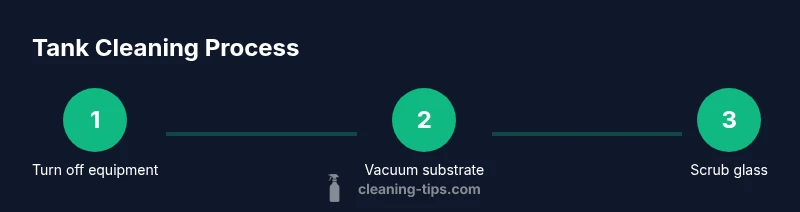
Turn off and unplug equipment
Power down the filter, heater, and any air stones before handling the tank. This reduces the risk of electrical shock and stops water movement that could dislodge substrate. If you must move fish, do so with care in clean, water-filled containers.
Tip: If a heater is in the tank, unplug it after turning off the thermostat to avoid rapid temperature shifts. - 2
Prepare replacement water
Set up dechlorinated water that matches the tank’s temperature as closely as possible. Use a thermometer to check temperature; slow temperature changes minimize stress on fish. Have conditioner ready and applied to the replacement water.
Tip: Always pre-mix water and test its temperature before adding it back to the tank. - 3
Vacuum the substrate
Gently run the gravel siphon across the substrate to remove uneaten food and waste. Work in broad, overlapping passes to avoid missing debris. Avoid vacuuming too aggressively in one spot to protect beneficial bacteria.
Tip: If fish are present, perform short passes in small regions and watch for signs of stress. - 4
Scrub the glass
Use an algae scraper to remove algae from the glass. For stubborn spots, let the scraper sit briefly and then wipe clean. Avoid scratching the glass and never use metal on acrylic surfaces.
Tip: For acrylic tanks, stick to soft cloths or plastic scrapers to prevent scratches. - 5
Clean decorations and exterior equipment
Rinse decorations in old tank water; scrub away buildup, then re-submerge. Wipe the tank’s exterior surfaces and equipment with a damp cloth to remove fingerprints and dust; avoid detergents that can contaminate the water.
Tip: Never use soap or household cleaners inside or near the tank. - 6
Rinse and reassemble the filtration system
Rinse intake tubes and hoses with old tank water; reinstall the filter components. Do not wildly rinse all media with tap water; if you must rinse media, do it gently and with water from the tank to preserve beneficial bacteria.
Tip: Only remove a portion of media during cleaning to maintain biofilter stability. - 7
Reintroduce water and adjust temp
Slowly add replacement water, monitoring temperature to prevent sudden changes. If the heater is off, turn it back on and allow the tank to settle before resuming normal filtration.
Tip: Add water gradually to avoid shocking the inhabitants. - 8
Test water and check indicators
Take readings for ammonia, nitrite, nitrate, and pH, plus temperature. Compare with your baseline to ensure the tank remains healthy after cleaning.
Tip: If readings are off, perform a small follow-up water change and re-test in a few hours. - 9
Observe the fish and adjust
Watch for signs of stress (rapid breathing, hiding, or lethargy). If stress appears, provide extra hiding spots and avoid aggressive handling in future cleanings. Resume normal feeding once fish look settled.
Tip: Keep the first 24 hours after cleaning low-stress; avoid overfeeding.
Questions & Answers
How often should I clean a fish tank?
Most hobbyists start with weekly quick checks and a deeper cleaning monthly, adjusting based on tank conditions and fish behavior.
Most hobbyists begin with a quick weekly check, and do a deeper cleaning about once a month, adjusting as needed based on your tank.
Can I perform a full water change during cleaning?
Full water changes can shock fish and disrupt beneficial bacteria. Partial changes are safer and more sustainable for most setups.
Avoid changing all the water at once; partial changes are safer for fish and the biofilter.
What should I test after cleaning?
Test ammonia, nitrite, nitrate, pH, and temperature to ensure the tank remains stable after cleaning.
Test the water for ammonia, nitrite, nitrate, pH, and temperature to confirm the tank is stable after cleaning.
Is it safe to remove decorations during cleaning?
Yes, but rinse decorations in old tank water and avoid soaps. Dry surfaces before returning them to the tank.
You can remove decorations, just rinse them in old tank water and avoid any cleaners.
What should I do if fish seem stressed after cleaning?
Offer hiding places, monitor feeding, and consider smaller, more frequent cleanings if stress signs persist.
If your fish look stressed, give them more hiding spots and try smaller changes next time.
Should I clean the filter during every tank cleaning?
Clean exterior parts during routine maintenance; rinse media only with old tank water and avoid contaminants to preserve beneficial bacteria.
You can clean the filter exterior regularly, but don’t overdo it with the media—use tank water to rinse.
Watch Video
The Essentials
- Develop a routine: quick weekly checks and deeper monthly cleanings.
- Use dechlorinated, temperature-matched water for changes.
- Never use soaps or detergents near the tank.
- Monitor fish behavior after cleaning and adjust practices as needed.